
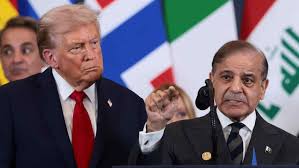
Iran’s Foreign Ministry declared Monday that Washington is not genuinely pursuing a diplomatic resolution to the weeks-long war, accusing the United States of repeated ceasefire violations that have undermined fragile truce efforts.
Ministry spokesman Esmaeil Baqaei, speaking at a weekly press briefing in Tehran, said American actions “do not in any way indicate seriousness in pursuing a diplomatic process.”
He cited three specific incidents: a US attack on an Iranian cargo ship early Monday, the continuation of an American naval blockade of Iranian ports, and delays in implementing a separate ceasefire in Lebanon.
“While claiming diplomacy and readiness for negotiations, the US is carrying out behaviours that do not in any way indicate seriousness,” Baqaei said.
The war erupted on February 28, 2026, when coordinated US and Israeli strikes killed Supreme Leader Ayatollah Ali Khamenei, triggering a regional conflict that has since drawn in allied militias and destabilised global energy markets.
A two-week ceasefire, announced by President Donald Trump on April 8, began hours before an ultimatum deadline and was intended to create space for negotiations in Islamabad, with Pakistan serving as mediator.
Those talks, described as the highest-level direct engagement between the two nations since 1979, lasted 21 hours but collapsed on April 12 without an agreement.
The collapse has been attributed to deep mistrust and a wide gap between the parties’ opening positions. Iran’s 10-point peace framework did not address surrendering its nuclear ambitions, while Washington has insisted on a firm commitment that Tehran will not develop nuclear weapons.
Central to the impasse is Iran’s enriched uranium stockpile. Publicly reported estimates place the stockpile at nearly 2,000 kilograms, including approximately 450 kilograms enriched to 60 percent purity. Baqaei was emphatic that transferring this material abroad has never been an option.
“Regarding the issue of transferring enriched uranium, neither during this period of negotiations nor before has transferring it to the United States been discussed,” Baqaei said. “It was never raised as an option for us.”
The strategic Strait of Hormuz, through which roughly one-fifth of the world’s oil typically transits, has been closed since the outbreak of war and remains a flashpoint. Iran’s Revolutionary Guards have linked its reopening directly to the lifting of the US naval blockade.
On Sunday, President Trump said he had ordered US negotiators to travel to Pakistan for another round of talks. But Iran has yet to confirm its participation.
“As of now, while I am at your service, we have no plans for the next round of negotiation, and no decision has been made in this regard,” Baqaei said.