


Labour Leaders Warn of Economic Collapse as Insecurity Guts Productivity
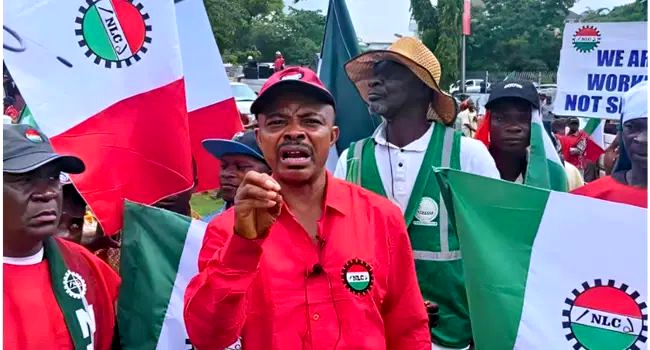
Nigeria’s organised labour marked the 2026 May Day celebrations with a grim assessment of the national economy. Leaders of the Nigeria Labour Congress and the Trade Union Congress warned that rampant insecurity and deepening poverty now act as a blockade to decent work. When citizens cannot travel safely, markets fail. Agricultural output has stalled because farmers fear for their lives. National productivity will continue to decline until the state secures its borders and its farmlands.
Hunger and fear have become the primary features of the Nigerian workplace. Joe Ajaero, NLC president, noted that quality jobs are vanishing as millions slip below the poverty line. Most Nigerians now survive in the informal sector without pensions or safety nets. Labour leaders argue that security is the only viable stimulus package. If the government removes the threat of violence, people will return to their farms. Food prices would drop, and small businesses would breathe again.
The internal politics of the unions added a layer of discord to the holiday. In Edo State, the labour movement has split into two warring factions. One group, backed by the national body, boycotted the official ceremonies to mourn the “travails of labour” in the state. They accused the rival faction of being government puppets. This second group proceeded with celebrations at the Samuel Ogbemudia Stadium alongside the state governor. Such fractures weaken the collective bargaining power of workers during a national crisis.
Oyo State provided a rare contrast to the general gloom. The state government claimed a harmonious relationship with its 130,000 workers. Officials highlighted the prompt payment of salaries and the introduction of a 13th-month bonus. Oyo currently ranks fourth in the federation for worker welfare. The local NLC leadership praised the governor for clearing pension arrears that previously forced retirees into legal battles. This cooperation suggests that political will can mitigate even the harshest national economic trends.
The informal sector remains the most vulnerable part of the workforce. Advocacy groups pointed out that 93 per cent of Nigerian workers lack basic social protections. These traders, artisans, and farmers contribute more than half of the national GDP. Yet they have no access to healthcare or workplace safety schemes. The current system treats the majority of the workforce as an afterthought. Without a structural shift toward inclusive social protection, May Day remains a hollow ritual for most.
Political hopefuls are already using the plight of workers to sharpen their 2027 campaign tools. In Osun State, opposition figures are promising a “people-first” administration to replace the current order. They describe the Nigerian worker as the backbone of the nation, but lament their treatment as a footnote. The rhetoric is familiar, yet the underlying issues of inflation and instability remain unaddressed. Labour expects more than tributes; it expects a functioning state.
Nigeria cannot build a stable society on the backs of underpaid and frightened citizens. The transition from a subsistence economy to a productive one requires more than speeches. It requires the restoration of the rule of law and a living wage that keeps pace with inflation. Until the government addresses the twin pillars of poverty and insecurity, the “dignity of labour” will remain a slogan rather than a reality.