
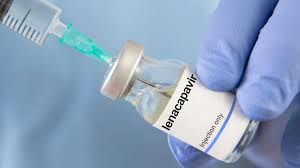
A South African laboratory is set to produce a generic version of lenacapavir, a revolutionary twice-yearly HIV injection, marking a significant milestone in Africa’s push toward pharmaceutical self-sufficiency, global health agency Unitaid announced on Tuesday.
Lenacapavir, originally developed by American pharmaceutical giant Gilead Sciences, has drawn widespread medical attention for its exceptional efficacy. Clinical studies show the injectable drug reduces the risk of HIV transmission by*99.9 per cent and unlike conventional antiretroviral therapy, it requires only two administrations per year rather than a daily tablet, a distinction experts say carries profound implications, particularly for women who face social stigma around visible HIV medication.
“Together with Gilead, we have an agreement with the government of South Africa for this drug to be produced in South Africa as soon as possible,” Unitaid Executive Director Philippe Duneton disclosed while speaking at a Franco-African economic summit in Nairobi.
Duneton described the development as “a very important step,” stressing that investment in regional pharmaceutical manufacturing across Africa was “absolutely essential.” He confirmed to AFP that a preliminary agreement with Gilead is already in place, pending the formal identification of South African laboratories to handle production. A call for tenders has since been launched.
“I have every confidence in what is going to happen. It takes months of discussions. We have been talking for years,” Duneton told AFP.
Once a manufacturing partner is selected, Unitaid projects that actual production could begin within one to two years.
The agreement draws renewed attention to a vulnerability painfully exposed during the COVID-19 pandemic, when wealthy nations largely ringfenced vaccine supplies for their own populations, leaving African countries scrambling for doses. That experience galvanised calls for the continent to develop domestic capacity to produce life-saving medicines rather than depend entirely on foreign supply chains.
“When there are tensions, competition or disruptions in supply chains, it’s better to have medicines produced close to home. That holds true everywhere, in Europe as well as in Africa,” Duneton noted.
Unitaid, which operates as an international health financing agency focused on reducing the cost of treatments for diseases prevalent in lower-income countries, has been central to brokering the arrangement between Gilead and the South African government.
The move is widely regarded as a template for how African nations can leverage multilateral health partnerships to build genuine medical sovereignty reducing dependence on external manufacturers while improving access to cutting-edge treatments at affordable prices.