
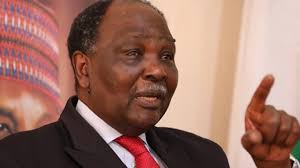
Facing a collapsing ammunition stockpile and cold-shouldered by his closest Western allies, former Nigerian Head of State General Yakubu Gowon turned to the Soviet Union and a Lebanese black-market businessman to prosecute the Biafran civil war — a dramatic revelation now detailed in his newly launched autobiography.
The disclosures appear in Chapter Fifteen of Gowon’s 859-page memoir titled *My Life of Duty and Allegiance*, launched in Abuja on Tuesday and attended by Vice President Kashim Shettima, who represented President Bola Tinubu.
The chapter, titled “If The Devil’s Ready To Help,” recounts how Nigeria’s entire army ammunition reserve had shrunk to just half a million rounds by late 1968, a quantity Gowon described as wholly inadequate to sustain battlefield operations during the three-year conflict that ran from July 1967 to January 1970.
“Left with no choice, I ordered the Federal troops to hold their position after the capture of Enugu up to Okigwe and Umuahia because I could not, in clear conscience, commit them to further advance knowing that the ammunition to sustain the effort was in short supply,” he wrote.
Gowon said he summoned the British and American ambassadors to a meeting he described as one of the most consequential of the entire war. Both left without any commitment. As they departed, Gowon delivered a pointed warning.
“If I say I’m not disappointed, it will be an understatement, so I will go to any devil to get what I need to deal with the problem, to do my duty to my country, and when that happens, I hope I will not be accused of doing something wrong,” he told them.
He subsequently directed his Principal Secretary, Hamza Ahmadu, to contact Soviet Ambassador Aleksandr Romanov. A Nigerian delegation comprising Commissioner of Information Anthony Enahoro, Permanent Secretary Edwin Ogbu, Chief of Air Staff Emmanuel George Kurubo and Ambassador John Ukegbu was dispatched to Moscow.
“The Soviet Union supplied us some MiG-15 trainers and MiG-17 bombers for the meeting, which was a huge success,” Gowon wrote, noting that Soviet-Nigerian relations grew into something “special” after the war.
For immediate ammunition needs, Gowon turned to Ali Jamal, a Lebanese businessman who offered to personally finance military procurement on an interest-free basis pending government reimbursement.
“He told me not to worry and that he would use his own money to provide the ammunition we needed but would want to be reimbursed interest-free at the shortest possible time,” Gowon recounted.
The arrangement hit a serious obstacle when Finance Commissioner Chief Obafemi Awolowo refused to authorise payment at the Federal Executive Council, citing procedural violations and extra-budgetary concerns. Gowon overruled him directly.
“I’m afraid I’ll want to use my powers and authority, which I think I can do as Head of State and Head of Government, to give any department the order to do what is required to be done,” he told Awolowo. Jamal was eventually paid in full.
The autobiography spans 36 chapters covering Gowon’s life from his Angas origins in Plateau State through his military career, civil war leadership, 1975 ouster, exile and academic years.