
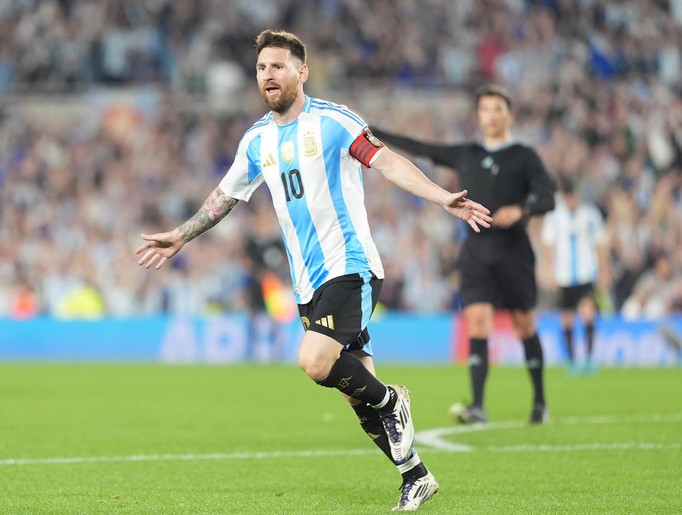
Lionel Scaloni has named Lionel Messi as captain of Argentina’s 26-man World Cup squad, quelling intense speculation over the forward’s physical fitness. The definitive roster announcement ends months of public silence from the 38-year-old talisman regarding his historic sixth tournament appearance. Panic had rippled through Buenos Aires earlier this week when Messi suffered a sudden hamstring injury during a domestic match for Inter Miami. Club doctors diagnosed the issue as severe muscle fatigue, offering no firm timeline for his return to competitive action. Scaloni’s swift squad selection aims to restore institutional calm as the reigning global champions finalize their defensive strategy.
The medical scare occurred during the final Major League Soccer fixture before the international tournament break. Messi requested an abrupt substitution in the 73rd minute of Miami’s high-scoring victory over Philadelphia, visibly clutching his left thigh. The national coaching staff spent several days reviewing diagnostic data and consulting directly with American medical practitioners. Scaloni admitted that while the veteran forward will not join the training camp at peak fitness, the initial evaluation remains highly encouraging. The manager emphasized that the technical crew preferred a precautionary withdrawal rather than risking a permanent structural tear.
The structural composition of the travelling party heavily rewards the veteran core that delivered the global title in Qatar four years ago. Scaloni has retained seventeen players from that triumphant campaign, prioritizing tactical familiarity and dressing-room stability. However, the announcement also delivered considerable domestic shock by completely omitting Real Madrid’s teenage prodigy Franco Mastantuono. The 18-year-old midfielder was widely tipped by South American pundits to serve as the breakout star of the new generation. The coaching staff instead elected to fill the remaining technical slots with in-form continental prospects like Nicolás Paz and Valentín Barco.
Argentina faces an unusually complicated medical ledger across its entire defensive spine as the training camp opens. Tottenham Hotspur captain Cristian Romero remains a significant doubt after sustaining a collateral knee ligament strain during an English league match. Full-backs Nahuel Molina and Gonzalo Montiel are also racing against time to recover from recent muscular tears sustained during domestic club duties. These mounting defensive vulnerabilities have forced Scaloni to consider a more conservative tactical approach during the opening group fixtures. The squad will travel to the United States this week to commence formal training exercises under tight medical surveillance.
The upcoming tournament represents a major milestone in modern footballing history as several iconic careers reach their natural conclusion. Messi will share the record-breaking feat of appearing in six separate finals alongside his long-term Portuguese rival, Cristiano Ronaldo. The expanded multi-nation tournament kicks off on June 11 across the United States, Canada, and Mexico. Argentina will play two critical warm-up friendlies against Honduras and Iceland to test their makeshift defensive pairings. The South American giants open their formal title defense five days later against Algeria in Kansas City before facing Austria and Jordan.
The immediate managerial challenge involves balancing Messi’s minutes to ensure he peaks during the knockout stages. The national federation has already designed a highly specialized training schedule to limit further stress on his left hamstring. For Scaloni, retaining the trophy requires navigating these persistent physical limitations without compromising the team’s fluid attacking identity. The omission of younger creative options means the tactical burden remains firmly on the established veterans. The coming weeks will reveal whether this aging roster possesses the physical endurance to defend its crown or falls victim to scheduling exhaustion.