
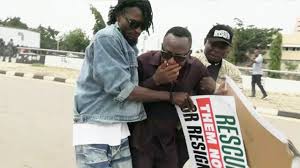
Human rights lawyer and activist Deji Adeyanju has described the alleged use of tear gas against Omoyele Sowore and other protesters during Democracy Day demonstrations in Abuja as a troubling sign for Nigeria’s democracy.
Speaking to Vanguard newspaper, Adeyanju called the incident deeply concerning. He noted that Democracy Day commemorates the sacrifices made by Nigerians in the struggle for civil liberties. It is therefore troubling when citizens exercising their constitutional right to peaceful assembly are met with force, he said. While security agencies have a duty to maintain public order, that responsibility must be exercised in a manner that respects fundamental rights. The use of tear gas against peaceful demonstrators, particularly on such a symbolic day, reveals much about the state’s tolerance for dissent.
The comments follow events on 12 June 2026 when police dispersed protesters gathered near Eagle Square and other points in Abuja. The demonstration, organised by groups including the Take It Back Movement and led by Sowore, demanded improved governance and security. Multiple reports confirmed that tear gas canisters were deployed, with Sowore stating he was exposed to a substance at close range, struggled to breathe and collapsed before being revived. Similar incidents involving Sowore-led protests have occurred in previous years, including during the 2019 RevolutionNow campaign and responses to later demonstrations.
Adeyanju placed the episode within the broader context of Nigeria’s democratic journey. Nigeria has sustained constitutional governance and civilian rule for over two decades since the return to democracy on 29 May 1999, with regular elections and peaceful transfers of power. However, he argued that democracy cannot be measured solely by electoral processes. Its true value must also be assessed by its impact on the welfare of citizens. The challenge before Nigeria is not merely to preserve democracy ideologically but to deepen it substantively by ensuring that democratic governance translates into improved security, economic opportunity, accountability and social welfare for the people.
He expressed particular concern ahead of the 2027 general elections amid current insecurity and economic challenges. Voter turnout has declined steadily in recent cycles. Official figures show it fell from 43.65 per cent in the 2015 presidential election to 34.75 per cent in 2019 and further to 26.72 per cent in 2023, the lowest since the return to civilian rule. Citizens who feel disconnected from the political process or dissatisfied with governance may be less motivated to participate, Adeyanju observed. Another concern is the ability to conduct credible elections in areas affected by insecurity, where voter access and electoral logistics may be compromised. Nevertheless, the elections present an opportunity for political actors to engage citizens on concrete solutions.
Adeyanju identified the shrinking civic space as his greatest concern. A healthy democracy depends on citizens being able to speak freely, criticise government policies, organise peacefully and hold public officials accountable without fear of intimidation. Restrictions on protests, mistreatment of journalists and activists, and the use of certain laws give cause for worry. The strength of a democracy is not tested by how it treats those who support government policies but by how it treats those who disagree with them.
The remarks come against the background of documented trends. Monitors including CIVICUS rate Nigeria’s civic space as repressed, with reports of journalist arrests, protest disruptions and legal actions under laws such as the Cybercrimes Act. Data from local press freedom trackers recorded dozens of incidents involving harassment or detention of journalists in 2025. Past responses to mass protests, including those in 2020 and 2024, have similarly drawn attention to the balance between public order and rights protection.
Observers note that the June 12 commemoration itself carries historical weight. It marks the 1993 presidential election won by Moshood Kashimawo Olawale Abiola, which was annulled, and the subsequent struggle that contributed to the end of military rule. Twenty seven years of uninterrupted civilian governance have been achieved, yet recurring questions about accountability, security and citizen welfare continue to shape public discourse.
Adeyanju’s intervention underscores ongoing debates about the quality of democratic practice as Nigeria approaches the next electoral cycle.