
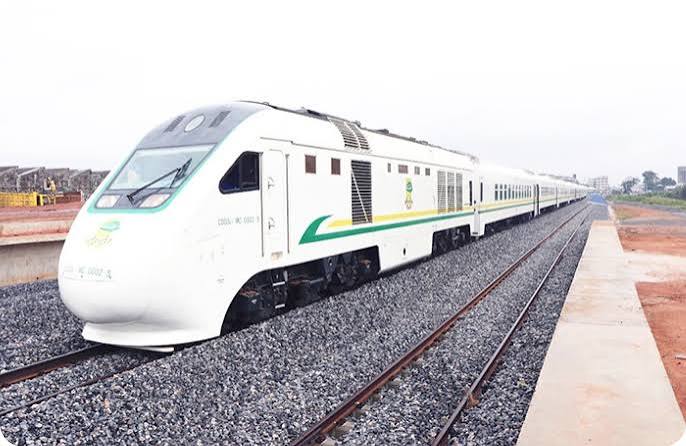
Nigeria’s railway has carried freight and passengers for well over a century, yet it has rarely paid its own way. That financial reality returned to public attention this month when the Nigerian Railway Corporation (NRC) admitted it can no longer cover its operating costs without borrowing.
The corporation said it has been running at a loss, with fuel expenses becoming one of the biggest threats to operations, according to Managing Director Kayode Opeifa. Speaking at the second town hall meeting with workers in Lagos, attended by the Nigerian Union of Railway Workers and the Senior Staff Workers Union, Opeifa was blunt about the strain.
“The cost of diesel alone has almost made it impossible to operate our trains,” he said. “We are running at a loss, and we had to resort to borrowings to keep our operations.”
He pledged to keep prioritising staff welfare, telling workers their efforts had sustained the corporation, but urged them to appreciate its “precarious financial position.”
The admission lands awkwardly against the scale of recent public investment. According to checks by The Guardian, direct federal funding to the NRC between 2016 and 2026 stood at about N300 billion, while federal borrowings for rail development over the same period exceeded N5 trillion. Those borrowings financed the Abuja-Kaduna, Lagos-Ibadan, Itakpe-Warri, Port Harcourt-Maiduguri and Kano-Maradi lines.
The figures behind those corridors are substantial. The Abuja-Kaduna line was inaugurated in 2016, while the Lagos-Ibadan segment was awarded to China Civil Engineering Construction Corporation at a cost of $1.2 billion. The Kaduna-Kano line, also under CCECC, carries a price tag of about $1.2 billion, with the majority of the funding coming from the Nigerian government.
The trouble is not new. The Guardian reported that as far back as 1978, railway revenues covered only about 40 per cent of operating expenses, and by 2004 that figure had dropped to roughly 14 per cent. Rail expert Segun Esan noted that the NRC last declared a profit in 1964, and that the colonial railway, dating to 1898, was built primarily to move agricultural produce to the coast for export rather than for mass mobility.
Industry voices interviewed by The Guardian point to one persistent gap. The Managing Director of Bethlehem Rail Infrastructure Limited, Rowland Ataguba, observed that successful railways worldwide earn the bulk of their revenue from freight while subsidising passenger services. The NRC, by contrast, still concentrates on passenger movement as trucks haul much of the country’s cargo.
Even so, the federal commitment continues. The 2026 Appropriation Bill proposes N102.3 billion as counterpart funding for the Lagos Green Line rail project, while Opeifa has disclosed plans for a high-speed Lagos-Abuja service and a new corporate headquarters in Ebute-Meta.
Whether those ambitions can coexist with a corporation that borrows to fuel its trains remains the open question. As Ataguba put it, a loss-making railway “will become unsustainable if the promoter is unable to keep funding its losses,” a description he tied directly to the NRC’s story.