

Nigeria Exports N105.5bn Worth of Petrol to Togo in Q1
Nigeria shipped Premium Motor Spirit worth N105.50bn to Togo in the first three months of 2026, a figure that captures how sharply the country’s downstream fortunes have turned after decades of dependence on imported fuel. The export value was contained in the National Bureau of Statistics Foreign Trade Statistics Report for the first quarter of 2026, which ranked ordinary motor spirit among Nigeria’s major petroleum exports to the neighbouring country.
The reversal is striking when set against recent records. As recently as the fourth quarter of 2025, Nigeria spent N84.69bn importing petrol from Togo, which was then its largest African source of the product. Years earlier, the country bought roughly $117m worth of petroleum products from Togo in 2023 and between $72m and $77m in 2024. The flow has now turned the other way.
Petrol was not the only commodity moving outward. NBS data showed that gas oil exports to Togo stood at N278.36bn, kerosene-type jet fuel at N273.18bn, crude petroleum oil at N220.14bn, and partially refined oil at N89.83bn during the quarter.
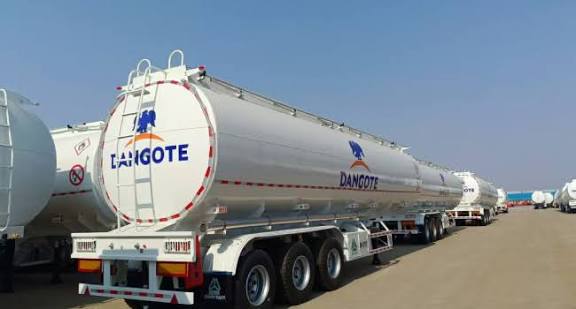
Behind the shift sits the Dangote Petroleum Refinery in Lekki. The 650,000-barrel-per-day facility reached its full nameplate capacity in February 2026, becoming the single most consequential variable in West Africa’s fuel supply chain. By June, its process licensors certified a performance test of 700,000 barrels per day, surpassing the nameplate figure for the first time. The plant had earlier shipped 456,000 tonnes of Euro 5 gasoline and diesel across twelve cargoes to Côte d’Ivoire, Cameroon, Tanzania, Ghana and Togo, its first petrol export push after hitting full production.
The Lomé hub explains why exports and re-imports now coexist. Dangote supplies more than 70 per cent of the waterborne refined fuel volumes arriving in Nigeria through the Lomé, Togo, trading hub. Matthew Tracey-Cook of S&P Global Commodity Insights, speaking at a webinar organised by the Major Energies Marketers Association of Nigeria, stated: “For several months, from March until May, we saw well over 70 to 80 per cent of the volumes that were imported into Nigeria actually originated from Dangote.”
He added: “Lomé has become an increasingly important transshipment hub for filling regional shortages across the region.”
The wider trade numbers underline the turn. Nigeria’s petrol import bill crashed to about N87.4bn between January and March 2026, representing a 96.2 per cent decline from the N2.271tn spent in the same period of 2025. The country posted a trade surplus of N7.55tn in the quarter, with total trade reaching N34.79tn.
Constraints remain. Domestic refineries were allocated 61.9 million barrels of crude in the first quarter of 2026, yet actual delivery reached only 28.5 million barrels, less than half, leaving the Dangote plant running near 550,000 barrels per day for much of early 2026. The refinery has nonetheless tilted Nigeria toward becoming a net petrol exporter for the first time in decades, with expansion to 1.4 million barrels per day already under discussion. Whether crude supply can keep pace will shape how durable the export window proves.