
Presidency, Obi Clash Over 10,000MW Power Promise
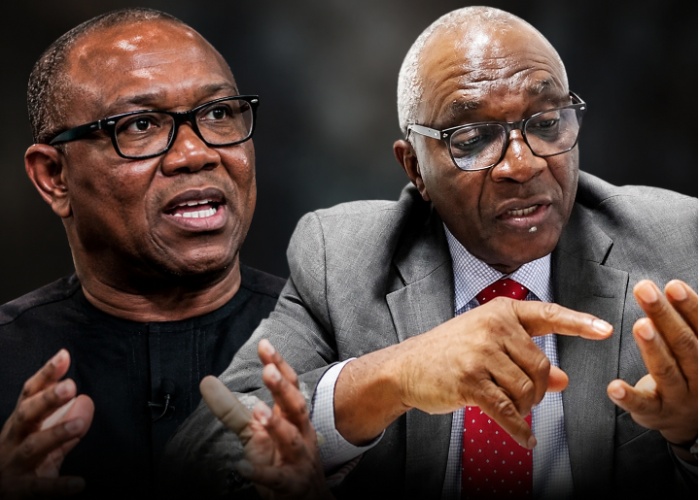
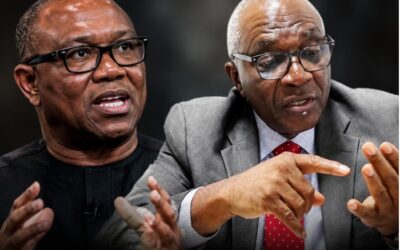
A fresh dispute over Nigeria’s troubled electricity sector has opened between the Presidency and the opposition, after Special Adviser to the President on Information and Strategy, Bayo Onanuga, dismissed a campaign pledge by Peter Obi to raise power generation and distribution by at least 10,000 megawatts within four years.
Onanuga criticised the recent promise by the presidential candidate of the Nigeria Democratic Congress, Peter Obi, to increase Nigeria’s electricity generation and distribution by at least 10,000 megawatts within four years if elected president in 2027. Speaking on Arise Television on Tuesday, he said the promise reflected a poor understanding of the country’s existing power infrastructure, noting that Nigeria already has an installed generation capacity of about 13,500 megawatts.
“What people don’t know, and which unfortunately Peter Obi did not know when he came and said he’s going to generate 10,000 megawatts, is that we already have in Nigeria installed capacity of 13,500 megawatts,” Onanuga said. He argued that the real bottleneck is not capacity but structural weakness. “What are the problems? No gas. The players in the sector are owing the gas companies legacy debt of over N4tn, which has become the problem of this administration, and it is trying to clear it,” he added.
The figures Onanuga cited align with official records. According to NERC’s February 2026 Operational Factsheet, Nigeria’s total installed generation capacity stands at 13,625MW. The gap between that figure and what reaches homes remains the crux of the debate. The highest power ever generated and delivered to the national grid was 5,801.84MW, achieved on March 4, 2025. Verified data from the Association of Power Generation Companies shows average available capacity declined to about 4,089MW by March 2026.
Obi’s pledge, made on Saturday, June 1, at the NDC convention in Abuja where he emerged as the party’s flag bearer, rested on those same realities. He said the country generates and distributes only about 4,000 megawatts for a population exceeding 200 million. He noted that South Africa and Egypt each generate over 40,000 megawatts, and that about 100 million Nigerians lack access to electricity.
The exchange revives a familiar accountability question. Before assuming office in May 2023, President Bola Tinubu pledged to deliver 15,000 megawatts of generation capacity within four years. Nearly 30 months later, the grid had added barely over 1GW, rising from 4,387.91MW in the second quarter of 2023 to 5,395.72MW towards the end of 2025.
Onanuga maintained that the administration moved early on reform. “To show that he meant business, the first thing he did when he came to office was sign the Electricity Act, which enables states to generate power, transmit power and distribute power,” he said, describing the national grid as “outdated.”
The transmission operator has rejected the notion that its network is the weakest link. TCN says the grid can now wheel 8,700MW, far above the highest power ever generated. Former Power Minister Adebayo Adelabu, who resigned in April 2026, has separately described over 10GW of installed capacity as “stranded,” pointing to gas supply, metering and distribution as the binding constraints. With campaigning for 2027 intensifying, electricity is set to remain a defining battleground.