
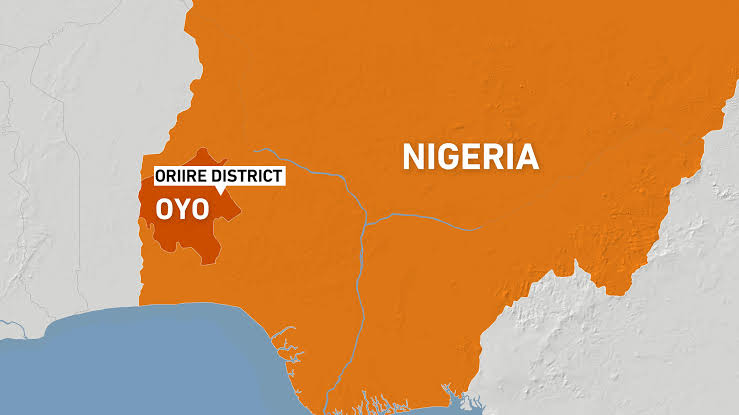
The Oyo State Government has firmly pushed back against fresh allegations that it secretly paid money to the armed group holding dozens of pupils and teachers seized from three schools in Oriire Local Government Area, insisting that no ransom has changed hands as the ordeal enters its seventh week.
The rebuttal came on Friday in a statement by the Commissioner for Information, Prince Dotun Oyelade, who dismissed the claim as “far from the truth” and accused what he called “irresponsible bloggers” of trying to sow confusion and mislead the public. “Although both the Oyo State and Federal Governments have been making concerted efforts to secure the safe release of the abducted children and their teachers, no ransom has been paid to the bandits, either directly or indirectly,” Oyelade said. He urged residents to disregard the reports and to rely only on information released through official government channels.
The government’s response followed a widely shared video by the social media personality Martins Otse, better known as VeryDarkMan or VDM, who alleged that Governor Seyi Makinde had paid a ransom for the release of the captives but that the abductors reneged and kept them in the bush. Oyelade maintained that the administration continues to work closely with security agencies to bring the victims home and “bring this sad event to a close.”
The abduction that triggered the controversy is one of the most jarring security episodes to hit Nigeria’s South-West in recent years. On Friday, May 15, 2026, heavily armed men riding motorcycles carried out a coordinated dawn raid on three schools in the Yawota and Ahoro-Esinele communities of Oriire Local Government Area. The affected institutions were Baptist Nursery and Primary School, Yawota; Community High School, Ahoro-Esinele; and L.A. Primary School. According to figures widely cited by security agencies and the police, 39 pupils and seven teachers were marched into the surrounding forest. Some tallies placed the number of victims higher, with the Christian Association of Nigeria’s Oyo chapter putting it at 46, and separate accounts including a toddler among those taken.
The violence did not end with the abduction. A teacher, Joel Adesiyan, was killed while trying to flee, and a motorcycle rider was also cut down during the raid. Two days later, on May 17, the attackers released a video showing the beheading of another teacher, Michael Oyedokun, a mathematics teacher at Community High School, Ahoro-Esinele. Governor Makinde confirmed the killing in a statement on May 18, describing it as deeply painful. President Bola Tinubu condemned the attack as “barbaric” and pledged that the Federal Government was working with the state to rescue the victims.
Security sources have linked the abductors to Jama’atu Ansarul Muslimeena Fii Bilaadis Sudan, known as Ansaru, a breakaway faction of Boko Haram. The group reportedly issued a four-point demand: the release of detained commanders, a ransom, two Hilux vehicles, and the implementation of Sharia-related law. Reports put the ransom figure at N1bn, said to be payable into an account in the Republic of Benin, though the figure has not been independently verified. In more recent weeks, sources indicated that the captors had dropped the demand for their commanders’ release and narrowed their focus to money, even as troops and other operatives tightened a cordon around a hideout believed to be within the Old Oyo National Park forest corridor, difficult terrain close to the border route towards Niger Republic and the Kainji axis.
The prolonged captivity has drawn sustained national attention. The Nigeria Union of Teachers declared an indefinite strike from June 1, shutting public schools across the state before suspending the action, with teachers directed to resume duties on July 2. During a federal delegation’s visit to the affected communities on May 31, led by the Chief of Staff to the President, Femi Gbajabiamila, alongside the National Security Adviser, Nuhu Ribadu, and other top security chiefs, grieving women of Yawota rejected donations of rice and cash, reportedly insisting, “We don’t want money. It is our children we want.” The Oyo State House of Assembly, through its Speaker, Adebo Ogundoyin, publicly rejected any negotiation with the attackers, arguing that concessions would only embolden them.
The Oriire attack has resonated far beyond the state because it marked a rare expansion of large-scale school raids into the South-West, a region long considered relatively secure. Mass school abductions have haunted Nigeria since the 2014 Chibok kidnapping, in which Boko Haram seized 276 schoolgirls in Borno State, and the pattern persisted with the abduction of about 100 children from a Catholic school in Niger State in late 2025. The renewed anxiety has prompted advocacy groups such as the Socio-Economic Rights and Accountability Project and United Nations officials to demand stronger protection for schools and the safe return of every victim.
For now, the government insists its strategy remains discreet and its efforts unbroken, even as families in Oriire wait, seven weeks on, for the children and teachers who have not come home.