
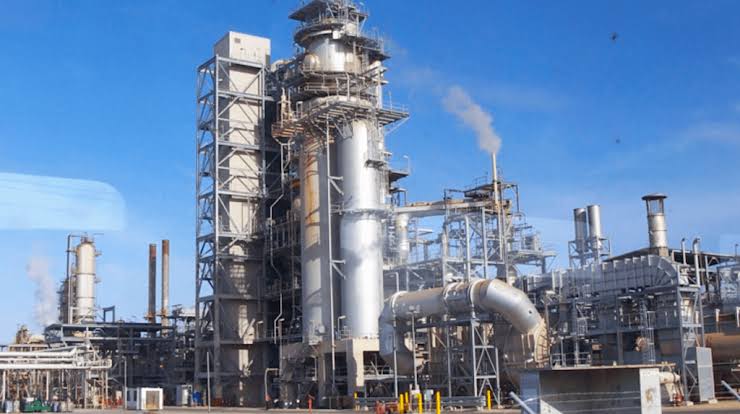
Nigeria’s downstream petroleum sector is bracing for renewed pressure on the foreign exchange market after Dangote Petroleum Refinery scrapped naira pricing for petrol, diesel and aviation fuel, a decision that could oblige marketers to source as much as 1.84 billion dollars every month to keep the pumps running and tie domestic fuel costs directly to the fortunes of the naira.
The refinery notified marketers and customers that, effective Monday, July 13, 2026, all gantry and coastal lifting payments would be denominated in United States dollars, following an earlier email dated July 9. In the notice, signed by its Group Commercial Operations department, the plant declared that every previously issued naira Proforma Invoice and Deal Recap was invalid and that no payment should be made against them. Premium motor spirit was fixed at 0.779 dollars per litre at the gantry, automotive gas oil at 1.087 dollars, aviation turbine kerosene at 0.942 dollars, and coastal petrol at 1,044.62 dollars per metric tonne. Liquefied petroleum gas, the notice clarified, remains outside the new arrangement.
At the prevailing official rate of about 1,380.50 naira to the dollar, the petrol benchmark works out to roughly 1,075.61 naira per litre at the depot gate. Unlike the fixed naira prices marketers had grown used to, that figure will now move with the exchange rate, reopening a channel through which currency weakness feeds straight into pump prices.
Based on national consumption and supply volumes, marketers would require an estimated 60.7 million dollars daily to lift products from the refinery. Petrol accounts for the largest share at about 36.9 million dollars a day, or roughly 1.1 billion dollars monthly. Diesel adds around 20.4 million dollars daily, translating to about 633.5 million dollars a month, while aviation fuel demands a further 3.4 million dollars daily, or some 105.1 million dollars monthly, on an average daily supply of 3.6 million litres. Together, the three products point to a monthly foreign exchange requirement of about 1.84 billion dollars.
Because that dollar demand flows directly to a local refinery rather than to offshore suppliers, the market is unlikely to suffer significant capital flight through the arrangement. The concern, rather, is timing and depth. A largely fragmented body of marketers converging on the banking system for dollars at short notice will test how quickly the foreign exchange market can respond, and how the naira holds up under that strain.
The pass through has begun. Depot petrol prices climbed by more than 100 naira, with several terminals raising rates by over nine per cent. Data tracked across depots showed Matrix Warri at about 1,230 naira per litre, Rainoil Delta at 1,170 naira, Optima at 1,141 naira and AITEO at 1,121 naira, all well above the roughly 1,076 naira gantry reference before transport and distribution margins are added. Sahara, AIPEC and African Terminal reportedly moved petrol loading prices from 1,090 to 1,120 naira per litre, while diesel touched as high as 1,650 naira at some points, a jump of up to 150 naira.
The shift also lands against a firmer crude market. Brent crude climbed to around 85 to 86 dollars per barrel, gaining close to 10 dollars within the first two trading days of the week amid renewed geopolitical tension around the Strait of Hormuz, with West Texas Intermediate near 79.76 dollars and Murban around 83.16 dollars. Coming only days after the Federal Government urged the refinery to bring petrol prices down, the timing has sharpened public unease.
The move marks a decisive turn away from the naira based framework that took hold after the Federal Government launched its domestic crude supply, or naira for crude, initiative on October 1, 2024, a scheme designed to ease foreign exchange demand, support local refining and firm up energy security. It is not the first such reversal. In April 2025, the refinery briefly returned to dollar pricing over concerns about crude supply under the arrangement, only to reverse course after talks with the Federal Government.
Industry sources attribute the latest decision to a widening currency mismatch. According to those familiar with the matter, the refinery has been receiving fewer naira denominated crude cargoes from the Nigerian National Petroleum Company Limited than dollar denominated ones, even as a large share of its refined output continued to sell in naira. That imbalance, combined with volatile crude prices and exchange rate uncertainty, made a migration to dollars, in their words, necessary. The refinery’s chief executive, David Bird, has maintained that the plant pays international benchmark prices for crude regardless of the naira for crude policy, underscoring the dollar exposure at the heart of its cost base.
Energy economist and founder of Energy Business Analytics, Dr Kaase Gbako, said the development suggests the naira for crude arrangement is under strain, with a larger portion of feedstock now sourced externally. He argued that the refinery has effectively transferred foreign exchange risk from crude suppliers to marketers and, ultimately, consumers, warning that dollar pricing would lift demand for foreign currency, pressure the naira and push local fuel prices higher as marketers price in the cost and possible delay of sourcing dollars.
A professor emeritus of petroleum economics and Executive Director of the Emmanuel Egbogah Foundation, Prof. Wumi Iledare, framed the shift as consistent with a deregulated market in which crude, the principal feedstock, is internationally traded. While it offers commercial clarity and aligns domestic pricing with global fundamentals, he said, it introduces fresh operational and macroeconomic challenges. Marketers, in his assessment, will need sophisticated foreign exchange procurement strategies, and firms with stronger banking relationships, better liquidity and sound treasury management will hold an edge. He expects shorter inventory cycles as operators limit exposure to depreciation, a habit that could translate into more frequent and quicker price adjustments at the pump. Future prices, he noted, will increasingly reflect three variables, namely international crude costs, refining and logistics expenses, and the naira to dollar rate. Iledare cautioned that resulting volatility should be read not as policy failure but as the expected behaviour of a competitive market, advising better inventory management, diversified supply, hedging where available and adequate working capital, while urging government to focus on macroeconomic stability rather than fixing prices.
A former president of the Nigerian Economic Society, Prof. Adeola Adenikinju, said the transition would fundamentally reshape procurement, obliging marketers to source dollars through the banking system before buying products and making domestic purchases resemble importation despite the refinery sitting on Nigerian soil. Given the relatively inelastic demand for petrol, he warned that the added dollar demand could weigh on the naira if poorly managed, with knock on effects on imported goods and inflation, and would make pump prices far more sensitive to exchange rate swings.
Country Manager for Tradegrid, Jide Pratt, noted that the refinery’s status as a Free Trade Zone enterprise provides a legal basis for transacting in foreign currency, but questioned why it had abandoned a naira framework that had worked. He pointed to inadequate crude supply under the naira for crude scheme as the likeliest trigger, and warned that marketers who once relied on bank guarantees may now need standby letters of credit and other trade finance instruments, raising the cost and complexity of doing business. He also flagged the currency mismatch of buying in dollars while selling in naira, and called for a transparent framework linking crude sourcing to product pricing, arguing that products refined from naira sourced crude should ideally remain in naira. “There needs to be a transparent framework linking crude sourcing with product pricing. Without that, uncertainty will persist,” he said.
Managing Director of the Centre for the Promotion of Private Enterprise, Dr Muda Yusuf, likewise identified currency mismatch as the central risk, noting that businesses with dollar costs and naira revenue face serious financial exposure. He argued, however, that the impact on pump prices would hinge on exchange rate stability and crude prices, and that a stable naira could limit any increase. He described the refinery’s decision as commercially understandable, given that much of its crude is imported and paid for in dollars.
For marketers, the deeper worry is that the domestic fuel trade could gradually dollarise. The National President of the Petroleum Products Retail Outlets Owners Association of Nigeria, Dr Billy Gillis-Harry, asked whether marketers would now be expected to draw dollars from the Central Bank of Nigeria to buy products sold entirely within Nigeria, and warned that allowing a dominant player to change pricing structures without wider consultation could unsettle the industry. The National President of the Independent Petroleum Marketers Association of Nigeria, Shettima Maigandi, said independent operators would struggle to convert naira into dollars before lifting products and, though it was too early to gauge the retail effect, insisted marketers would naturally prefer to keep buying in naira since their sales are in the local currency.
Taken together, the stakeholders accept that the shift reflects the commercial logic of a deregulated market wired into global crude trade, yet insist it raises hard questions about the effectiveness of the naira for crude policy, the resilience of the foreign exchange market and the country’s ambition to deepen local value addition. Converting the refinery’s dollar prices at the current rate produces figures broadly in line with existing market levels, which suggests the immediate shock may be contained so long as the naira holds. Should the currency slip, however, the new template ensures that weakness will reach the pump faster than at any point since subsidies were removed.