
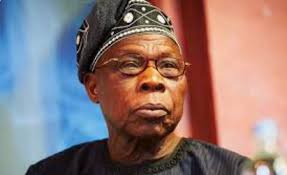
Billions of dollars in rehabilitation contracts and a decades-long search for efficiency have failed to shift former President Olusegun Obasanjo’s conviction that Nigeria’s state-owned refineries are beyond repair. As the Nigerian National Petroleum Company (NNPC) Limited pushes toward a June 2026 deadline to secure technical partners for the Port Harcourt, Warri, and Kaduna facilities, the former leader maintains that the infrastructure has become a monument to systemic failure.
Speaking during a television interview on *Sony Irabor Live*, Obasanjo argued that the government’s insistence on managing these assets defies historical lessons. He pointed to the Nigeria Liquefied Natural Gas (NLNG) project—where the private sector holds 51% and the government 49%—as the gold standard for functional partnerships. In contrast, he noted that projects like the Nigerian railways and the national shipping company suffered under state control.
“The NNPC has refineries, and I said to people that it will never work,” Obasanjo stated, recalling an encounter where an official questioned his technical authority. “And a man had the audacity to say, ‘Am I a chemical engineer?’”
The former president detailed his administration’s failed attempts to engage Shell, a global energy giant, to manage the facilities. According to Obasanjo, Shell declined even a 10% equity offer, citing four structural deal-breakers: a primary focus on upstream rather than low-margin downstream operations; the small scale of Nigerian refineries (60,000 to 100,000 barrels) compared to the global standard of 250,000 to 300,000 barrels; poor maintenance handled by “quacks and amateurs”; and deep-seated corruption.
A pivotal moment in this history occurred when Alhaji Aliko Dangote offered $750 million for a 51% stake in two refineries. Obasanjo described the offer as a “miracle,” but the deal was later rescinded by his successor, the late President Umaru Yar’Adua. Obasanjo claimed Yar’Adua admitted the reversal was due to intense “pressure” from the NNPC.
“I said, ‘Look, when you sell these refineries, you will not get 200 million (dollars) for them, because you will sell them as scrap,’” Obasanjo recalled telling his successor.
Current data reflects a staggering financial burden. Obasanjo noted that approximately $16 billion has been spent on repairs—just $4 billion shy of the $20 billion cost to build the world-class Dangote Refinery. Despite the NNPC reopening the Port Harcourt and Warri plants in 2024 before their subsequent closure, NNPC Group Chief Executive Officer, Bayo Ojulari, admitted the facilities operate “well below international standards.”
With the NNPC now targeting June 2026 to finalize technical partnerships, the shadow of past failures remains. Aliko Dangote, who built his own refinery after the 2007 reversal, shares Obasanjo’s skepticism, suggesting the state-owned assets may never be commercially viable again.