
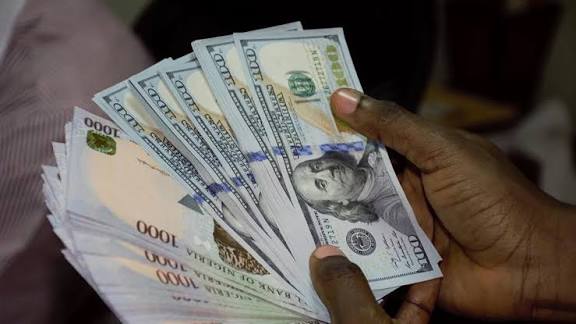
The Nigerian naira opened Wednesday, July 29, 2026, on a steady footing against the United States dollar, extending a run of relative calm in the foreign exchange market as improved liquidity and rising external reserves continued to anchor the local currency.
Data from the official Nigerian Foreign Exchange Market (NFEM) put the naira at an average of 1,364.54 per dollar, with intra day spot trading opening near 1,367.00 before settling around the 1,364.50 mark in morning transactions. The reading sits close to the 1,362.09 the Central Bank of Nigeria (CBN) recorded at the last full session on July 24, underlining how narrow daily movements have become.
In the parallel market, widely known as the black market, Bureau De Change operators and street traders quoted buying rates near 1,410 per dollar and selling rates around 1,425, with figures shifting by location, volume and available liquidity. That leaves a premium of roughly 60 naira over the official window, a fraction of the spreads recorded during earlier bouts of volatility.
Market operators link the sustained convergence to repeated liquidity interventions by the CBN and clearer policy signalling from its Monetary Policy Committee (MPC). At its 306th meeting on July 20 and 21, the committee held the Monetary Policy Rate at 26.5 percent, retained the Cash Reserve Ratio at 45 percent for commercial banks and 16 percent for merchant banks, and kept the asymmetric corridor at plus 50 and minus 450 basis points around the benchmark. The rate had earlier been trimmed from 27 percent in February 2026 after inflation eased.
The stability is unfolding against a stronger reserves position. CBN Governor Olayemi Cardoso disclosed after the July session that gross external reserves rose to 52.52 billion dollars as of July 17, up from 50.47 billion dollars at the end of May and 45.56 billion dollars at the start of the year, a gain of about 15.3 percent for 2026 so far. He said the buffer now covers roughly 11 months of imports, well above the three month international benchmark, and credited crude oil related tax receipts and third party inflows for the build up.
Price pressures, though still elevated, have shown signs of easing. The National Bureau of Statistics reported headline inflation at 15.91 percent in June 2026, down marginally from 15.93 percent in May and the first decline in three months. Food inflation, however, quickened on a monthly basis, a reminder that relief at the market remains uneven.
The current calm marks a sharp turn from the turbulence that followed the June 2023 decision to float the naira, which at its weakest sent the currency tumbling past 1,600 to the dollar and widened the gap between official and street rates dramatically. Successive reforms, including the unification of exchange windows, the clearing of a foreign exchange backlog and a banking recapitalisation exercise that Cardoso said mobilised 4.65 trillion naira in fresh capital by March 2026, have gradually restored a measure of confidence.
Risks nonetheless persist. Cardoso flagged rising crude and commodity prices, supply chain disruptions, climate shocks to food output and renewed hostilities in the Middle East as threats to the outlook, even as he projected that the economy would remain resilient through the second half of the year.
For now, importers, manufacturers and ordinary Nigerians sending or receiving foreign exchange are watching reserve levels, oil earnings and global cues as the day’s trading unfolds, with the CBN maintaining that the NFEM rate, derived as a volume weighted average, remains the country’s official benchmark.