
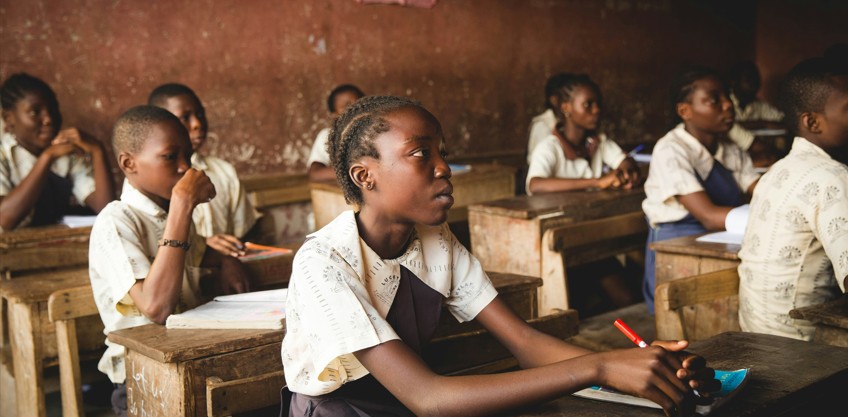
Private school proprietors across Nigeria have defended tuition and operational fee increases of up to 30 per cent ahead of the new academic term, citing punishing spikes in logistics, commercial energy tariffs, and food prices. The National Association of Proprietors of Private Schools (NAPPS) and independent operators maintain that these upward adjustments are unavoidable measures to prevent corporate insolvency. In major urban centres such as Lagos, Abuja, Port Harcourt, and Ibadan, school owners report that their operating expenses have doubled over the past twelve months. Commercial facility rents have surged, diesel costs remain high, petrol price fluctuations have made school bus services nearly unviable, and qualified teachers are leaving the profession because their pay no longer covers daily transport.
This economic squeeze is shattering the unwritten social compact that defined urban Nigerian life for four decades. Faced with the historic decay of state-funded education in the 1980s and 1990s, the Nigerian middle class opted out of the public sector. Parents assumed the financial burden of their children’s schooling, treating private school tuition as a non-negotiable tax paid in exchange for consistent academic calendars, functional classrooms, and basic literacy. Today, general price inflation has outpaced household wage growth. The rapid escalation of private education tariffs is driving an involuntary exodus of middle-class families back into an under-resourced public school system. This migration widens domestic inequality and exposes the structural limits of substituting private commerce for public goods.
Household Balance Sheets Under Siege: The Arithmetic of Survival
For millions of salaried workers and small business owners, September resumption has turned into an annual solvency crisis. With general consumer inflation depressing real earnings and food prices consuming upwards of 60 per cent of average disposable incomes, household balance sheets have little capacity to absorb sudden double-digit tuition adjustments. When a school raises term fees from ₦200,000 to ₦260,000 per child, a family with three children must find an unbudgeted ₦180,000 every three months, excluding parallel increases in textbooks, uniforms, and mandatory technology levies.
To bridge this gap, families are dismantling their financial stability. Commercial banks, fintech credit applications, and workplace cooperative societies report an increase in high-interest educational loan requests at the start of each term. Parents are liquidating personal savings, deferring routine medical care, and selling long-term assets to pay for basic secondary credentials.
When credit lines dry up, households make painful compromises inside the home. Families are abandoning school bus routes, forcing young children onto dangerous public transit or unpaved trekking paths. Parents cancel extracurricular programmes, purchase second-hand textbooks with outdated curricula, and negotiate fragmented instalment plans with school bursars. In extreme cases, families stagger schooling: an older child remains enrolled while a younger sibling pauses formal learning for a term. Private education, once viewed as an elevator out of poverty, has become a driver of household indebtedness.
The Public Sector Chokepoint: Absorbing the Exodus
The most alarming outcome of this fee escalation is the exodus of pupils from private classrooms into public schools. State education boards in several industrialised states report an influx of transfer applications from parents who can no longer meet private school invoices. While a return to public education would represent healthy civic renewal in a functioning welfare system, the Nigerian public school network cannot absorb this sudden influx.
Decades of subnational underfunding have hollowed out primary and secondary schools. Public infrastructure in high-density suburbs operates well beyond technical design limits. In many municipal primary schools across the South-West and North-Central regions, pupil-to-teacher ratios exceed 70: 1. Classrooms frequently lack basic window panes, functional chalkboards, and adequate desks, forcing children to sit on bare concrete floors or bring plastic stools from home.
Subnational governments cannot expand classroom capacity or hire qualified teachers fast enough to accommodate this displacement. State education budgets remain burdened by recurrent payroll debts, leaving capital spending on physical school rehabilitation minimal. If thousands of displaced pupils pour into municipal classrooms without a matching expansion in public facilities, the quality of instruction drops further for everyone. The result is a double defeat: middle-class children suffer disrupted learning standards, while indigent students already inside the public system see their strained teachers overwhelmed by crowded rooms.
Cooperative Procurement and Operational Reorganisation
School operators frequently blame external market shocks for their fee increases, but their business models carry deep inefficiencies. The average private school functions as an isolated economic entity, individually purchasing power generation equipment, fuel reserves, logistics services, and food supplies at fragmented retail rates. This lack of commercial scale leaves them vulnerable to price spikes.
School-system consortiums and regional branches of proprietor associations can deploy cooperative procurement models. Instead of every individual school running separate diesel or petrol generators at exorbitant retail prices, clusters of private schools within the same geographic district can form energy pools. Consortiums can negotiate joint power-purchase agreements with commercial solar developers to install modular solar-and-storage systems, securing predictable, lower-cost electricity over long terms without depleting immediate capital reserves.
A similar collective approach can transform transportation and academic procurement. Private schools often run half-empty 14-seater buses along identical residential routes, multiplying fuel expenses and maintenance fees. Proprietors can pool logistical resources by establishing shared, district-level student transit services that operate along scheduled trunk corridors. Furthermore, associations can leverage their aggregate student numbers to secure bulk discounts directly from textbook publishers, uniform manufacturers, and stationery distributors, cutting out the middle-tier distributors whose profit margins inflate ancillary charges. Cooperative procurement allows schools to trim operational overheads without cutting staff salaries or lowering classroom quality.
Reclaiming Education as a Public Good
The fee shock shaking Nigerian private schools is a systemic warning about the limits of market-driven public goods. Relying on an unregulated, private market to supply primary education to the majority of a nation’s youth is an unsustainable development model. When commercial shocks strike, private operators must choose between financial collapse and exclusionary price increases. In both cases, the child’s right to learn is sacrificed.
Subnational governments cannot remain passive observers of this displacement. State ministries of education must establish clear regulatory frameworks to prevent arbitrary mid-session fee increases, while introducing targeted tax relief and equipment import waivers for schools that maintain affordable fee bands.
More importantly, state governments must treat the revival of public schooling as an urgent economic priority. The state must direct capital into basic classroom construction, digital learning aids, and competitive teacher remuneration. A society where middle-class parents must impoverish themselves to secure basic literacy for their children, while poorer families are priced out of formal education entirely, will struggle to build a stable future. The school gate cannot remain an auction block. Until public education provides a dependable, high-quality alternative, inflation will continue to dismantle the middle class, turning schooling from a fundamental human right into a luxury that fewer families can afford.