
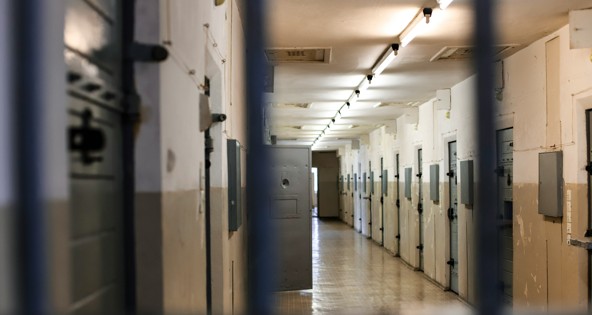
With prisons filled to 98 percent capacity, emergency early release schemes are sparking fierce public backlash, overwhelming probation officers, and threatening to fracture the UK’s criminal justice system.
How does a modern country reach a point where its high-security prisons operate like overbooked hotels, leaving officials one sudden riot away from complete institutional collapse? That harrowing question confronted Debbie Adlam when she learned about sweeping early-release measures across England and Wales. Her son, PC Andrew Harper, was dragged to his death behind a vehicle in 2019 while trying to stop a theft. The young men convicted of his manslaughter received 13-year prison sentences. Under newly enacted emergency rules, they stood eligible for release after completing a mere fraction of that time. Adlam described feeling physically ill at the prospect, sparking a public outcry that forced political leaders into a sudden policy retreat.
Yet, Adlam’s pain reflects just one side of a deep structural crisis. Behind the high walls of Victorian-era penitentiaries, the system tasked with maintaining public safety is operating near complete failure. Facilities routinely hover between 97 and 98 per cent capacity, pushing staff to their limits and turning daily management into an exercise in crisis containment.
Operating standard systems at maximum heat
Pia Sinha, a former prison governor who currently leads the UK-based Prison Reform Trust, compares running the network at near-total capacity to facing an impending health epidemic without a single spare hospital bed. When every cell is occupied, the entire criminal justice pipeline becomes unstable, leaving zero margin for administrative or operational error.
This lack of room creates immediate safety hazards for staff and inmates alike. Overcrowding forces staff to rush through risk evaluations, sometimes transferring high-risk individuals into lower-security facilities ill-equipped to handle them. Mistakes have multiplied rapidly under these conditions; between April 2024 and March 2025, authorities released 262 prisoners in error across England and Wales, marking a 128 per cent surge from the previous year and the highest figure on record.
For those locked inside, daily life has reduced to prolonged confinement in cramped cells. Access to constructive rehabilitation programs has evaporated, leading to increased drug use and escalating violence directed at staff. During her tenure managing HMP Liverpool between 2017 and 2020, Sinha temporarily reduced inmate numbers to renovate crumbling wings. Today, such structural upgrades are nearly impossible because of the scarcity of empty cells to transfer people into.
The political trap of longer sentences
How did a modern judicial system reach such a dire impasse? According to data from the Institute for Government, the prison population across England and Wales has doubled over the past 30 years, despite overall crime rates falling over the last decade.
This dramatic growth stems largely from political decisions rather than rising crime. Over the past quarter-century, successive governments engaged in what criminologists term “penal populism,” passing legislation that mandated significantly longer custodial terms. Guidelines show that the average minimum term for murder escalated from 13 years in 2000 to 21 years in 2021. For general offences, average prison stays lengthened from 13 months in 2005 to 21 months by 2023.
While sentences grew longer, investment in physical infrastructure lagged. Between 2010 and 2024, post-financial crisis spending cuts resulted in the creation of only 500 net prison places. Subsequent court delays during the pandemic compounded the backlog, forcing thousands of unsentenced individuals to wait extended periods on remand.
Shifting pressure to a breaking frontline
To create immediate space and prevent total system paralysis by November, political leaders instituted emergency reforms to release standard-sentence prisoners earlier than originally scheduled. Depending on the offence category, certain adult convicts became eligible for parole after serving one-third or one-half of their court-mandated terms.
Following fierce public resistance, Prime Minister Andy Burnham adjusted the policy to exclude individuals convicted of manslaughter, dangerous driving causing death, and historic child sexual offences. However, shifting people out of physical cells does not dissolve the state’s responsibility – it merely transfers the burden directly onto probation officers tasked with monitoring released individuals in local communities.
Ian Lawrence, general secretary of the probation union NAPO, warns that the community supervision network faces total collapse under current workloads. Union members voted heavily in favour of strike action over pay and unsustainable demands, noting that staff sickness has hit record levels, with 60 per cent of absences attributed directly to workplace burnout. Overwhelmed officers, operating in an environment intolerant of mistakes, frequently recall released individuals back to custody at the slightest technical breach, returning them straight into the overcrowded cells they just vacated.
The human cost of compromised justice
For victims of crime, the chaotic policy shifts carry a profound psychological toll. Independent Victims’ Commissioner Claire Waxman reports that hearing news of an offender’s potential early release leaves many victims unable to work or navigate daily life.
More critically, systemic dysfunction is driving a sharp rise in victim attrition, where injured parties formally withdraw their support for ongoing prosecutions out of sheer exhaustion and disillusionment. When individuals lose faith that a conviction will yield meaningful accountability, the foundation of public trust in the rule of law begins to crumble.
As governments attempt to balance public safety against severe physical constraints, the crisis in England and Wales serves as an enduring case study in the dangers of short-term policy fixes. Building new facilities will require years of sustained investment, leaving authorities to manage a fragile network where every available space remains filled to capacity.