
FG Signs $1.3bn Deal To Restart Nigeria’s Only Integrated Steel Plant
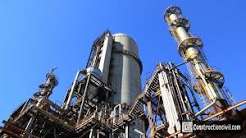
Nigeria’s long stalled ambition to produce steel from its own iron ore has moved closer to reality with the signing of a $1.3 billion agreement to restart integrated production at the Delta Steel Company in Ovwian-Aladja, Delta State, the country’s only integrated steel plant.
The Sub-lease and Operations Agreement was executed between the National Iron Ore Mining Company, Itakpe, and Premium Steel and Mines Limited, the plant’s current owner. Under the deal, PSML has committed more than $1.3 billion to iron ore exploration, plant rehabilitation and modernisation, with the target of restoring full capacity of one million tonnes of liquid steel a year. The company is expected to reactivate the integrated plant and begin commercial operations within 18 to 24 months, subject to a steady supply of iron ore.
The Minister of Steel Development, Prince Shuaibu Abubakar Audu, tied the agreement to President Bola Tinubu’s Renewed Hope Agenda, describing it as a move to restore local steelmaking, support downstream industries and create jobs. According to the ministry, the project is projected to generate about 5,000 direct and more than 20,000 indirect jobs, and to feed into the government’s target of 10 million tonnes of steel annually by 2030.
The distinction between rolling steel and making it matters here. The plant was inaugurated to roll billets into iron rods in 2018 under PSML, an Indian owned firm, but it has never run as a full integrated facility that smelts iron ore into liquid steel, and it slid back into inactivity around 2021. The new agreement is aimed squarely at that missing link, pairing the Aladja plant with domestic ore from NIOMCO and the planned development of the Ajabanoko deposits in Kogi State.
The plant carries a long and difficult history. The project dates to 1977, when the Federal Government contracted a German and Austrian consortium to build an integrated plant using direct reduction and electric arc furnace technology. Commissioned in 1982 with an installed capacity of one million tonnes of liquid steel, it operated at only about a quarter of that capacity before operational problems forced its shutdown.
In 2005 the government privatised the company to Global Infrastructure Holdings Limited. The Asset Management Corporation of Nigeria later took over the debt laden asset and sold it to PSML in 2015. For most of the two decades since privatisation, the 172 hectare complex has stood as a symbol of Nigeria’s stalled industrial ambitions rather than a working steel mill.
The financial stakes reach well beyond Delta State. The government has repeatedly put Nigeria’s annual steel import bill at about $4 billion, a persistent drain on scarce foreign exchange. The ministry has also noted that just four countries, Egypt, South Africa, Algeria and Morocco, account for roughly 88 per cent of Africa’s steel output, despite Nigeria’s abundant iron ore reserves. Restoring integrated production at Aladja is presented as part of a wider plan to create more than 500,000 direct and indirect jobs across the sector and contribute to the administration’s $1 trillion economy target.
The Delta agreement is one of several moves in 2026 to revive Nigeria’s dormant steel assets. The government has said it is close to a roughly $2 billion deal with a Chinese investor to revive the Ajaokuta Steel Company, established in 1979 but yet to produce commercial steel, and recently agreed a gas supply arrangement to power that complex. NIOMCO in Itakpe, the intended ore source for both Aladja and Ajaokuta, remains central to whether any of these plants can run sustainably.
Officials have been careful to frame the targets as conditional. The ministry stressed that the agreement must translate into actual mine development, plant rehabilitation, commercial production and lasting employment within the agreed timeframe. Reliable iron ore, dependable electricity and functioning rail and port logistics were listed as conditions for success, and the project is expected to lift freight along the Central Rail Line and traffic through the Delta Steel jetty.
What is confirmed is the signing of the agreement and the $1.3 billion commitment. The projected output, job figures and timelines remain targets rather than results, and Nigeria’s record of revival pledges at both Aladja and Ajaokuta gives reason for caution. Whether this deal finally delivers integrated steel production will depend on execution over the next two years.