
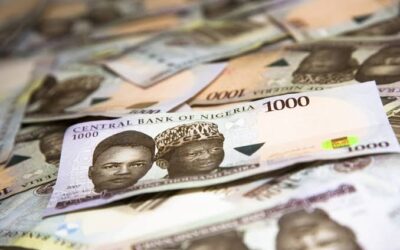
Naira Gains Ground as CBN Injects $252m Into FX Market
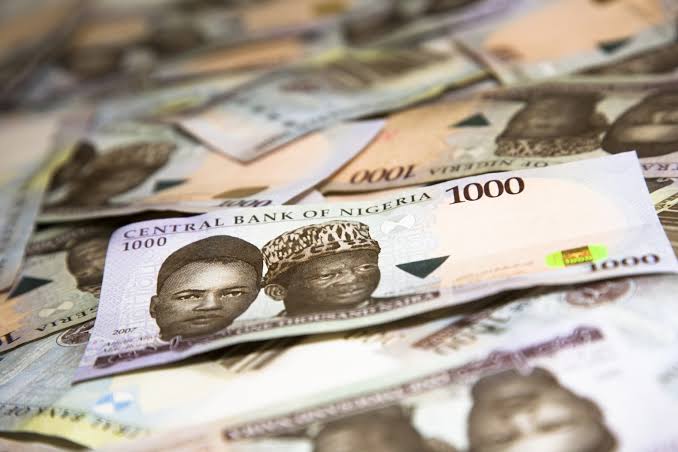
The naira has entered one of its calmest stretches since Nigeria floated the currency in 2023, holding within a narrow range against the dollar even as a gap between the official and parallel markets persists. The relative stability marks a sharp departure from the turbulence that followed the exchange rate reforms of the past two years, and it is being driven by a combination of record foreign reserves and fresh liquidity measures from the Central Bank of Nigeria.
In the latest sessions, the naira traded at about N1,405 per dollar in the parallel market, easing slightly from N1,400 earlier in the week. In the official Nigerian Foreign Exchange Market, NFEM, the currency firmed to around N1,347.5 per dollar. According to data from the CBN, the indicative rate improved from N1,351, a gain of N3.5, while the spread between the two markets stood at roughly N57.5 per dollar. That margin, though widening on the day, remains far narrower than the wide divergences recorded during earlier periods of stress.
The steadier tone follows a run of gains that pushed the naira to a five month high of N1,343.32 per dollar on 18 August 2026, its strongest level since 22 April. The recovery has been underpinned by Nigeria’s external reserves, which climbed to $52.19 billion as of 12 August, the highest in 17 years, according to CBN figures. That represents an increase of about 28 per cent from the $40.65 billion recorded in the same period of 2025. Stronger reserves give the apex bank greater room to supply the market and meet the country’s external obligations.
The CBN, under Governor Olayemi Cardoso, has also adjusted its rules to deepen market activity. The bank removed restrictions that had barred lenders active in the NFEM and in government securities auctions from tapping its Standing Lending Facility, allowing banks to trade foreign exchange and buy government paper without losing access to liquidity support. Alongside the reform, the CBN injected $252.1 million into the official market in mid August. Turnover responded sharply, with NFEM volumes jumping more than 228 per cent to $607.47 million on one trading day, up from $184.99 million the previous session.
To appreciate why the current calm matters, it helps to recall how far the naira has fallen. When the Tinubu administration unified the exchange rate windows and allowed the currency to float in June 2023, the rate moved from around N460 to the dollar to more than N1,600 by early 2024, a devaluation of about 225 per cent within a year. The naira lost roughly 41 per cent of its value in 2024 and was ranked among the world’s worst performing currencies. As recently as mid August 2025, the dollar exchanged for about N1,530 in the official market, meaning the naira is stronger today than it was a year ago.
Monetary policy has played a central role. The CBN raised its benchmark rate to 27.5 per cent, one of the highest in Africa, to draw foreign portfolio flows and slow the currency’s slide. The tighter stance, combined with recovering oil earnings and steadier reserves, has helped contain price pressures. Inflation eased to 15.43 per cent in July 2026, the lowest since March, down from 15.91 per cent in June, with the National Bureau of Statistics linking the moderation partly to a more stable naira. Food inflation, however, remains stubborn, quickening to 20.31 per cent, a reminder that lower headline figures have yet to translate into relief at the market.
The persistent premium in the parallel market reflects retail demand that the official window does not fully absorb, including cash needs for travel and small importers. To ease some of that pressure, the CBN revised its rules on Personal Travel Allowance and Business Travel Allowance from 1 June 2026, allowing travellers to receive a quarter of their allowances in cash and the rest electronically.
Analysts caution that the gains are not guaranteed. The naira slipped by N7.09 to N1,350.41 per dollar on 19 August, showing that day to day volatility has not disappeared. They say the currency’s near term direction will depend on oil revenues, diaspora remittances, portfolio inflows and the CBN’s liquidity management. The Proshare Economic Outlook for 2026 projected that inflation could fall to the upper single digits during the year, but only if the naira appreciates steadily and reforms hold. With 2026 a pre election year, the durability of those reforms is likely to face its stiffest test yet.
For now, the currency’s stability offers a measure of predictability that businesses and households had long sought, even if the cost of living remains high.