
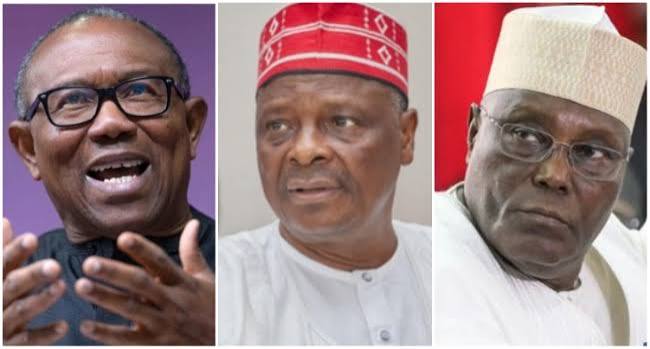
The most prominent figures in Nigeria’s opposition were absent when six parties gathered in Abuja to begin building the united front they say is needed to unseat President Bola Tinubu in the 2027 general elections. The empty chairs revived the oldest question in the country’s opposition politics: whether its leaders can place a common cause above personal ambition.
The Summit of Nigeria’s Opposition Political Parties held on Monday, 31 August 2026, at the Shehu Musa Yar’Adua Centre in Abuja, convened by the pressure group G100 in collaboration with the Minority Caucus of the House of Representatives. It brought together representatives of the African Democratic Congress (ADC), the Allied Peoples Movement (APM), the Nigeria Democratic Congress (NDC), the Peoples Democratic Party (PDP), the Peoples Redemption Party (PRP) and the Social Democratic Party (SDP).
Notably missing were the ADC presidential candidate, Atiku Abubakar; the NDC’s Peter Obi and Rabiu Kwankwaso; Oyo State Governor Seyi Makinde; and former Transportation Minister Rotimi Amaechi. Those present included the SDP candidate, Adewole Adebayo, the PRP’s Donald Duke, former Niger State governor Babangida Aliyu, and the APM vice-presidential candidate, Lawal Musa Daura.
The ADC moved quickly to downplay the significance of its candidate’s absence. Speaking on a national television programme on Tuesday, the party’s spokesman, Bolaji Abdullahi, said the gathering was designed for conversation between parties rather than among candidates. “It’s not consequential that Alhaji Atiku Abubakar was not present. I was there. The party was highly represented. We had like four vice chairmen there,” he said. A separate statement from the Atiku camp described the absence as unavoidable and insisted it should not be read as a boycott, adding that the former vice president remained committed to building a credible opposition.
Organisers were careful to manage expectations. According to opening remarks delivered on behalf of the G100 by Salihu Lukman, a former national vice chairman of the ruling All Progressives Congress (APC), the summit was not called to settle who would fly the opposition’s presidential ticket. Instead it proposed a Government of National Competence, anchored on a single four-year transition term and a National Reset Programme, to be secured by what the group called an enforceable transition charter binding participating parties to the agreement.
The framework provides for three standing bodies: a central leadership committee, a publicity and communication committee, and a legal committee. Five working groups, each with one representative per party, are to produce proposals within four weeks on a national covenant for democratic renewal, a single-term transition charter, a national reform programme, a framework for opposition unity, and a roadmap to a common presidential candidate. These are to be tabled at a second summit for adoption. The G100 said it would act only as a facilitator and observer, backing no candidate or party.
The urgency behind the exercise lies in the numbers of the last contest. According to results declared by the Independent National Electoral Commission, Tinubu won the 2023 presidential election with 8,794,726 votes. Atiku, then of the PDP, polled 6,984,520, Obi of the Labour Party secured 6,101,533, and Kwankwaso of the New Nigeria Peoples Party took 1,496,687. The three main challengers together drew more than 14.5 million votes, well above the winner’s tally, but split them among competing platforms.
Lukman put the point bluntly. He said the opposition secured about 13 million votes in 2023 against fewer than nine million for the winner, yet lost because those votes were divided. “Nobody stole 13 million votes. We divided them ourselves, openly and fully aware of the consequences,” he said.
The precedent the organisers hold up is the APC itself, formed in 2013 from a merger of several parties that ended the PDP’s 16-year hold on power in 2015. Replicating that feat has so far eluded Tinubu’s opponents.
The current effort is the latest in a series of attempts that have struggled to hold. The ADC was adopted in July 2025 as the platform for a broad opposition coalition that drew in Atiku, Obi, Kwankwaso, Amaechi and others. Within months the alliance frayed. Obi and Kwankwaso left the ADC around May 2026, citing internal disputes and litigation, and moved to the NDC. The realignment left the ADC narrower in reach and scattered the opposition’s most recognisable names across rival parties, the very fragmentation the Abuja summit now seeks to reverse.
Doubts persist even among participants. The SDP’s national secretary, Olu Agunloye, said the party supported cooperation but questioned how such an alliance would function in practice. Duke, for his part, indicated willingness to step aside for a jointly agreed candidate, arguing that the egos of political leaders had repeatedly obstructed unity.
What is confirmed is that six parties have agreed to a structured process and a four-week timeline leading to a second summit. What remains unresolved is the hardest question of all, namely who steps down for whom, and whether figures such as Atiku, Obi and Kwankwaso, now on separate platforms, will submit to a single ticket.
The stakes are measurable. A projection by the Political Intelligence Group suggested that Tinubu would carry 20 states were the election held today, though such forecasts are estimates rather than outcomes and can shift well before 2027. For now, the opposition has a framework and a deadline. Whether it can convert them into the discipline that eluded it in 2023 will not be known until its leaders, absent in Abuja this week, choose to sit at the same table.