
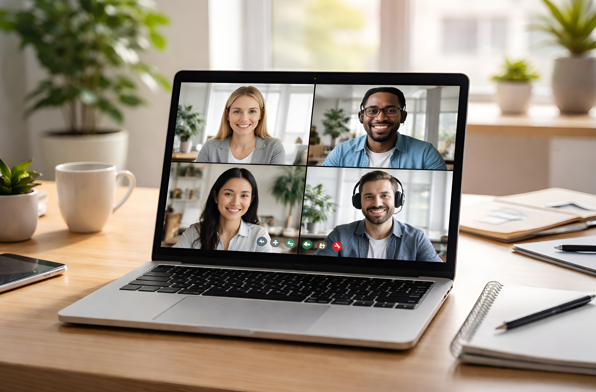
For generations of Nigerian workers, getting ready for work meant preparing to leave home. There was the commute, the traffic, the cost of transportation and the familiar transition from home life to office life. Remote work has disrupted that routine. For workers whose jobs can be performed online, the journey to work can now begin and end at the same desk. But working remotely in Nigeria is not simply a story about freedom from traffic.
It is also a story about electricity, internet access, productivity, supervision, career development and the changing expectations between employers and employees. The office may have disappeared from the physical routine. The work has not.
The workplace has moved
The growth of remote and hybrid work has changed the workplace. A laptop and an internet connection can allow some professionals to participate in meetings, complete assignments, communicate with colleagues and serve clients without being physically present in the same building. For Nigerian professionals, that can open opportunities beyond the geographical limits of the traditional office. A worker in Lagos can work for a company based elsewhere. A company can recruit talent without requiring every employee to live close to its office. For businesses, this can expand the pool of people they can consider when recruiting.
For workers, it can create access to opportunities that might previously have been difficult to reach. That possibility is particularly significant as African professionals increasingly participate in cross-border digital work. A 2025 report by Rayda, based on surveys of 1,000 remote professionals and 67 employers across six African countries, including Nigeria, examined remote hiring, skills, salaries and employer attitudes towards African talent.
The trend suggests that remote work is not only about where employees sit. It is also about where employers can find talent.
The commute disappears — but the costs do not
One of the most obvious advantages of remote work is the disappearance of the daily commute. For a Nigerian worker who previously travelled a considerable distance to an office, working from home can mean less spending on transportation. It can also reduce the time spent moving between home and work. That creates a different daily rhythm. Instead of preparing for a long journey, the worker can begin the working day from home. For some people, that means more time with family. For others, it means more time for rest, exercise, learning or additional work. But remote work does not eliminate costs. It can shift them.
The employee may now need reliable internet, electricity, backup power, a suitable laptop and a quiet place to work. A company that saves money by reducing office space may also have to consider whether employees have the tools they need to perform effectively outside the office.
Nigeria’s electricity problem follows workers home
The idea of working from home can sound straightforward until the electricity supply becomes unreliable. A physical office may have generators, inverters or other backup systems. An employee working from home may have to provide those arrangements personally. The same applies to internet access. A virtual meeting does not care whether the worker is at home. It still requires a stable connection.
A dropped call, weak network or dead laptop battery can interrupt work in ways that have nothing to do with an employee’s willingness or ability to perform. This makes remote work in Nigeria different from simply copying a foreign work-from-home model. The infrastructure surrounding the worker matters.
The question of productivity
One of the biggest debates surrounding remote work is productivity. Supporters argue that employees can work effectively without being physically present. Critics worry about supervision, collaboration and accountability. The answer is rarely as simple as “remote workers are more productive” or “office workers are more productive”. It depends on the job, the employee, the manager, the technology available, and how performance is measured.
A role that requires independent digital work may be easier to perform remotely than one that depends on physical equipment or face-to-face interaction. That distinction matters for employers considering remote or hybrid arrangements. The question should not simply be whether employees are sitting in an office. It should be whether the organisation has a clear way to measure the work employees are expected to deliver.
From attendance to outcomes
Traditional office culture often places visible emphasis on attendance. An employee arrives at a particular time. They remain in the office for a specified number of hours. They leave at the end of the working day. Remote work makes that model harder to rely on. When employees are not physically visible, managers have to focus more deliberately on outputs. Was the assignment completed? Was the deadline met? Was the customer served? Was the report accurate? Did the project move forward?
This can encourage organisations to think more carefully about performance management. It can also expose weaknesses in workplaces where productivity has traditionally been measured primarily through physical presence.
The new boundary problem
Remote work can remove one boundary while creating another. The office used to provide a physical separation between professional and personal life. Once the office becomes a room in the home, that separation becomes less obvious. A laptop can remain open after working hours. A message can arrive late at night. A virtual meeting can interrupt a personal commitment. The worker may technically be at home but still feel permanently connected to work. That makes boundaries important.
Remote work can offer flexibility, but flexibility without clear expectations can become constant availability. Employees need to know when the working day ends. Managers need to respect those boundaries.
Not every worker gets the same opportunity
Remote work also has a limitation that is sometimes overlooked. Not every job can be performed remotely. A nurse cannot treat a patient from home. A construction worker cannot build remotely. A factory worker cannot operate machinery through a laptop. A restaurant worker cannot serve customers from a bedroom. Remote work is therefore concentrated in occupations that can be digitised.
Even among those occupations, not every employee has equal access to the necessary equipment and infrastructure. A professional with reliable electricity, fast internet and a dedicated workspace begins from a different position than someone sharing one room with several family members and relying on unstable connectivity. The flexibility of remote work therefore depends partly on resources.
Hybrid work may be the middle ground
For organisations not ready to abandon physical offices, hybrid work offers another possibility. Employees spend part of the week working remotely and part of the week in the office. This model can preserve face-to-face interaction while reducing the number of days employees need to commute.
Recent workplace research also suggests that hybrid arrangements remain more common than fully remote models in many organisations. One 2025/26 workplace survey reported that 82 per cent of participating businesses operated a hybrid model, compared with 17 per cent requiring employees to be fully office-based and 1 per cent offering fully remote work.
The figures come from a private-sector survey rather than a Nigerian government labour statistic, so they should not be treated as representative of all Nigerian employers. They nevertheless illustrate a broader workplace shift: flexibility does not necessarily mean the complete disappearance of the office.
What young workers want
The changing workplace also raises a question about expectations. Younger professionals entering the labour market have seen that some jobs can be performed without daily physical attendance. That can influence what they consider an attractive employer. Salary remains important. But flexibility, commute time, work-life balance and the possibility of working from different locations can also influence employment decisions.
For employers, this creates a recruitment consideration. A company that insists on full-time office attendance is competing with organisations offering hybrid or remote arrangements for workers who value flexibility. The issue is therefore no longer simply technological. It is becoming part of the competition for talent.
The office is not dead
It would be easy to interpret the rise of remote work as the end of the traditional office. The evidence does not support such a simple conclusion. Offices still provide spaces for collaboration, training, supervision, relationship-building and activities that cannot easily be reproduced online. Some workers also prefer the structure of an office. Others find it easier to concentrate when home and work are physically separated. The more likely future is therefore not one universal model.
It is a workplace in which different organisations — and sometimes different teams within the same organisation — use different arrangements.
A different idea of work
The most significant change brought by remote work may not be the disappearance of the commute. It may be the change in what people think a workplace is supposed to be. For decades, employment was strongly associated with a physical location. You went to work. Now, for some professionals, work is something they do rather than somewhere they go. That distinction has implications for employers, workers and the infrastructure supporting both. Reliable electricity matters. Internet access matters. Digital skills matter. Clear management matters. So do trust and measurable performance. Remote work has not removed the challenges of working in Nigeria.
It has simply moved some of them into a different environment. The office may be several kilometres away — or it may be the room next door. Either way, the central question remains unchanged: Can the worker get the job done? Increasingly, employers and employees are learning that the answer may have less to do with where the work happens and more to do with how effectively it is organised.