

You check the label. You check the expiry date. You look at the packaging and, if the price is reasonable, you buy it. But what if the product is not what the label says it is? For Nigerian consumers, that is becoming an increasingly difficult question.
From food and cooking oil to toothpaste, cosmetics and medicines, concerns over counterfeit, adulterated, unregistered and substandard products continue to surface. The problem is not simply that fake products exist; it is that some can be difficult for an ordinary consumer to identify. And unlike a laboratory or regulatory agency, the average shopper has very few ways of knowing what is inside a product before buying it.
It Is Not Always Obvious
Food fraud is broader than simply producing a fake version of a popular brand. Researchers describe it as the deliberate substitution, addition, tampering or misrepresentation of food or its packaging, usually for economic gain. It can include dilution, substitution with cheaper ingredients, mislabelling, repackaging of expired products and other forms of deception.
A study of 2,160 Nigerian consumers found that food fraud was already a familiar concern to many respondents, even though more than a third were unfamiliar with the specific term “food fraud”. Participants reported awareness of issues involving counterfeit dairy products, cooking-oil adulteration, rebagged rice, honey, alcoholic drinks and other foods. Rice and palm oil were among the products most frequently mentioned by respondents as being affected by food fraud.
That means the concern is not limited to one particular market or one type of food. It can appear in products people buy regularly.
When Packaging Cannot Tell the Whole Story
Packaging is often the first thing consumers use to establish whether a product is genuine. A familiar name gives confidence. A professional-looking label gives confidence. A sealed container gives confidence. But counterfeiters know this too. In April 2026, NAFDAC warned Nigerians about suspected counterfeit and unregistered toothpaste products found in Kaduna State. The products carried labels including “Coglaet ActivGel 100g” and “Coglaet Herbal 100g” and were reportedly being presented as products associated with the Colgate brand. NAFDAC said the products were neither registered nor approved.
The incident demonstrates why consumers cannot always rely on appearance. A product may look sufficiently convincing to pass a quick inspection while still raising serious questions about its authenticity and regulatory status.
Food Is Even More Complicated
There is a difference between a counterfeit product and a food product that has been adulterated. With food, the problem may not involve copying a major brand at all. A product may contain a substance that should not be there. It may have been diluted, substituted or improperly labelled.
The Nigerian consumer study found that 98 per cent of the food-fraud incidents reported by respondents involved adulteration, while 2 per cent involved mislabelling. The researchers also found that 56 per cent of the foods mentioned were raw products and 44 per cent were processed foods. Among the concerns identified by respondents was the adulteration or counterfeiting of cooking oils, including the addition of colour dye to palm oil.
This does not mean every unusual colour or appearance is evidence of adulteration. It does, however, show that consumers have legitimate reasons to be concerned about the authenticity of some products entering the food supply chain.
The Consumer Cannot Test Everything
This is where the problem becomes particularly difficult. A shopper can inspect a package, but cannot test its chemical composition in a market. A parent can check the expiry date on a yoghurt container, but cannot independently establish whether its contents have been substituted.
Someone buying cooking oil can examine the bottle but cannot determine, by sight alone, whether the product has been diluted or adulterated. The responsibility for ensuring product safety therefore cannot reasonably fall entirely on consumers. Regulators and manufacturers have a much greater role to play in making sure products entering the market meet required standards.
NAFDAC’s Role
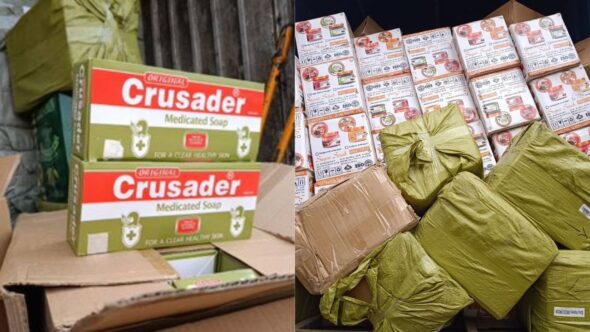
NAFDAC is responsible for regulating products including food, drugs, cosmetics and other regulated goods in Nigeria. The agency conducts inspections, product registration and market surveillance, and it can act against products considered counterfeit, unregistered or otherwise unsafe. It also provides a system through which consumers can verify registered food products using their NAFDAC numbers. But public awareness remains important.
The Nigerian consumer study found that about 74 per cent of respondents disagreed with or were neutral about the statement that government was doing enough to create awareness about counterfeit, adulterated or mislabelled food. More than 60 per cent also disagreed with or were neutral about whether reporting suspected food fraud to regulatory agencies was easy. These findings point to a gap between regulation and the consumer’s experience. It is one thing for an agency to have the power to act. It is another for an ordinary shopper to know what to look for, where to verify a product and how to report a suspicious one.
Does a NAFDAC Number Guarantee Everything?
Not necessarily. A NAFDAC registration number is an important regulatory indicator, and the agency provides an online platform for consumers to verify product registration.
But consumers should still pay attention to other details. Check the product name and packaging carefully. Look at the expiry date and batch information. Be cautious of damaged packaging or products from questionable sources. And if something appears suspicious, do not simply assume that someone else will deal with it. NAFDAC has a reporting system for suspected substandard, falsified and unregistered products, allowing consumers to provide details and supporting evidence.
Cheap Does Not Always Mean Fake
There is also a danger in oversimplifying the issue. A product being cheaper than another does not automatically make it counterfeit. Nigeria’s economic difficulties have pushed many consumers towards cheaper alternatives, discounts and unfamiliar brands. A lower price can have legitimate explanations.
At the same time, economic pressure can make consumers more vulnerable to sellers offering suspicious products at attractive prices. That is why price should be treated as a reason to ask questions, not proof that a product is fake.
The Bigger Problem Is Trust
Ultimately, the issue goes beyond food, toothpaste or cooking oil. It is about trust. Consumers need to trust that the product they pay for is the product described on the package. Manufacturers need confidence that counterfeiters will not undermine their brands. Retailers need reliable supply chains. Regulators need the resources and public cooperation required to detect and remove unsafe products.
The burden cannot rest entirely on the person standing in the shop trying to decide what to buy. An ordinary Nigerian should not need specialist knowledge to determine whether everyday food or household products are legitimate. Consumers can be more careful. They can verify where possible, check labels and report suspicious products.
But the stronger protection must come from the systems behind the shelf. Because when a shopper picks up a bottle of oil, a packet of yoghurt or a tube of toothpaste, the basic expectation should be simple:
What Is Written On The Label Should Be What Is Inside The Package.