
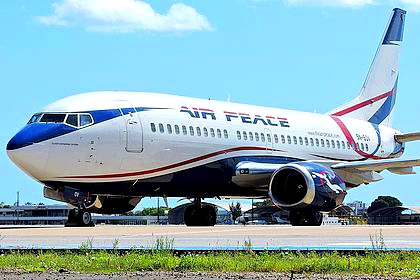
For millions of Nigerian air travellers accustomed to the volatile rhythm of domestic aviation, the threat of grounded flights is rarely just an administrative inconvenience. It is an immediate disruption to business schedules, family reunions, medical emergencies, and interstate commerce. On Friday, the nation’s air transport grid stood on the edge of another major turbulence before high-level security diplomacy forced a step back from the brink.
The immediate crisis centred on Air Peace, the nation’s largest domestic carrier, which was facing a renewed industrial shutdown threatened by aviation workers under the banner of the Air Transport Services Senior Staff Association of Nigeria (ATSSSAN). With memory still fresh of a previous operational standstill that threw airports across the country into chaos, the prospect of a repeated confrontation had sent anxiety rippling through Nigeria’s commercial travel ecosystem.
That paralysis was narrowly avoided following an emergency intervention led by the Inspector-General of Police, Olatunji Disu. In an impromptu security and peace dialogue held in Abuja, police authorities succeeded in persuading union executives to hold off on their planned industrial action, creating crucial breathing room for mediation in an increasingly bitter corporate conflict.
The Anatomy of a Dispute
To understand the tension that brought the country’s leading airline back into the crosshairs of organised labour, one must look back to the disruptive events of August 11, 2026. On that morning, unionised workers executed a swift picketing operation against Air Peace, abruptly halting terminal activity and stranding thousands of passengers across key airport hubs nationwide.
While government regulatory intervention eventually brought that initial standoff to a temporary halt, the fundamental grievances between the airline’s management and union leadership remained unresolved. Instead of dissipating, the friction migrated into the legal and law enforcement arenas, escalating into a high-stakes standoff.
Following the August disruption, legal counsel representing Air Peace submitted a formal petition to the police leadership. The complaint alleged operational sabotage and unlawful obstruction, prompting federal law enforcement to initiate an official investigation into the union’s actions and the circumstances surrounding the flight groundings.
Confronted with the prospect of criminal investigations and legal counter-actions targeting their leadership, ATSSSAN executives prepared to mobilise another industrial shutdown. The impending conflict threatened to paralyse domestic flight schedules once more, raising major security concerns and sparking fears of widespread economic disruption across the civil aviation network.
Police Diplomacy at High Altitude
Recognising that a full-scale aviation strike would ripple rapidly across Nigeria’s fragile economy, the Inspector-General of Police convened a direct dialogue with the union’s top brass in Abuja. The strategy was straightforward: convince the union to stand down its strike directive in exchange for an inclusive, transparent, and balanced investigative process into the petitions filed by Air Peace. Confirming the resolution in an official dispatch, ATSSSAN General Secretary Frances Akinjole disclosed that union leaders presented their account of the August 11 picketing directly to top police officers, outlining the rationale behind their industrial strategy.
“While there, we stated our version of the occurrence of August 11 from our own perspective,” Akinjole noted, adding that high-ranking police officers urged both sides to preserve civil order and refrain from measures that could disrupt national transport safety while official inquiries continue. According to the union secretary, police authorities gave formal assurances that their investigation would not be one-sided or punitive. Federal investigators pledged to conduct identical fact-finding sessions with all key stakeholders mentioned in the airline’s legal filings.
“The police promised to have similar interactions with every other person/organisation that has things to say about the contents of the petition from the Air Peace lawyer, including Air Peace itself,” Akinjole stated, confirming the temporary suspension of the strike action.
Fragile Equilibrium in the Skies
While the suspension of industrial action offers immediate relief to passengers and airport operators, industry observers emphasise that the truce remains delicate. The core dispute reflects broader, systemic tensions that have long plagued Nigeria’s commercial aviation landscape—a sector caught between high operating costs, complex regulatory pressures, and intensifying disputes over labour rights, worker compensation, and union representation.
When major carriers suffer operational paralysis, the consequences reach far beyond airport terminals. Supply chains buckle, inter-city commerce slows, and confidence in the domestic transit grid suffers. By stepping into a dispute that typically falls within the domain of labour conciliation and civil aviation regulators, the Nigeria Police Force has highlighted the extent to which major aviation disputes are now viewed through the lens of critical national security and economic stability.
For now, the country’s domestic flight corridors remain open. Aircraft are taking off, schedules are holding, and passengers are moving across terminals without disruption. Yet, as police investigators prepare to question airline executives and examine the petition’s merits, the aviation sector remains in a state of watchful waiting.
Whether this police-brokered reprieve matures into a lasting settlement or merely postpones another showdown depends on how effectively both parties navigate the coming investigative dialogues—and whether a permanent middle ground can finally be established between labour demands and corporate survival.