
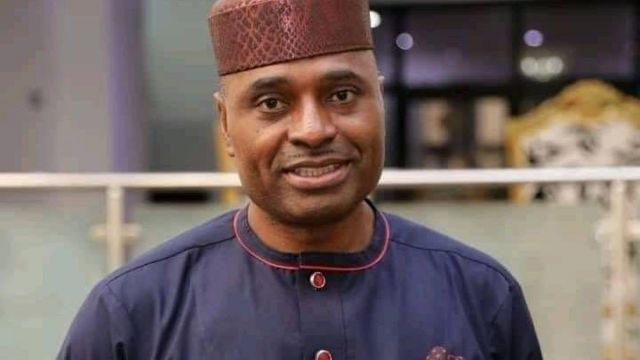
Kenneth Okonkwo, spokesperson for the Atiku Abubakar presidential campaign, has argued that a broad opposition coalition remains the only realistic path to defeating President Bola Tinubu in the 2027 presidential election.
Speaking in an interview with Ibeju Upgrade Media on Thursday, Okonkwo dismissed the prospects of Peter Obi, the presidential candidate of the Nigeria Democratic Congress (NDC), unseating the incumbent without a wider alliance. He said attempts by opposition parties to forge a united front in 2025 had failed after major contenders, including Atiku and Obi, emerged as candidates of separate platforms.
“Coalition is the only way out. So you don’t come down with a man who has told you from the beginning that power is not taken à la carte; you fight for it, you grab it, you snatch it, you run away with it,” Okonkwo said, referring to Tinubu’s well-known description of power politics.
He added: “So, if Peter Obi goes against Tinubu alone, Tinubu will eat him like biscuits. Will Kano people accept Peter Obi? In 2023, when we had the opportunity, they did not accept him. In 2027, they will not accept him. Kwankwaso has nothing to contribute to the ticket. Even in Kano, Kwankwaso has lost.”
Obi is the NDC presidential candidate, with former Kano State governor Rabiu Musa Kwankwaso as his running mate.
The comments come against the background of the 2023 presidential election results declared by the Independent National Electoral Commission. Tinubu of the All Progressives Congress secured 8,794,726 votes (36.61 per cent). Atiku Abubakar of the Peoples Democratic Party polled 6,984,520 votes (29.07 per cent). Obi, then of the Labour Party, received 6,101,533 votes (25.39 per cent), while Kwankwaso of the New Nigeria Peoples Party obtained 1,496,687 votes (6.23 per cent).
Tinubu, Atiku and Obi each won 12 states (including the Federal Capital Territory for Obi), while Kwankwaso took only Kano State. In Kano, Kwankwaso secured a clear majority, but Obi’s performance there was limited. Across much of the North, Obi’s vote share remained low compared with his strong showing in the South-East, South-South and parts of the North-Central.
Opposition efforts to consolidate ahead of 2027 have been marked by shifting alliances. Atiku is now the candidate of the African Democratic Congress. Obi and Kwankwaso moved to the NDC after earlier association with the ADC. A national opposition summit held in Abuja in late August 2026 was boycotted by several leading figures, including Atiku, Obi and Kwankwaso, underscoring the difficulties of building a single platform.
Okonkwo, a former spokesperson for Obi in 2023 who later aligned with Atiku, has repeatedly argued that a fragmented opposition would only strengthen the incumbent. He has previously described a vote for Obi in 2027 as effectively benefiting Tinubu by splitting the opposition vote.
The 2027 contest is still more than a year away. Voter registration continues, with INEC reporting millions of new registrants. Analysts note that turnout, regional voting patterns, economic conditions and the ability of parties to mobilise beyond their traditional strongholds will determine the final outcome. For now, the debate over coalition versus separate candidacies remains a central feature of opposition politics.