
Nigeria’s electoral management body has begun intensifying preparations for the 2027 General Election, with the Independent National Electoral Commission (INEC) focusing on improving internal coordination, strengthening state-level operations and addressing public confidence challenges ahead of the nationwide polls.
The commission’s latest measures include a review of administrative structures across the 36 states and the Federal Capital Territory (FCT), alongside efforts to assess readiness in areas such as logistics, technology, voter registration and staff coordination.
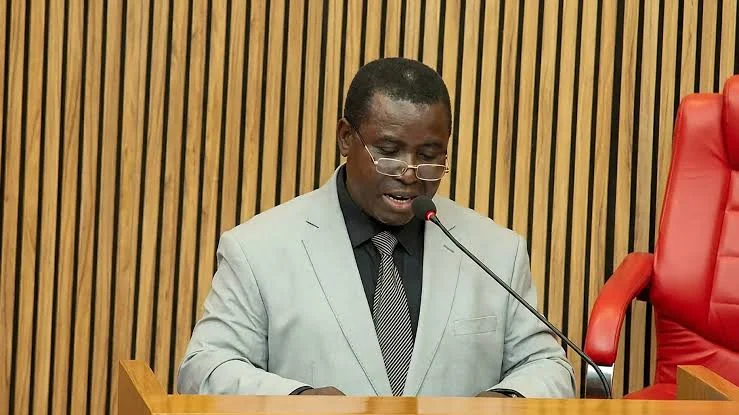
INEC Chairman, Prof. Joash Amupitan, announced the initiatives during a strategic operational workshop for the commission’s Administrative Secretaries in Lagos, where he directed officials responsible for state-level administration to improve coordination and adopt more consistent operational procedures.
The move reflects the increasing importance of election preparation beyond polling day activities. Electoral experts have often emphasised that successful elections depend not only on voting procedures but also on planning, logistics management, personnel deployment and institutional capacity.
Administrative Secretaries occupy a key position in INEC’s state offices, supporting the day-to-day administrative and operational functions required for election activities.
While Resident Electoral Commissioners (RECs) remain the institutional heads of INEC offices in the states, the commission has identified Administrative Secretaries as important links in maintaining operational continuity and ensuring that election plans are implemented effectively.
During the Lagos workshop, Amupitan said the commission needed uniform procedures across the country to reduce inconsistencies in election preparation and administration.
The workshop is part of INEC’s wider effort to evaluate its readiness ahead of the 2027 polls, including lessons from recent off-cycle elections.
The commission has said experiences from state elections are useful for improving logistics, technology deployment and administrative coordination, although nationwide elections present different challenges because of their larger scale.
As part of its preparation strategy, INEC is developing a system aimed at improving visibility into election readiness across states.
The proposed operational tracking framework is designed to provide information on activities such as logistics planning, personnel preparation and other election-related processes.
According to reports on the initiative, the system will connect state-level preparation information with INEC’s monitoring structures to allow the commission to identify potential challenges earlier.
The use of technology in election administration has become increasingly central in Nigeria’s electoral process, particularly after the introduction of systems such as the Bimodal Voter Accreditation System (BVAS) and electronic result management tools in recent elections.
However, technology alone remains only one part of election credibility, with administrative capacity, voter confidence and stakeholder behaviour also playing significant roles.
INEC has also provided updates on voter registration ahead of the next general election.
The commission said the Continuous Voter Registration (CVR) exercise conducted between 2025 and 2026 recorded 10,772,421 new registrants.
However, INEC stated that the figure remains subject to verification through its Automated Biometric Identification System (ABIS), which is designed to detect issues such as duplicate registrations.
The expansion of the voter register is expected to increase administrative responsibilities for the commission, including verification, voter education and election logistics planning.
Nigeria’s voter register stood at 93,469,008 registered voters for the 2023 General Election, according to INEC data.
Beyond operational planning, INEC has identified declining voter participation and information challenges as issues that require attention before 2027.
The commission has previously highlighted voter apathy, declining public trust and misinformation as factors capable of affecting electoral participation.
Official figures show that voter turnout in Nigeria’s presidential elections has declined over recent election cycles. INEC cited turnout levels of 53.7 per cent in 2011, 43.6 per cent in 2015, 34.7 per cent in 2019 and 26.7 per cent in 2023 during a consultation with political stakeholders.
The trend has become a major issue for election stakeholders, who continue to debate the causes of reduced participation, including public confidence, political engagement and citizens’ perception of democratic outcomes.
INEC has repeatedly stated that public trust depends heavily on the conduct of election officials and the effectiveness of electoral processes.
Amupitan has urged commission staff to maintain neutrality, professionalism and competence, arguing that election credibility is influenced by decisions made at every level of the organisation.
The commission is also planning measures aimed at improving the integrity of the voter register, including efforts to identify and address inaccurate records.
As preparations continue, the 2027 General Election is expected to test INEC’s ability to manage a large-scale electoral exercise while responding to longstanding concerns around logistics, voter participation, technology and public confidence.
The effectiveness of these preparations will ultimately be measured not only by policies announced ahead of the election but by how efficiently they are implemented across Nigeria’s polling units and communities.