
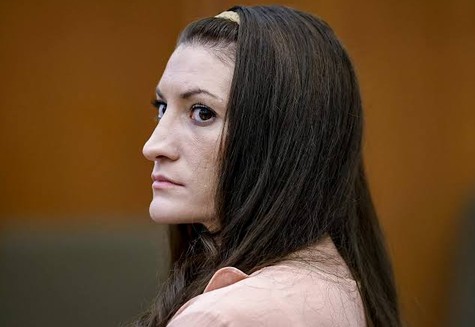
Examine the profound moral dilemma at the heart of the Lindsay Clancy mistrial, where the legal defence of postpartum psychosis collides with the absolute, unyielding right to life for innocent children.
When a high-profile criminal case unravels in an agonising courtroom deadlock, media narratives almost inevitably gravitate toward the living—their visible suffering, their psychological trauma, and the heavy emotional weight borne by the jurors tasked with deciding their legal fate. Following the dramatic mistrial in the Massachusetts triple-murder prosecution of Lindsay Clancy, public attention swiftly shifted to the internal rift among the panel: eleven jurors advocating for an acquittal by reason of insanity against a single holdout who refused to yield.
Yet, buried beneath the intense focus on courtroom drama, psychiatric debate, and jury room tears lies a fundamental moral question that sits at the very heart of human civilisation: Does the absolute right to life belong first and foremost to the most vulnerable among us?
In any society governed by the rule of law, the right to life is not a relative privilege to be weighed against extraordinary circumstances, mental distress, or systemic medical failures. It is an absolute, non-negotiable threshold. Three young children – Cora, Dawson, and Callan – had their fundamental, inviolable right to live violently stolen from them in the basement of their suburban home. While defence attorneys positioned the tragic events as the inescapable byproduct of a severe psychiatric breakdown brought on by postpartum psychosis, prosecutors maintained that a series of conscious, calculated choices led to their deaths.
The friction within the jury room underscores an ideological battle over how justice evaluates the value of innocent life. Under Massachusetts law, the prosecution bears the heavy legal burden of establishing beyond a reasonable doubt that a defendant possessed criminal responsibility at the precise moment of an offence. For eleven jurors, the state’s evidence fell short of proving full mental capacity beyond a reasonable doubt. They saw a mother stripped of her agency by an agonising mental illness, concluding that she could not comprehend right from wrong when the tragedy occurred.
However, the stance of the lone holdout – and the prosecutors who brought the charges – presents a stark, unyielding moral stance: that no diagnosis, medical history, or psychological defence can fully erase the ultimate accountability owed to children whose lives were violently cut short. To yield entirely to a defence of insanity without absolute, unassailable certainty is, in the eyes of strict legalists, to minimise the ultimate loss of human life.
This deep-seated legal friction highlights why criminal justice systems exist in the first place – not merely to extend compassion to the broken, but to act as an unbending sanctuary for the defenceless. When a mother checkmates the existence of her own infants, the law is forced into its most solemn role. It must insist that every human life possesses intrinsic worth that demands accountability at all odds, regardless of how painful, sympathetic, or complex the surrounding context may be.
As district attorneys weigh whether to initiate a secondary prosecution or negotiate an alternative resolution, the broader lesson extends far beyond a single American courtroom. A society’s moral health is ultimately judged by how fiercely it protects the right to life when tragedy strikes. Empathy for human suffering is a noble virtue, but it can never be permitted to obscure the foundational truth that the lives of the innocent must remain sacred, untouchable, and forever defended before the law.
The trial may have ended without a legal resolution, but the philosophical debate it sparked will echo far beyond the courthouse walls. As public commentary continues to debate the merits of mental health advocacy versus strict criminal responsibility, the core duty of the justice system remains unchanged: to uphold the sacredness of human life above all else. Without that unyielding commitment, the foundational guarantee of protection for the most helpless among us begins to erode.
In the end, justice cannot simply be measured by the emotional comfort of the living or the relief of a deadlocked panel. It must be measured by its fidelity to those who no longer have a voice to speak for themselves. The innocent dead demand nothing less than a legal system that refuses to compromise on the sanctity of life, no matter how complex the trial or how painful the path to truth may be.