
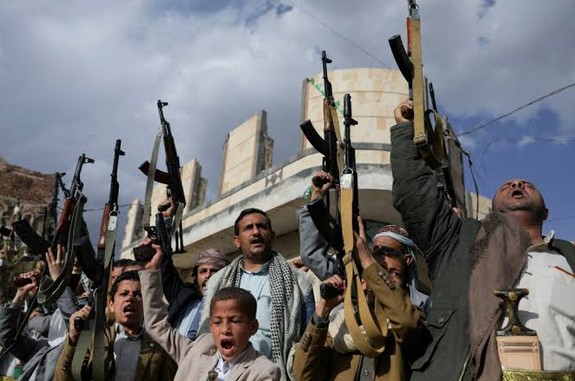
Yemen’s Houthi fighters seized the strategic Red Sea port of Mocha on Thursday, 10 September 2026, routing pro-government forces and driving combat lines directly toward the narrow mouth of the Bab al-Mandeb strait. The sudden fall of the coastal fortress strips the internationally recognised government of its main operating base on the western littoral. Defeated loyalist units, including the National Resistance and the Giants Brigades, retreated south toward Dhubab under relentless artillery and drone fire. The militia now stands less than fifty kilometres from the narrow nautical passage that links the Indian Ocean to the Mediterranean Sea. By capturing Mocha, the insurgent command secures high ground overlooking lanes that carry twelve per cent of all seaborne world trade. Western capitals thought their naval task forces had contained the rebel threat to open water. That assumption died in the dust of Mocha on Thursday morning. Coastal artillery now commands the sea lanes from solid earth.
The lightning advance completely shatters the fragile political settlement that held regional fighting in check since 2022. For four years, United Nations envoys pointed to the quiet southern front as proof that the Yemeni civil war had entered a peaceful phase. That diplomatic achievement collapsed within days as well-equipped rebel columns swept through government checkpoints across Taiz and Hodeidah provinces. The offensive coincided with fresh explosions reported near Sirik, Minab, and Qeshm Island along the southern coast of Iran, showing how quickly the regional war spreads. tareq saleh, vice-chairman of Yemen’s Presidential Leadership Council, confirmed that his men had to pull out to set up an alternative command centre in safer territory. Government forces took heavy casualties while trying to hold the coastal approaches against superior firepower. Diplomatic roadmaps look foolish when tank treads roll over broken trenches. Peace broke down because mediators confused tactical pauses with lasting reconciliation.
Control of the Red Sea coast hands the Houthis an effective pincer over international energy flows. With the Strait of Hormuz already shut by American naval blockades and Iranian missile salvos, the Bab al-Mandeb remained the last open maritime exit for Gulf crude. Houthi shore batteries and anti-ship missile trucks can now target commercial tankers from fixed positions on dry land. Closing both waterways at the same time would strangle nearly seven million barrels of daily oil shipments between Asia, Africa, and Europe. International maritime underwriters responded to the news by raising war-risk insurance premiums for commercial hulls to punitive rates. Shipmasters must now choose between sailing through missile range or routing their vessels around the Cape of Good Hope. Choosing the African detour adds twelve days to each voyage and inflates retail transport costs. A narrow strip of desert coastline now holds world commerce hostage.
The military push along the coast provides tactical cover for direct attacks against the Saudi homeland. Earlier in the week, rebel drone salvos wounded 73 civilians in Abha, Khamis Mushait, Jazan, and Najran, hitting oil refineries and airbases. Saudi jets retaliated by flying 54 bombing missions against insurgent depots across northern Yemen, but air strikes failed to halt the march on Mocha. Riyadh attempted to forestall the ground assault by sending stern diplomatic warnings to Tehran through Pakistani intermediaries. Iranian diplomats shrugged off the warnings, insisting that the armed group acts independently without operational orders from abroad. Yet intelligence records show that commanders from the Islamic Revolutionary Guard Corps arrived in Yemen days earlier to help plan the coastal sweep. Tehran uses its Yemeni partners to turn up the heat on Saudi borders while parrying American naval power. Proxy forces deliver great results for their distant backers.
The coastal defeat exposes the fatal divisions that hobble the Saudi-backed Presidential Leadership Council. The ruling council brings together rival southern separatists, northern tribal leaders, and religious militias who hate each other almost as much as they oppose the rebels. When Houthi shock troops assaulted the outskirts of Mocha, several allied units withheld their ammunition to preserve their own tactical positions. The coalition command in Riyadh spends millions of dollars on modern weapons, but it cannot buy mutual loyalty among its fractious ground commanders. Southern separatists care only about defending their historical borders around Aden, leaving coastal gateways vulnerable to surprise assaults. The rebel movement, by contrast, operates under a single command that moves with ideological fanaticism and sharp operational focus. Fractured coalitions always lose ground to unified opponents. Money cannot compensate for broken trust on the battlefield.
The shockwaves from the Red Sea crisis land heavily upon developing economies that depend on imported finished fuels. In Nigeria, where factory managers already grapple with diesel prices crossing N2,000 per litre, fresh maritime transport panics will drive retail pump prices higher. Rising global crude quotes do little to enrich the federal treasury when high transport fees devour the surplus. Local manufacturing plants consume vast amounts of fuel simply to keep production lines running in the absence of steady public electricity. Freight forwarders in Lagos warn that shipping container tariffs from Asian factories will jump within weeks to reflect longer voyage times around the African continent. African consumers pay the ultimate bill whenever missiles fly over Arabian sands. Energy supply shocks punish impoverished households first and hardest. Global logistics disruptions spare no domestic market.
The advance also threatens the stability of African states sitting directly opposite the Yemeni shoreline. Djibouti and Eritrea watch the fall of Mocha with rising alarm, knowing that coastal warfare inevitably spills across the water. Djibouti hosts military bases for the United States, France, and China, while serving as the primary commercial sea gate for landlocked Ethiopia. If Houthi gunners close the strait to commercial navigation, port revenues across the Horn of Africa will collapse overnight. Regional leaders know that American warships anchored off the African coast cannot protect commercial container ships from short-range shoreline rockets. The western edge of the waterway cannot isolate itself from the gunfire echoing across the eastern shore. Regional geography links African economic survival to the outcome of Yemeni ground battles. Foreign conflicts easily drag innocent neighbours into the fray.
The United States and its allies have run out of easy options to restore security to the waterway. Washington cannot spare additional surface warships from the Persian Gulf, where its navy remains locked in an exhausting standoff with Iranian coastal forces. Launching another large ground operation into western Yemen remains politically impossible for Western governments weary of foreign adventures. At the same time, leaving the Bab al-Mandeb under rebel control hands an enormous strategic asset to an aggressive ideological movement. The rebel victory at Mocha proves that air power alone cannot defend open waters from determined ground armies. Riyadh and Washington must either accept permanent rebel control over the maritime corridor or commit substantial ground forces to roll back the advance. Half-hearted containment policies have clearly failed. The world’s busiest maritime gate now answers to armed fighters on a windswept pier.