
Aliko Dangote has renewed his long running argument that Nigeria’s wealthiest citizens are pouring money into private jets and luxury while doing too little to build the factories that create jobs, tying the criticism directly to the productive capacity he says the country needs to escape its economic difficulties.
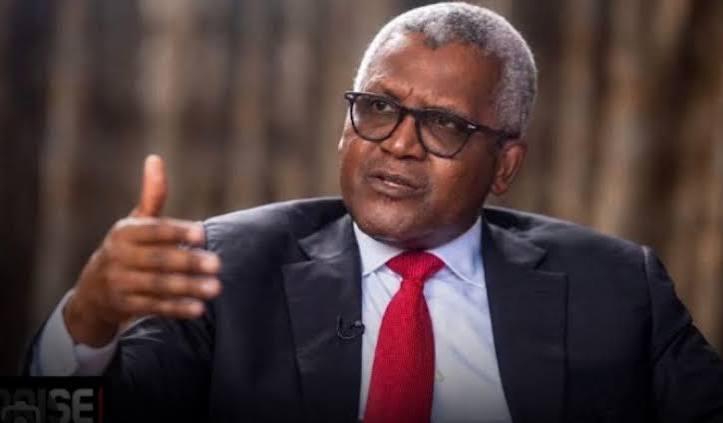
Africa’s richest man made the comments in a wide ranging interview with ARISE News, Tuesday, in which he spoke about his own attitude to wealth, foreign investor interest in the continent and what he described as his priority of industrialisation over personal possessions. “What I see is people now owning aircraft all over the place, flying all over, and they don’t have one single factory,” he said. “So it means that they’re not actually helping in growing the economy, and that has to change.”
The remarks came days after Dangote raised the same theme at the opening of the initial public offering for his refinery. Speaking on Monday at the offer’s launch, he recounted spending about half an hour searching for a parking space in Abuja before realising the area was crowded with private jets, and said he wished the space had been filled with factories instead. He disclosed that he bought his first private aircraft at about the age of 22, but said that after decades in business the accumulation of personal luxury no longer held much appeal, and that he was now comfortable flying commercial.
The timing is not incidental. Dangote Petroleum Refinery and Petrochemicals opened public subscription for its IPO on 14 September, offering 4.1 billion ordinary shares at N525 each in a bid to raise about N2.15 trillion, roughly 1.6 billion dollars, to fund an expansion of the plant from 700,000 barrels per day to 1.4 million. The company set a minimum subscription of 10 shares, or N5,250, a threshold Dangote said was chosen deliberately to allow ordinary Nigerians, including drivers, cooks and junior staff, to take a stake. The offer, which closes on 13 October, has been described by the Nigerian Exchange as one of the largest ever attempted on the continent, valuing the refinery at close to 50 billion dollars and, if listed, potentially lifting total quoted equity on the exchange past N200 trillion for the first time. His call for productive investment therefore doubles as an argument for the very asset class his own company is now selling.
Behind the rhetoric sits a structural weakness Dangote has pointed to for years. National Bureau of Statistics figures show manufacturing contributed 9.57 per cent to real gross domestic product in the first quarter of 2026, marginally below the 9.62 per cent recorded a year earlier but a recovery from 7.40 per cent in the final quarter of 2025. The sector grew 3.29 per cent year on year in the quarter, its strongest showing after several years in which quarterly growth stayed below 2 per cent. Even with that rebound, manufacturing’s share of output has been stuck in a narrow 8 to 9 per cent band for most of the past decade, a long way from the roughly 20 per cent it reached in the early 1990s. The Federal Government has set a target of raising manufacturing to 25 per cent of GDP within five years under a new industrial policy, an ambition that would require sustained private investment on a scale not seen in a generation.
The obstacles to that investment are well documented, and Dangote himself set them out plainly in the same round of interviews. He argued that it was very difficult to industrialise with interest rates around 30 per cent, a reference to the high cost of borrowing that has followed the Central Bank of Nigeria’s tightening cycle, with the monetary policy rate held at 26.50 per cent at the bank’s July meeting. He said the greater problem was the absence of policy stability to protect large scale investors, and predicted that no new refinery would be built in Nigeria over the next ten years unless that changed. Manufacturers have consistently cited high electricity costs, foreign exchange volatility, logistics bottlenecks, insecurity and multiple taxation as the barriers that keep capital away from production and channel it instead into trading, real estate and financial assets that carry lower risk.
Dangote’s comments should be read as one industrialist’s assessment rather than a settled account of how Nigerian wealth behaves. There is no publicly available official register of privately owned aircraft in the country against which the scale of the phenomenon can be measured, and his description of Abuja aprons crowded with jets is anecdotal. The broader claim, that too little private capital flows into manufacturing, is on firmer ground and is supported by the GDP data and by the government’s own diagnosis in setting its 25 per cent target. He also acknowledged the other side of the ledger, noting that foreign investors were increasingly interested in Africa but had lacked what he called big ticket opportunities to attract substantial sums, and suggesting that projects on the scale of his refinery could begin to change that.
For ordinary Nigerians, the argument matters because manufacturing is one of the few sectors capable of absorbing labour at scale in a country where youth unemployment and underemployment remain high and where the population is expanding rapidly. The sector was also the single largest contributor to value added tax in the first quarter of 2026, accounting for 29.75 per cent of collections, which underlines its weight in public revenue as well as employment. Whether Dangote’s appeal shifts the behaviour of the country’s wealthy, or whether his refinery offer succeeds in drawing a broad base of small shareholders into productive ownership, will be measurable in the months ahead, first in the take up of the IPO and later in the pace of new industrial investment. What is not in dispute is that the productive base he wants Nigerians to build remains, on the official numbers, a modest share of an economy he has repeatedly said cannot prosper without it.