
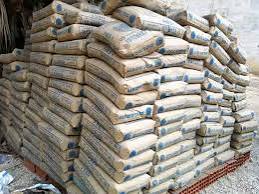
The soaring cost of cement has reopened one of Nigeria’s oldest housing debates, with built environment experts insisting that the country can no longer afford to treat imported and cement based construction as the only route to putting roofs over people’s heads.
A 50 kilogramme bag of cement now sells for as much as N15,000 in several markets, according to industry surveys, with prices in most cities ranging between N10,500 and N14,050 depending on brand, location and haulage. Specialised products such as waterproof cement have been quoted as high as N18,000 in Lagos. The Guardian reported in July 2026 that Nigerian cement retails at nearly double the African average, an outcome that industry watchers describe as difficult to justify given the scale of local production.
That paradox sits at the heart of the argument. Nigeria’s installed cement capacity is estimated at between 60 and 65 million tonnes a year, while domestic consumption is put at 25 to 30 million tonnes. The market is dominated by three producers, Dangote Cement, BUA Cement and Lafarge Africa, which recently rebranded as HBM Nigeria Plc. The country therefore produces more cement than it uses and exports the surplus, yet prices at home remain among the steepest on the continent. Dealers attribute the retail figure to distribution margins, loading charges and transport, noting that diesel has stayed between N1,300 and N1,600 per litre through 2026.
The Federal Ministry of Housing and Urban Development has estimated that building materials account for roughly 50 to 70 per cent of the cost of constructing a house, with cement alone making up about 15 to 20 per cent. On a project requiring 400 bags, the difference between cement at N10,000 and N15,000 amounts to N2 million on a single unit. Scaled across a 1,000 unit estate, that gap widens to about N6 billion on cement alone, a calculation that stakeholders say turns pricing into a matter of national policy rather than private commerce.
The stakes are underlined by the housing shortfall. The National Housing Data Technical Committee, set up by the Federal Ministry of Housing and Urban Development, put Nigeria’s deficit at 14.925 million units for 2025, a figure presented in January 2026 to settle years of conflicting estimates. Successive governments have promised to close the gap, most recently through the Renewed Hope Housing Programme, but delivery has run into hundreds of thousands of units against a requirement counted in millions.
A group of housing stakeholders led by Festus Adebayo has argued that affordable housing depends on material diversity rather than a single substitute for cement. Nigeria, they note, has abundant local options, including compressed stabilised earth blocks, interlocking laterite blocks, clay bricks, bamboo, precast components and locally produced roofing, tiles and fittings.
Research by the Nigerian Building and Road Research Institute lends weight to the case. The institute’s Compressed Stabilised Earth Blocks are made from about 90 per cent laterite and 10 per cent cement, dry stacked so that each block interlocks with the next to form a solid wall. According to NBRRI’s cost analysis, the blocks deliver savings of between 20 and 22 per cent on total building cost compared with sandcrete blocks for one, two and three bedroom units. Because they finish in a natural earth colour, they also remove the need for plastering and painting. The blocks have been deployed as constituency projects across all six geopolitical zones.
The stakeholders stressed that cheaper does not mean inferior. Every material promoted for mass housing, they said, must meet strict standards for structural strength, fire safety, moisture resistance and durability, with institutions such as NBRRI, the Standards Organisation of Nigeria, universities and professional bodies handling testing and certification. Affordable, in their words, must never become another name for substandard.
Olufemi Oyedele, a built environment expert, framed the problem as one of identity as much as economics, arguing that Nigeria lacks a housing culture because of its reliance on imported materials. He pointed to the recognisable brick and stone traditions of British and Scottish towns and called for brick houses to become the country’s symbol of affordable housing. He listed drywall, aluminium sheet, laterite brick, cut granite, plaster of Paris and facing bricks among viable local materials.
Robert Plattners, co-founder of the building technology firm Hydraform, said Nigerians spend too much on cement and promoted soil based walling that uses only a fraction of the cement required by conventional construction. The architect Ezekiel Nya-Etok added that citizens in urgent need of shelter cannot wait indefinitely while cement prices climb.
None of these materials is new. NBRRI has promoted stabilised earth technology for decades, and government agencies announced commercialisation plans as far back as 2024. What keeps the conversation alive is the persistence of high cement prices against a widening housing deficit and a construction sector still shaped by habit and perception.
The experts concede that technology is not the main obstacle. The greater difficulty, they argue, lies in changing public attitudes that equate cement and concrete with quality and dismiss earth based construction as backward. They contend that large government housing programmes could resolve this by generating the scale of demand needed to lower production costs and normalise alternatives.
Whether Abuja acts decisively remains to be seen. For now, the numbers frame a clear choice. With cement near record levels, a housing gap approaching 15 million units and proven local materials offering measurable savings, the case for diversification rests less on novelty than on arithmetic.