
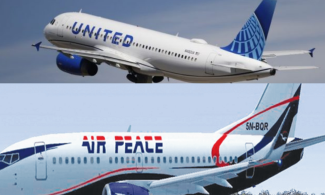
Air Peace and United Nigeria Airlines have rejected the Nigeria Civil Aviation Authority’s report on domestic flight disruptions for August 2026, saying the figures misstate their flight volumes and fail to separate delays the airlines caused from those driven by factors outside their control.
The NCAA’s Summary of Domestic Airline Flight Disruption Operations for August put total industry disruptions at 4,801 out of 7,961 flights operated. Air Peace recorded the highest count, with the authority listing about 1,330 of its 1,864 flights as delayed and seven cancelled. United Nigeria followed with 951 disruptions out of 1,231 flights, ahead of Enugu Air, ValueJet, Ibom Air and Arik.
The airlines’ central complaint is that the report offers raw counts without cause. In a statement signed by its Chief Operating Officer, Oluwatoyin Olajide, Air Peace said the authority understated its operations. “The NCAA report vastly underreported our total flight volume. Air Peace operated a total of 2,564 flights in August 2026, as opposed to the 1,864 flights stated in the NCAA report,” she said, adding that omitting more than 700 flights inflated the airline’s reported delay rate.
According to Olajide, an internal review found that only 391 flights, about 15 per cent of the disruptions, stemmed from internal factors such as unscheduled maintenance and fuel supply. She attributed the rest to external causes including airport congestion, bird strikes, poor airport facilities, bad weather, union picketing and damage to an aircraft by a ground handling company.
The airline also tied much of the month’s disruption to industrial action. Olajide said picketing that began on 11 August affected operations for more than 14 days, forcing rescheduling and cancellations, and questioned why the report carried no note of that context. She further asked why the authority began its monthly series with August rather than July, and why detailed August data appeared only 13 days after the month ended while no comparable July figures had been released.
United Nigeria made a similar argument through its Chief Commercial Officer, Adedayo Olawuyi, who spoke at the Aviation Day session of the 23rd Akwaaba African Travel Market in Lagos. He said the data grouped controllable and uncontrollable delays together, leaving airlines to carry blame that belonged across the sector. “The question about the reason for the delays should not be directed to the airlines. The question should be directed to all stakeholders,” he said.
Olawuyi pointed to ramp congestion, ageing equipment and airports that cannot operate after dark. He said many Nigerian airports run dusk to dawn without runway lighting, so delays from any earlier cause can push a flight past nightfall and into cancellation. He added that technical faults, though less frequent, cannot be rushed because safety checks must be completed before an aircraft returns to service.
Some of the underlying numbers remain unsettled. Reported figures for Air Peace’s delays range between 1,330 and 1,337 depending on the account, and the operator’s claimed total of 2,564 flights has not been independently confirmed against the authority’s records. The NCAA had not issued a public response to the airlines’ objections at the time of writing, and its methodology for compiling the August summary has not been detailed.
The dispute sits against a wider strain on the sector. Air Peace has cut its Abuja to London service to three flights a week because of constraints in the supply of Jet A1, the aviation fuel that has grown more expensive since the removal of the petrol subsidy pushed up energy costs across the board. Fuel and foreign exchange remain among the heaviest cost lines for Nigerian carriers, and both feed directly into scheduling reliability.
The exchange also reflects a live regulatory question over passenger rights. The NCAA has been moving to enforce compensation and care obligations for delayed and cancelled flights, and monthly disruption scorecards give that effort a public evidence base. The theme of the Lagos session, on the rules and rights of passengers, underlines how far the argument turns on who bears responsibility when a flight fails to depart on time.
For passengers, the practical picture is unchanged whatever the final count. On the authority’s own figures, most domestic flights in August were delayed, with the largest share falling between 16 minutes and one hour and a smaller number stretching beyond three hours. Whether the fault lies chiefly with the airlines, the airports, the regulator or the fuel market is precisely what the two operators now want addressed before the next report is published.