
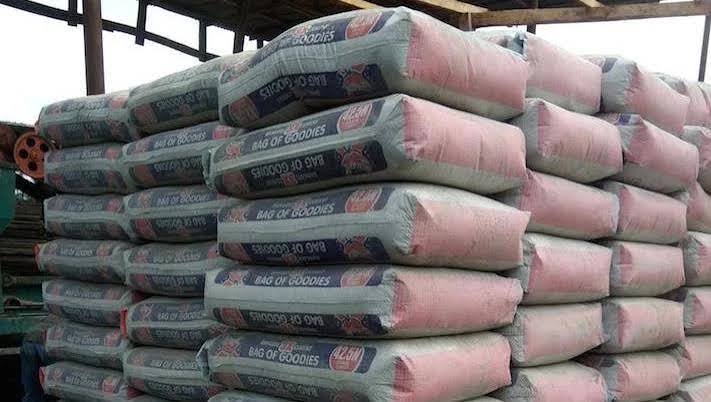
Nigeria consumes far less cement per person than most of the world, and the high price at the till is being driven largely by foreign exchange and self-generated power, HBM Nigeria has said.
The company’s chief executive, Lolu Akingemi-Alada, made the point over the weekend in Lagos at the Experiencing Panterra event, where he spoke during a question-and-answer session. He was represented by Emmanuel Ilaboya, the general manager for readymix concrete at HBM, the firm formerly known as Lafarge Africa.
According to Akingemi-Alada, per capita cement consumption in Nigeria sits below 150kg, against about 500kg in Egypt and roughly 700kg in South Africa. He framed the gap as a commercial opening rather than a weakness, arguing that low usage points to room for growth. “What that tells you is that there is a huge opportunity,” he said.
The figures he cited track with independent estimates over the years, though the exact number moves depending on the source and the year. Industry data have put Nigeria’s per capita consumption at around 120kg to 130kg in recent counts, with the global average often placed near 500kg to 650kg. The direction is consistent across studies. Nigeria produces more cement than it uses and exports the surplus, yet ordinary demand remains thin relative to its population of more than 200 million.
Akingemi-Alada also said capacity utilisation per manufacturer is running at just 20 to 30 per cent, which he described as a sign of untapped ground in the sector. That reading fits a market where installed capacity has outpaced actual consumption for more than a decade. When plants run well below what they were built to produce, fixed costs are spread over fewer bags, and that weighs on pricing.
On why cement remains costly, he pointed first to the exchange rate and then to power. Much of what goes into production, he said, is either imported or priced in dollars, including gas and oil inputs that are produced locally but still billed in foreign currency. “When your cost component is so exposed to foreign exchange, it becomes a bit difficult,” he said.
He noted, however, that the naira had held fairly steady for much of the past year, which he said allowed manufacturers to forecast and plan with more confidence. His argument was less about whether the rate is high or low and more about its stability. Central bank data support the broad claim of recent calm. The official rate has traded in a band of roughly N1,320 to N1,330 to the dollar through much of September 2026, firmer and less volatile than in the sharp swings that followed the 2023 float.
Power was the second cost he singled out, and he argued it is where Nigeria diverges most from its peers. No cement manufacturer in the country can rely on the national grid, he said, so producers build their own power plants, an outlay he described as capital intensive. In many of the countries Nigeria is measured against, he added, factories draw electricity from the grid, keeping that cost far lower.
Akingemi-Alada said HBM was working to absorb the effect of imported inputs through operational efficiency rather than passing the full weight to customers. He also said the company ranked between seventh and eighth on the exchange by market capitalisation.
Prices on the ground remain elevated. Market surveys through 2026 have put a 50kg bag of cement at roughly N9,000 to N15,000 depending on brand, location and whether the buyer is dealing retail or wholesale, with the South-South and South-East typically dearer than the North because of transport. That range sits well above the equivalent in several African markets often used for comparison, and it feeds directly into the country’s housing deficit and the cost of public works.
The event where the remarks were made was hosted by Panterra, a real estate investment firm. Its chief executive, Tayo Odunsi, used his welcome address to argue that the property sector suffers from a shortage of reliable data. “Our sector is so opaque; there is no standard repository for information,” he said, announcing the launch of two reports on the Nigerian construction and West African property markets.
Panterra’s chief investment officer, Ayo Ibaru, added that currency stability, deeper financing, Global South partnerships and security are now the main drivers of regional real estate performance. He said local capital and builders were increasingly financing growth, with Gulf, Turkish and Asian money widening the investor base away from Western sources.
Ibaru pointed to the Dangote Refinery as having turned the Lekki Free Trade Zone into one of the region’s more active industrial corridors, a signal, he argued, that indigenous capital sees Nigerian infrastructure as investable. He also flagged the 15.6 billion dollar Abidjan-Lagos corridor, which is planned to link five countries and an urban population he put at 173 million by 2050.
What remains open is whether the low consumption Akingemi-Alada described translates into cheaper cement or simply more capacity. On his own account, price relief depends on inputs that stay tied to the dollar and on power that manufacturers still generate themselves.