
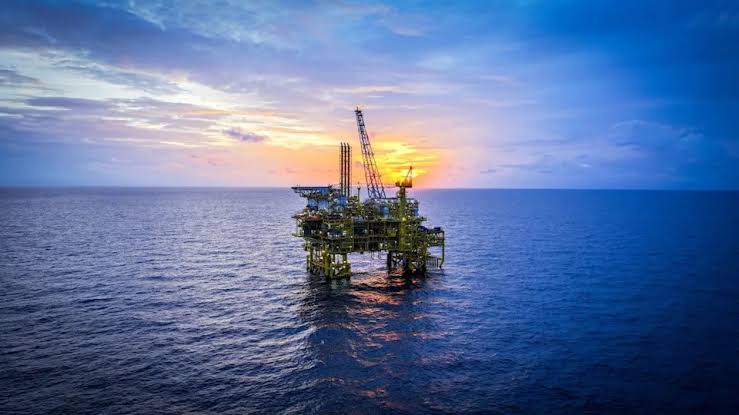
Nigeria’s Ima gas field, discovered in 1973 but left untouched for more than five decades, has finally secured a Final Investment Decision, with AMNI International and TotalEnergies committing $800 million to bring it into production.
The two partners announced the decision on Tuesday, 23 September 2026, clearing the way for one of the country’s long-stranded offshore gas resources to be developed. The field sits in shallow waters of eight to ten metres across Oil Mining Leases 112 and 117 off the coast of Rivers State, near Bonny Island.
Under the plan set out by TotalEnergies, the field will be developed through a single offshore platform tied to Nigeria LNG’s Bonny Island facilities by a 22-kilometre pipeline. First gas is targeted for 2028, with output expected to reach a plateau of 350 million standard cubic feet a day, the equivalent of more than 60,000 barrels of oil per day.
The project’s significance lies largely in what it feeds. Once on stream, Ima is expected to supply about one-third of the gas required for NLNG’s Train 7 expansion, which will lift the plant’s liquefaction capacity from 22 million tonnes a year to 30 million tonnes. That places the development at the centre of Nigeria’s plan to expand LNG exports and monetise its gas reserves.
AMNI, a Nigerian independent exploration and production company, holds 60 per cent of the venture. TotalEnergies holds the remaining 40 per cent and is the operator, and separately owns a 15 per cent stake in the NLNG plant that will take the gas.
President Bola Tinubu, in a statement signed by his Special Adviser on Information and Strategy, Bayo Onanuga, presented the decision as evidence that reforms in the oil and gas sector were beginning to revive projects that had stalled commercially. “For more than 50 years, the gas beneath Ima remained a resource with enormous potential, but potential alone doesn’t create jobs, finance businesses or improve the lives of the people,” he said. The President said his administration would continue working to turn the country’s gas resources into investments and jobs.
According to the Presidency, Ima is the fourth major gas project to reach a Final Investment Decision under the current administration, following the Iseni, Ubeta and HI projects.
The Special Adviser to the President on Energy, Olu Verheijen, said the field’s long dormancy showed the difference between holding resources and creating the conditions to develop them. “Nigeria has never lacked resources. The challenge has been creating the commercial and investment conditions required to move those resources from beneath the ground into projects that employ Nigerians,” she said.
The Federal Government and the Nigerian Upstream Petroleum Regulatory Commission both described the decision as a fresh vote of confidence in the country’s investment climate. The Minister of State for Petroleum Resources (Gas), Ekperikpe Ekpo, attributed it to reforms and Executive Orders approved by the President to improve competitiveness and speed up project delivery.
NUPRC Chief Executive Oritsemeyiwa Eyesan, speaking at the FID ceremony in Abuja, credited the outcome to consistent policy direction. “As the chief regulator in the industry, we will enable business, we will unplug obstacles,” he said.
Two features of the deal point to a growing domestic role in large upstream projects. The Presidency said Nigerian financial institutions arranged about 77 per cent of the financing, while roughly 60 per cent of the development workforce is expected to come from host communities, including Bonny, Finima and Andoni in Rivers State.
TotalEnergies has described Ima as a low-cost, low-emissions development, citing a simplified platform design, electricity supplied from shore, no routine flaring, and permanent methane detection and monitoring. The company also said all key contractors on the project would be Nigerian firms.
Its Managing Director, Mathieu Bouyer, put the company’s own investment at more than $600 million and said it reflected confidence in Nigeria’s oil and gas industry. He estimated the project could generate between $2 billion and $4 billion in value over its lifetime, though he noted that the figure would depend on international gas prices, which places it among the expectations attached to the deal rather than a guaranteed return.
The development follows a run of recent gas sanctions that TotalEnergies has linked to fiscal incentives introduced in the sector. Whether Ima meets its 2028 production target, and how much of the projected value materialises, will depend on execution and on prices in a gas market the partners do not control.