
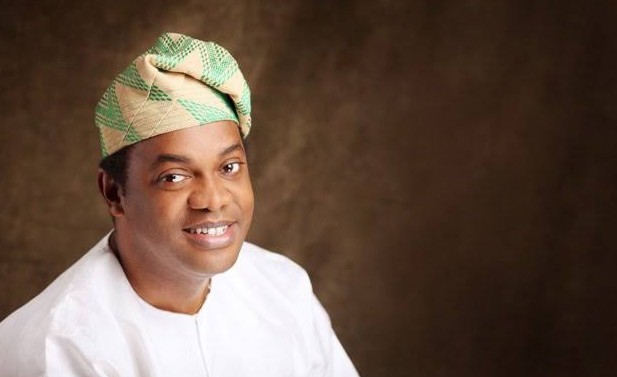
Donald Duke, the former governor of Cross River State, pledged on Wednesday, 7 October 2026, to bring the retail price of petrol down to 300 naira per litre if voters elect him president next year. Speaking on national television, the politician argued that current market prices crush low-income households whose entire monthly minimum wage of 70,000 naira barely covers a single tank of fuel. Cheap fuel drives national labour output. His populist proposal challenges the orthodox deregulation agenda of President Bola Tinubu, insisting that state managers should base domestic fuel prices on basic extraction costs rather than volatile international crude benchmarks.
His economic blueprint rests on a state-directed split of national hydrocarbon output between local consumption and international trade. The former governor wants the federal government to ring-fence 600,000 barrels of crude oil every day for local refiners at a production cost of 45 dollars per barrel, while selling the remaining one million barrels on global export markets to secure foreign currency reserves. State quotas rarely survive real market pressures. The plan assumes that public energy bureaucrats can supply local processing plants with discount feedstock without creating massive fiscal holes in statutory revenue allocations to the three tiers of government.
The arithmetic of a 300-naira litre collides directly with harsh commercial realities inside the domestic refining and distribution network. State planners currently battle persistent pipeline sabotage, stolen crude volumes, and massive operational losses that routinely push the actual cost of pumping Nigerian crude well above 45 dollars per barrel in troubled Niger Delta fields. Smugglers love wide regional price gaps. Artificially cheap fuel inside Nigerian borders would trigger widespread diversion of refined products into neighbouring West African countries where retail petrol commands far higher prices.
Mr Duke dismissed advice from multilateral lenders like the World Bank and the International Monetary Fund, urging authorities to stop treating fuel subsidies as an economic sin. Major agricultural nations protect their food growers with hefty public subsidies to keep rural workforces productive, so Nigeria should use its domestic oil deposits to lower internal transport bills and spur industrial manufacturing. Low transport fares lower food costs. The candidate suggested that security agencies could dye domestic petrol distinct colours to curb cross-border smuggling rather than punishing poor urban commuters with unbearable pump rates.
His bold campaign promise highlights growing public fury across Nigerian cities where steep transport tariffs have pushed millions of citizens into deep poverty. Political candidates running for high office in 2027 will find that promises of cheap fuel win easy applause from exhausted voters who view official deregulation as state cruelty. Desperate voters reward sweeping energy promises. State planners cannot slash energy prices through executive decrees without tackling deep corruption in state oil accounts, fixing leaking transport pipelines, and cleaning up chaotic coastal distribution networks.