
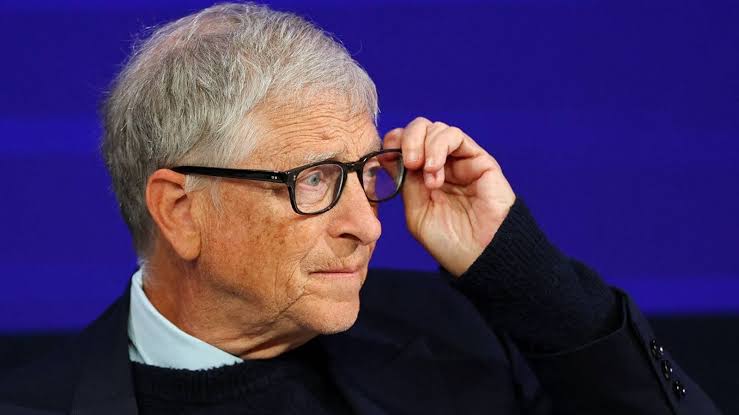
Microsoft co-founder Bill Gates has warned that the most immediate danger from artificial intelligence is not machines slipping out of human control, but criminals using powerful AI models stripped of their safety controls. Speaking in a television interview on Sunday, Gates said cyberattacks would be the area where that threat shows itself most clearly over the coming year. “The front that we’ll probably see most dramatically in the next year is cyberattacks,” he said.
Gates drew a sharp line between long-term and near-term risks. “The real danger right now is not the AI’s getting out of control. We need to work on that, but that’s years away in terms of the big impact that might have,” he said. The more pressing problem, in his view, is “really bad people using AI, particularly in AI where you can take out all the safeguards.” He called for tighter restrictions to stop such actors from turning the technology to bioterrorism and cyberattacks.
His central worry is a combination of three things. “So when you have bad people, no safeguards, and then the latest models, that’s where, over the next year, primarily in the cyber area, we are going to have a lot of negative surprises,” he said. Gates added that, at present, nothing stops users from removing the protections developers build into their systems.
The billionaire also took on the argument that AI companies can be trusted to police themselves, a position associated with US President Donald Trump. Since returning to office in January 2025, Trump has revoked his predecessor’s executive order on AI safety and pursued a policy that favours rapid development with lighter federal oversight. “The idea that for the most dangerous technology humans ever invented, that that’s the final word, that just the companies themselves are the only check that society has… it’s clear we’re not doing enough,” Gates said.
Industry data lend weight to his concern. IBM’s 2026 Cost of a Data Breach study, which covered 602 organisations breached between March 2025 and February 2026, found that one in four malicious breaches involved AI. That represents a 56 per cent rise on the previous year. The study put the average cost of an AI-enabled breach at about $6 million, roughly $1 million above the overall global average of $4.99 million, with deepfake impersonation and AI-assisted malware the most common methods.
Other threat trackers show a similar pattern. CrowdStrike’s 2026 Global Threat Report, released in February, recorded an 89 per cent year-on-year increase in attacks by adversaries using AI. Check Point Research found that organisations worldwide faced an average of 2,422 cyberattacks per week in August 2026, up 22 per cent on August 2025.
For Nigeria, the warning lands on already exposed ground. Check Point data show Nigerian organisations faced an average of 4,906 cyberattacks per week in August 2026, a 45 per cent increase on the same month last year and roughly double the global figure. The country recorded 4,975 weekly attacks per organisation in July and 4,701 in January, when it topped the African table.
The pressure is spreading across critical sectors. Check Point identified energy and utilities as the most targeted industry in Africa in August, followed by financial services and government institutions. With banking, fintech, telecoms and public services moving rapidly online, Nigeria’s attack surface continues to widen, and the 2027 general elections will add digital voter systems and political communication to the list of possible targets.
Gates is not new to this debate. In a lengthy post in August, he warned that the world was dangerously unprepared for the disruption AI would bring, particularly to jobs. His latest remarks shift the focus from long-term economic upheaval to a threat he believes is only months away.
How governments respond remains unsettled. The United States currently has no comprehensive federal law governing AI safety, and Nigeria’s own national AI strategy and cybersecurity framework are still being developed and implemented. For now, Gates’s prediction rests on a simple test that the coming year will settle: whether the safeguards hold, or whether the surprises he forecast arrive first.