
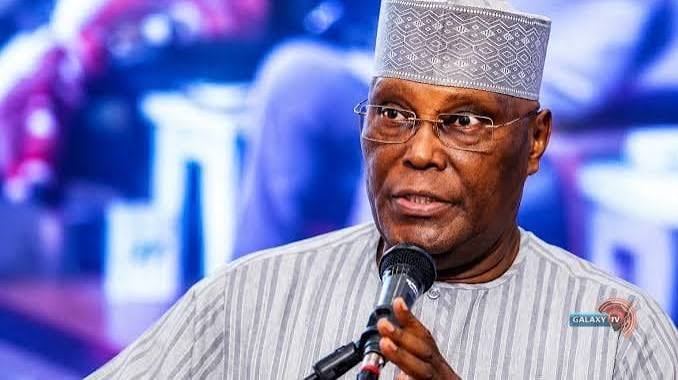
The African Democratic Congress has demanded the immediate release of the certified true copy of a Federal High Court judgment that sacked its leadership and voided the presidential candidacy of Atiku Abubakar, as uncertainty deepens over the opposition party’s place in the 2027 election.
Justice Peter Lifu of the Federal High Court in Abuja delivered the ruling on 5 November, declaring the David Mark-led caretaker committee unlawful for emerging in breach of the party’s constitution. The judge nullified every decision taken under that leadership, including the primary that produced Atiku as presidential candidate and Rotimi Amaechi as his running mate, as well as the emergence of Rauf Aregbesola as national secretary and other national officers. Lifu upheld the suit brought by Nafiu Bala Gombe, a former deputy national chairman for the North East, and dismissed 27 preliminary objections filed by Mark, Aregbesola and the party, describing them as frivolous.
At the centre of the latest dispute is the party’s inability to obtain the written judgment. The director of strategic communication of the ADC Presidential Campaign Council, Phrank Shaibu, said in a statement that the party’s lawyers had applied for the certified copy and paid the required fees, with the applications bearing the court’s “PAID” stamp, yet the document remained out of reach. He argued that withholding it prevents affected parties from knowing the exact orders and responding through the proper legal channels.
The Independent National Electoral Commission has said it is yet to receive the certified copy. Mohammed Kudu Haruna, a national commissioner and chairman of the commission’s information and voter education committee, said INEC had not discussed the matter or taken any decision, noting that obtaining a certified judgment usually takes about a week. The commission also disowned a separate online claim that it had reaffirmed the Mark-led leadership.
Aregbesola has moved to protect his position. In a letter dated 9 November and addressed to the INEC chairman through his counsel, Mohammed Sheriff, he disclosed that a notice of appeal and a motion for stay of execution had been filed on 7 November, and urged the commission to defer any discretionary changes that could prejudice the pending appeal. Atiku has separately vowed to challenge the judgment at the Court of Appeal.
Much of the party’s argument rests on an earlier ruling. On 2 July, Justice Musa Liman of the same Federal High Court, in suit number FHC/ABJ/CS/1637/2025, affirmed the legitimacy of the Mark-led national working committee and directed INEC to recognise it. The ADC insists that a judge of coordinate jurisdiction cannot overturn that subsisting judgment, a position echoed by veteran politician Chekwas Okorie and by civil society groups that have asked the National Judicial Council to examine the conflicting rulings.
The crisis has a long history. It began with the exit of the Ralph Nwosu-led leadership and the emergence of Mark and Aregbesola as the coalition took control of the party. On 12 March, the Court of Appeal dismissed Mark’s interlocutory appeal, after which INEC withdrew recognition of his faction. The Supreme Court granted Mark temporary relief on 30 April, prompting INEC to restore the names of his officers and returning the substantive dispute to the Federal High Court, while a further Court of Appeal decision in July upheld limits on the recognition of state congresses organised under the Mark-led structure.
The stakes extend well beyond the two principals. The party has warned that the ruling could unsettle thousands of its candidates at local, state and federal levels, little more than two months before the presidential poll, with Atiku’s name already published by INEC. The All Progressives Congress has denied any hand in the matter, describing it as an internal ADC affair, while the minister of the Federal Capital Territory, Nyesom Wike, faulted the party’s reaction at a town hall in Kwali, saying political parties should serve as vehicles for development rather than platforms for endless internal conflict.
For now, the outcome rests on two tracks that have yet to close. INEC says it will study the certified judgment before deciding anything, and the ADC’s appeal, once perfected, will ask a higher court to resolve the clash between two judgments of equal standing. Until those steps play out, the validity of Atiku’s candidacy, and that of the wider field nominated under the disputed leadership, remains unsettled.