
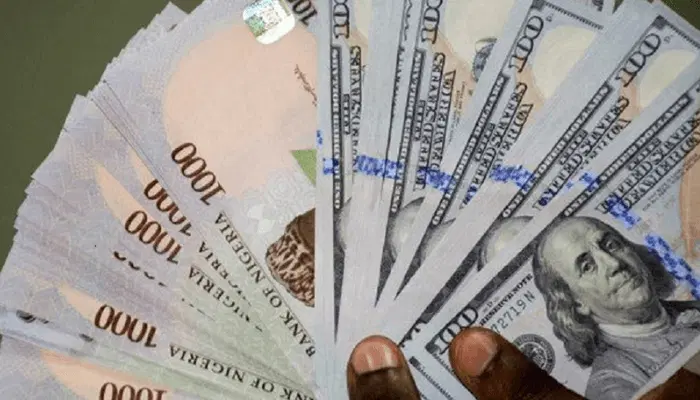
The Nigerian naira opened trading on Thursday, 12 November 2026, under heavy demand pressure, widening the gulf between official and street foreign exchange rates. Data from the Central Bank of Nigeria places the local currency at the official Nigerian Foreign Exchange Market within the N1,350.36 to N1,353.50 per dollar band. Meanwhile, early international currency feeds recorded spot quotes hovering near N1,345.72 per dollar before official fixing.
Street markets tell a far harsher story for businesses seeking immediate liquidity. Currency dealers across Lagos and Abuja bought dollars between N1,411 and N1,420 while selling them for up to N1,430. That pricing creates an arbitrage gap of roughly N68 to N80 per dollar over the official benchmark.
Seasonal importers and holiday travellers are draining hard currency supply ahead of the year-end rush. Foreign portfolio outflows and a stronger global dollar have worsened this seasonal scramble for greenbacks. Earlier in the week, interbank turnover hit $248.07 million across 144 deals as official rates swung between N1,349.25 and N1,354.
High external reserves offer policymakers a rare cushion against total currency collapse. Nigeria holds roughly $54.9 billion in gross reserves, sitting comfortably above the central bank’s full-year target of $51.04 billion. Yet central bankers face a tough choice between defending the naira and preserving their hard-won war chest.
This widening spread revives familiar headaches for local manufacturers and retail traders. Whenever street rates pull away from official windows, businesses price goods using the higher black-market benchmark to protect their margins. Consumers then absorb the inflationary shock even when official bulletins claim relative stability.
Monetary authorities must inject steady liquidity into the formal window to close this damaging gap. Without regular dollar supply at the banks, buyers will keep flooding informal hubs in Lagos and Abuja. The central bank has the reserves to steady the ship, provided it chooses to use them.