
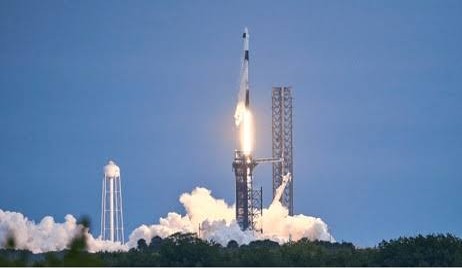
US regulators approved SpaceX to deploy up to one million solar-powered AI satellites in low Earth orbit, sparking debate over technology limits, orbital crowding, and the night sky.
Somewhere between five hundred and two thousand kilometres above our heads, a new race for computing power is preparing to leave the ground entirely. Regulators in the United States have just cleared SpaceX to deploy up to one million satellites for a venture called Starmind, turning low Earth orbit into a proposed frontier for artificial intelligence processing.
For ordinary people watching news from Lagos, Abuja, or Port Harcourt, a headline about one million orbiting machines can feel distant from daily life. Yet computing now underpins banking apps, digital payments, cloud storage, telecoms, and school research across Nigeria, while land, electricity, and water for giant ground data centres grow harder to secure worldwide.
Approval from the Federal Communications Commission marks a first of its kind, setting deadlines that stretch well into the late 2030s. Whether that figure becomes reality or serves as a ceiling still remains an open question, even as the decision stirs sharp pushback from rivals, scientists, and environmental advocates.
Solar Servers Above the Clouds
Under the Starmind design, spacecraft powered by sunlight will handle artificial intelligence workloads in orbit and beam results back toward Earth. SpaceX views orbital data centres as a way past limits on ground power and cooling as demand for artificial intelligence climbs rapidly.
Instead of building sprawling halls that draw heavy electricity and large volumes of water on land, engineers behind the concept point to continuous solar energy above the atmosphere. Google and Blue Origin are also exploring orbiting data centre ideas, framing space infrastructure as a greener option beside strained terrestrial grids.
Pushback against ground facilities has already gathered force in the United States, where analysts noted resistance to data centres played a role in heavy Republican losses during midterm elections. Communities increasingly question large developments that strain local resources or sit close to residential areas.
Rules, Timelines, and Unanswered Questions
Regulatory clearance brings firm milestones rather than an overnight sky full of hardware. Licence terms require SpaceX to start deployment no later than November 2033, reach ten percent by November 2035, and hit fifty percent by November 2038.
Company plans also point toward launching a first Starmind satellite next year, well ahead of those outer deadlines. Observers note that seeking approval for one million craft does not automatically guarantee every single one will fly, leaving open whether SpaceX asked for headroom beyond immediate needs.
Technical hurdles remain central to how the system will operate in practice. Starmind units are meant to link with SpaceX’s Starlink network, which already counts more than ten thousand satellites in low Earth orbit, before relaying information down to ground stations.
Voices From Orbit to the Night Sky
Questions over large-scale performance surfaced on BBC Radio 4’s Today programme through Surrey Satellite Technology Ltd founder and executive chairman Professor Sir Martin Sweeting. While calling data centres in space “technically feasible”, he noted that whether the idea “makes sense at scale yet” still requires thorough analysis.
Moving vast volumes of data between orbit and ground depends on laser links that have not yet reached full maturity. Sweeting observed that laser technology “has not yet been perfected to the level at which it would be able to support the huge amounts of data that are likely to be transferred backwards and forwards”.
Criticism came just as forcefully from other quarters after the commission framed Starmind as a boost for “America’s booming super intelligence economy”. Commission Chairman Brendan Carr praised the decision as a move that “opens a bold new frontier for the computing infrastructure needed to power America’s leadership and growth”, adding that “This is the kind of American ingenuity that can unite our strengths in space and advanced technology, reinforce our economic leadership, and expand prosperity here at home”.
Rival Amazon dismissed the plan as “a lofty ambition rather than a real plan”, signalling fierce commercial scepticism from a major competitor. Meanwhile, the American Astronomical Society expressed dismay, warning that brighter, more numerous satellites would remain visible longer in the night sky and “significantly undermine decades of federal investment in astronomical facilities” alongside public observation.
Earthjustice senior attorney Jan Hasselman widened the lens toward everyday life and planetary stewardship. In a statement, Hasselman warned that “Drastically expanding satellites in space has a direct impact on people’s everyday lives as well as the future of our planet”.
Crowded Orbits and Shared Skies
Growing traffic in low Earth orbit adds another layer of caution for space engineers and policymakers. Previous expert commentary to the BBC highlighted high launch costs, complex cooling and power gear in orbit, and rising space debris that threatens active craft.
Separate warnings pointed to greater collision risks as more objects crowd low orbits, potentially damaging equipment or sending debris back toward Earth. Starlink has faced accusations of orbital crowding and squeezing rivals, claims Elon Musk has rejected while denying his satellites occupy excessive space or block competitors.
Why Nigerian Readers Should Watch the Sky
Nigeria sits squarely inside a digital economy that relies on subsea cables, satellites, and overseas cloud servers to keep commerce and learning moving. As artificial intelligence tools spread across classrooms, startups, newsrooms, and banks, where computing happens and who controls that infrastructure matters far beyond North America.
Equally, Nigeria faces real pressures around power supply, land use, and environmental protection at home. Watching how global firms weigh ground expansion against orbital alternatives offers a window into future costs for digital services and shared global commons.
Whether Starmind reaches a fraction of its approved scale or reshapes global cloud computing over the next decade, the debate over our skies has only just begun. What happens when private ambition meets orbital limits will shape the digital world every Nigerian uses tomorrow.