
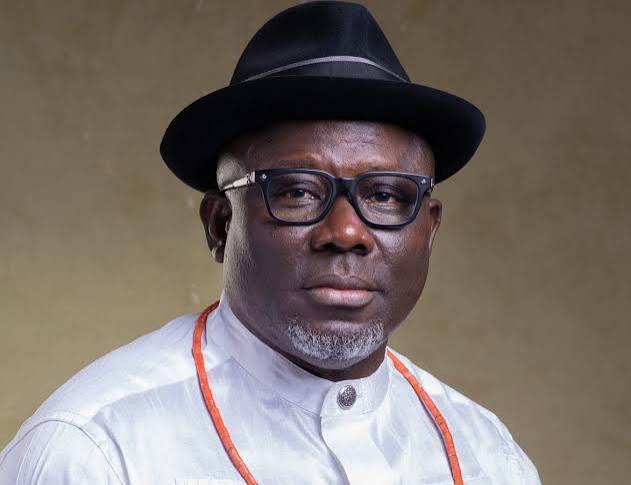
Delta State Governor Sheriff Oborevwori has condemned the killing of the president-general of Uduere community, declaring that no one can invade a community, murder its leader and expect residents to stay silent. He spoke at an All Progressives Congress campaign rally in Oghara, headquarters of Ethiope West Local Government Area, where he also warned against the use of firearms during political campaigns.
The governor said no group could storm a community, kill its president-general “and expect the community to leave you,” insisting such conduct was unacceptable anywhere. His remarks tied the killing to the wider unrest that has unsettled parts of the state in recent months.
Uduere, a suburb of the Abovwe community in Ughelli North Local Government Area, is no stranger to violence. In May 2025, armed men and security operatives, said by residents to be acting for the embattled council leadership, stormed the area and disrupted a family meeting of the Abovwe Descendants Union, prompting women and youths to protest. Rights campaigners have since urged the Inspector-General of Police to arrest the divisional police officer and other officers they accuse of involvement in the Uduere killings.
The killing is the most recent in a run of violent episodes as Delta moves towards the 2027 general elections. On 7 November 2026, a rally in Asaba organised by the opposition Obidient/OK Movement in support of a presidential candidate ended in bloodshed, with one person killed and five others injured, according to the state police command. The command said it had warned the organisers against an open road procession after receiving intelligence that violence was likely.
The state government condemned that attack but blamed the organisers for proceeding despite security advice. Former Deputy President of the Senate, Ovie Omo-Agege, rejected that account and accused the state government of sponsoring the assailants, pointing to earlier flashpoints in Usiefrun, Uvwie, Warri and Effurun. The government has denied the allegation.
Tension within the ruling party itself has also spilled into violence. In July 2026, the governor’s senior aide on protocol, Temple Mudi, was stabbed and beaten at an APC stakeholders’ meeting, an attack that required his head to be stitched several times. The episode deepened fears over the safety of political activity in the state.
Much of the friction traces to a realignment that reshaped Delta politics. Oborevwori, who won the 2023 governorship on the Peoples Democratic Party platform, defected to the APC alongside his predecessor, Ifeanyi Okowa, pulling the state’s main power blocs into one party and sharpening rivalries over who controls its structures. The governor and Omo-Agege, both now in the APC, have been locked in a bitter contest over the Delta Central senatorial seat and wider influence ahead of 2027.
Beyond the party battles, deadly disputes over community leadership have become a recurring feature of life in Delta. Quarrels over who should serve as president-general, often entangled with council chairmen, cult groups and land, have repeatedly turned fatal across Ughelli North, Ughelli South and Udu. The death last year of the Okuama community president-general, Pa James Oghoroko, in military detention remains a raw example of how such disputes end in tragedy.
No public account has yet established who ordered the Uduere killing, and no arrests have been announced. The Delta State Police Command, led by Commissioner Samuel Erale, has appealed to political parties to avoid road processions and to liaise with officers before gatherings, while promising impartial investigations into the recent attacks.
Oborevwori’s warning in Oghara made clear that the community does not intend to let the matter rest. Whether the authorities can turn that anger into arrests and prosecutions, and rein in the violence before campaigning intensifies, is the test that will shape public confidence as the 2027 elections draw nearer.