
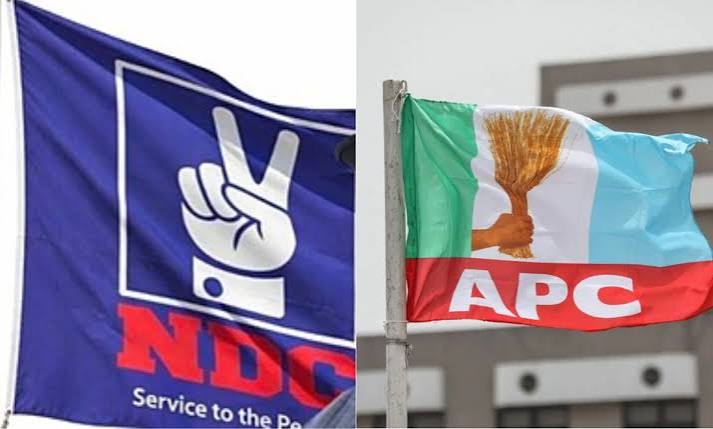
The Nigeria Democratic Congress has pushed back at the All Progressives Congress over the row surrounding the opposition’s “rig and die” slogan, accusing the ruling party of selective outrage and pointing to combative election-season language used in the past by President Bola Tinubu and former President Muhammadu Buhari.
In a statement issued on Sunday and signed by Great Imo Jonathan, a member of The Big Tent, the umbrella body for NDC support groups led by Professor Pat Utomi, the party said the APC lacked the moral standing to condemn the slogan while overlooking similar remarks by its own leaders. The response followed criticism of the opposition by APC chieftain Okoi Obono-Obla.
The NDC insisted that “rig and die” is a warning against electoral fraud rather than a call to violence, arguing that its message is simply that votes must count and manipulation must not be tolerated. The phrase has drawn scrutiny because the Independent National Electoral Commission earlier cautioned that it could expose electoral officials, party agents and observers to danger at the polls.
To make its case, the party recalled Tinubu’s 2022 campaign remark urging supporters to “grab it, snatch it and run with it”, a comment on seizing political power that went viral before the 2023 election and was heavily debated at the time. It also cited Buhari’s warning of bloodshed if the disputed 2011 election were repeated in 2015, and his 2019 statement that anyone who led thugs to snatch ballot boxes could pay with their lives. The NDC questioned why those statements never attracted the condemnation now aimed at the opposition.
Beyond the war of words, the party tied the dispute to what it described as a wider pattern of intimidation. It said its members and supporters had come under attack in several states, including Delta, Edo, Benue, Enugu, Cross River and Kano, calling the incidents a threat to opposition participation and fair competition.
The NDC pointed in particular to the reported attack on the campaign of its Delta Central senatorial candidate and former Deputy Senate President, Ovie Omo-Agege. Omo-Agege has alleged on more than one occasion that gunmen targeted his ward-to-ward campaign, with one incident leaving six people injured, and has called on the police and the Department of State Services to arrest those responsible. He has also said residents in Asaba overpowered an attacker and recovered an AK-47 rifle during one assault. The Delta State government has dismissed his assassination claims as mudslinging.
The party said some of its members had been killed or assaulted in politically linked attacks, and questioned whether opposition activities were being adequately protected. It referenced the reported resignation of a Delta State government aide, Tonia Gbemre, said to have stepped down over killings in the state and the treatment of opposition supporters.
The NDC challenged Obono-Obla and other APC figures to condemn threats and attacks on opposition members with the same energy they had directed at the slogan. It argued that inflammatory rhetoric should be judged by one standard, whoever uses it, warning that selective outrage weakens efforts to keep the 2027 campaign peaceful.
The party also named several officials in Edo, Borno, Ebonyi and the Federal Capital Territory whose past comments it said had gone unchallenged, though it offered no independent proof of the specific remarks. The APC has not addressed the latest statement in detail, and the individuals cited have not publicly responded to the claims.
The exchange reflects the hardening mood as parties move into full campaign mode ahead of the 2027 general election. INEC has repeatedly appealed for restraint, insisting that no slogan or statement should place its staff or voters at risk. For now, the opposition and the ruling party remain locked in an argument that is less about the wording of a slogan than about who bears responsibility for the violence already trailing the race.