
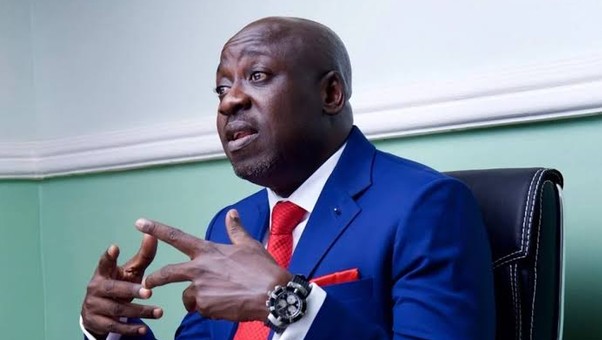
The African Democratic Congress demanded clarity on Monday over who runs Nigeria, as President Bola Tinubu and Vice President Kashim Shettima both exited the country. Speaking on Channels Television, party spokesman Bolaji Abdullahi queried the constitutional basis that permits Secretary to the Government of the Federation George Akume to stand in for the executive. Mr Tinubu left Abuja on 30 August for a prolonged working holiday across London and Paris, extending his absence until the coming weekend. Mr Shettima flew to New York on Sunday to address the 81st United Nations General Assembly. Power hates a vacuum.
The joint absence of both leaders exposes a familiar indifference toward constitutional procedure in Abuja. Section 145 of the 1999 Constitution instructs an absent president to transmit a formal declaration to the National Assembly to empower his deputy. Mr Tinubu transmitted no such notice to federal lawmakers before departing for Europe. Instead, the presidency has leaned on senior palace aides and cabinet secretaries to conduct state ceremonial duties without formal executive warrants. A country cannot govern itself by proxy.
Mr Abdullahi questioned whether Mr Akume now wields de facto acting powers despite sitting entirely outside the legal chain of succession. That succession ladder clearly terminates at the Senate President when both top principals cannot perform their statutory functions. While modern digital networks allow heads of state to review memos and issue decrees from hotel rooms abroad, that convenience cannot replace direct command over a troubled federation. Nigeria faces deep currency shocks, armed banditry, and rising social tension across its northern border. Remote control rarely works in a crisis.
The presidency insists that administrative business continues without friction, pointing to daily ministerial routines and scheduled committee sittings. Yet casual institutional drift carries real legal hazards whenever an urgent emergency demands immediate, lawful executive orders. Leaving the seat of government empty during severe economic strain also signals a damaging political detachment to weary citizens at home. Foreign capitals notice when sovereign leaders treat presence at home as an afterthought. Statecraft requires a firm hand on deck.