
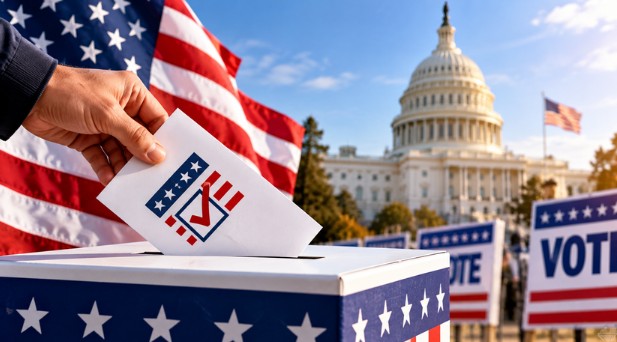
American voters filed into polling stations across fifty states on 3 November 2026 to deliver their verdict on Donald Trump’s second term in the White House. Voting operations opened across East Coast battlegrounds as both major political parties fought for control of Congress. Republican majorities in the House of Representatives and the Senate face severe pressure from an energised Democratic opposition. Power shifts in Washington.
Soaring consumer prices and escalating Middle Eastern conflict dominate voter concerns at local ballot boxes. Florida Governor Ron DeSantis warned party leaders that rising fuel costs tied to the Iran naval blockade endanger conservative candidates. AP-NORC surveys show Trump’s public approval rating sliding to 35 per cent as working-class families absorb heavy living expenses. High interest rates and lingering inflation keep retail voters deeply anxious about their personal household budgets.
Democrats expanded their legislative targets deep into traditionally conservative territory across the American heartland. Senate candidates mounted strong challenges in Kansas, Texas, and Iowa to flip Republican seats. Party strategists defended existing seats in Michigan, Minnesota, and Georgia while pouring resources into key suburban districts. High turnout among younger citizens and suburban women could decide tight congressional races before midnight.
Republican campaign committees pulled emergency cash out of failing suburban contests to shield vulnerable incumbents in rural strongholds. National leadership deployed heavy advertising funds to defend narrow margins in Pennsylvania and Iowa. White House officials insist that voters will ultimately reward conservative tax cuts and strict border enforcement over economic complaints. Yet court battles over redistricting maps in Florida and Texas reflect nervous party strategists bracing for heavy structural losses.
Controlling Congress determines whether Trump can enact his remaining legislative agenda or face aggressive oversight inquiries. A Democratic majority in either chamber will immediately block executive judicial appointments and subpoena federal agencies. International allies in Europe and Asia monitor state returns to gauge potential shifts in American foreign policy and foreign aid budgets. Electoral victory grants complete administrative authority, while political defeat forces bitter legislative gridlock.
Midterm elections routinely punish sitting presidents who fail to keep essential consumer goods affordable. Party loyalty breaks down quickly when voters pay record prices at local petrol pumps and grocery stores. Managing global conflicts cannot hide domestic financial pain from citizens waiting in line to vote. Today’s ballot count will show whether American voters choose to stay the political course or demand an immediate legislative brake.