
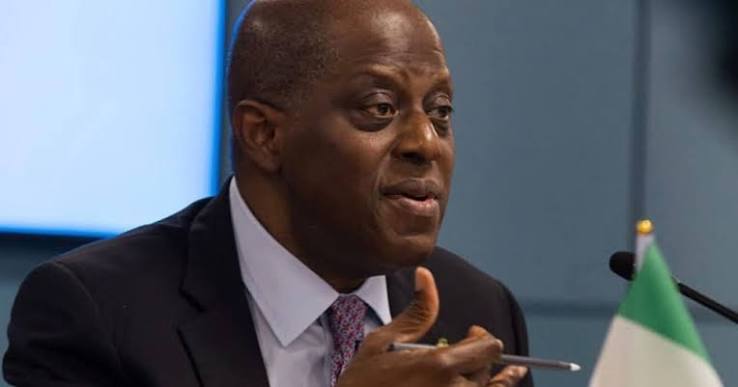
Nigeria has pushed for a governance structure in the planned ECOWAS single currency that reflects the size of each country’s economy and the weight of its financial commitment, with the Central Bank of Nigeria Governor, Olayemi Cardoso, arguing that the nations carrying the heaviest burden deserve a proportionate voice in running the union. He made the case on Friday, 20 November 2026, in Abidjan, Côte d’Ivoire, at the ministerial session of the sixth meeting of the Presidential Task Force on the ECOWAS Single Currency Programme.
Cardoso called for equity, fairness and proportional representation in the governance architecture of the proposed union. He said regional solidarity and respect for the sovereign equality of member states must remain fundamental, but that these principles should be balanced against the relative financial commitments, responsibilities and risks each country bears, particularly in deciding participation and leadership. According to the Governor, recent deliberations have turned on the shape of the institutions themselves, including where they will be located, who will lead them, and how authority will be shared.
He described the Abidjan meeting as a defining milestone in the integration process. “The decisions we take today will shape the future of the Union for decades to come,” he told delegates, warning that the outcome would affect the union’s credibility with investors and its legitimacy with citizens. He restated Nigeria’s commitment to the project as longstanding and unwavering, pointing to the country’s financial contributions, technical support and the compromises it had made for regional consensus.
Cardoso, however, insisted that solidarity must be matched by equity. Larger economies, he argued, should play a significant role because of the systemic importance they carry, and should be able to defend their contributions before their own parliaments and citizens. Where obligations are shared but influence is not, he cautioned, arrangements may be agreed but will be difficult to sustain over time. He stressed that Nigeria’s stance was rooted in responsibility rather than dominance or entitlement.
The position carries real weight because of Nigeria’s dominance of the bloc. The country is the largest economy in West Africa and in Africa as a whole, and ECOWAS figures put its share of the sub-region’s gross domestic product at about 62.7 per cent, with some estimates placing it above two-thirds of the regional economy. The bloc groups more than 400 million people and a combined output estimated at roughly 700 billion to 800 billion dollars in nominal terms, so decisions on voting power and institutional control turn heavily on how Nigeria is treated.
The single currency, the ECO, has been delayed repeatedly over the years. West African leaders reaffirmed a 2027 launch at their July 2026 summit in Sierra Leone, adopting a phased approach under which only member states that meet the agreed macroeconomic convergence criteria will adopt the currency first, while others join once they qualify. Those benchmarks include keeping inflation in single digits, holding budget deficits within four per cent of GDP, limiting central bank financing of government and maintaining adequate external reserves.
Meeting those conditions remains the central difficulty. By independent assessments, as of 2024 only Cabo Verde and Benin had satisfied all the primary convergence criteria, which has fuelled doubts about the realism of the 2027 date. Nigeria’s own numbers illustrate the gap, as its inflation, though easing from above 24 per cent in mid-2025 to around 15 per cent by mid-2026, still sits well above the single-digit threshold. In pressing for a louder governance voice, Nigeria is therefore also among the members yet to meet the entry conditions.
Momentum has nonetheless picked up. The Presidential Task Force was reactivated at the December 2025 summit, and the ECOWAS Convergence Council, meeting in September 2026, declared the 2027 target still achievable and urged the Commission to convene the Task Force without delay. Guinea has been approved to join the Task Force, the name ECO has been registered with the African Intellectual Property Organisation, and leaders directed that the body meet before the bloc’s ordinary summit scheduled for December 2026. A key unresolved question is whether the francophone states that use the CFA franc will come in at the start.
For Nigeria, the message from Abidjan is that it will commit substantial resources, reserves and institutional capital to the union, but expects accountability and a share of governance aligned to that scale. Whether the bloc can settle those terms, bring enough economies into convergence and still hold the 2027 line now stands as the defining test of the project.