
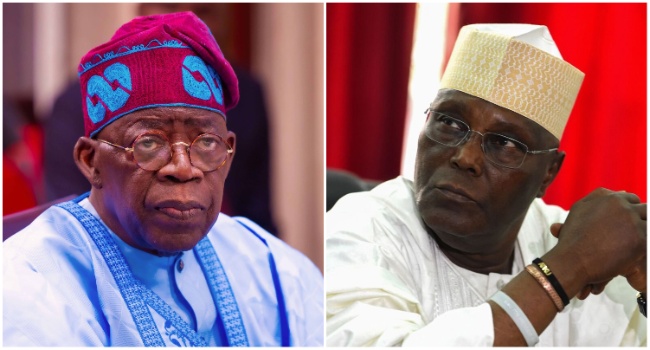
Former Vice President Atiku Abubakar launched a fierce attack on President Bola Tinubu on Monday, 14 September 2026, demanding a forensic audit of federation revenue as petrol pump prices touched 1,470 naira per litre. The African Democratic Congress presidential candidate accused the administration of running an organised system of grand larceny behind opaque deductions from the Federation Account Allocation Committee. His special assistant on public communication, Phrank Shaibu, released the blistering critique in Abuja just as filling stations nationwide posted another steep jump at the pump. The intervention strips away the polite fiction that fuel deregulation automatically produces fair consumer prices. Nigerians now pay First World rates at retail filling stations while taking home Third World wages. The basic arithmetic of household survival in Lagos, Kano, and Port Harcourt has broken down. Cheap political rhetoric from the presidential villa cannot bridge that widening gulf. Empty promises cannot fuel commercial buses or put food on kitchen tables.
Atiku zeroed in on a pricing paradox that government spokesmen routinely try to dodge. International crude oil trades near 102 dollars per barrel today, yet domestic petrol fetches 1,470 naira at retail stations. In 2008, global crude reached 147 dollars per barrel while local fuel sold for 65 naira under President Umaru Yar’Adua. The former vice president argued that previous administrations at least understood that statecraft exists to protect citizens’ welfare. The current economic team in Abuja treats the domestic petrol pump as an open revenue valve. Motorists absorb the full shock of global market turbulence while state treasuries quietly hoard the windfall. Energy markets do not reward blind official policy dogma. Ordinary workers pay the penalty for every bureaucratic miscalculation.
The opposition veteran rejected official attempts to use Middle Eastern tanker disruptions as a blanket excuse for domestic fuel hikes. He compared American pump prices with Nigerian realities to expose the structural unfairness of current reforms. Motorists across the United States pay roughly 1.14 dollars per litre, supported by a federal wage floor of 7.25 dollars per hour. Nigerian workers earn a statutory minimum wage of only 70,000 naira per month while paying almost identical retail prices for fuel. Tinubu has pushed domestic petrol close to American prices while leaving citizens with African poverty wages. That punishing imbalance explains why urban families have cut back on basic school runs and daily food. High fuel prices travel directly into every market stall, farm gate, and grocery store across the federation. Exhausted citizens cannot afford this imported economic template.
The sharpest thrust of Atiku’s critique targeted the obscure bookkeeping inside the Federation Account Allocation Committee. Official records from June 2025 show that the federation gathered 4.232 trillion naira in gross monthly revenue. Authorities distributed only 1.818 trillion naira among the three tiers of government after taking out massive upfront deductions. Bureaucrats buried the missing trillions under vague labels like collection costs, interventions, transfers, and sovereign savings. State governors who depend on these monthly cheques accepted the heavy cuts without mounting serious public objections. Atiku demanded a comprehensive reconciliation of all federation revenues and statutory deductions from May 2023 to date. The public deserves open accounting ledgers rather than bureaucratic codes designed to discourage difficult questions. Opaque balance sheets breed deep cynicism across the country.
The demand for transparency broadened into an attack on parallel funding vehicles run from the federal capital. Atiku demanded full disclosure regarding the financial operations of the Renewed Hope Infrastructure Development Fund. He called for an immediate independent inquiry into revenue flows from Oil Mining Lease 143 and state-funded maritime security contracts. The statement singled out the international liquefied natural gas trading books and offshore corporate structures of the national petroleum company. Shadowy offshore corporate vehicles and unmetered crude lifting continue to divert export earnings before cash reaches public coffers. Atiku insisted that independent forensic auditors must trace every exported barrel, identify every cargo, and reconcile legitimate payments. Ministers cannot dismiss such serious allegations of missing oil receipts with routine partisan insults. Clean ledgers protect the commonwealth far better than press statements.
The fuel price shock has also shattered the comforting narrative that local refining would guarantee affordable petroleum. Commercial refiners must buy crude feedstocks at prevailing international dollar rates and price finished fuel against import parity. Local refinery gates in Lekki recently raised ex-depot prices to 1,350 naira per litre, driving retail pumps past 1,400 naira. Domestic manufacturers now hold an alarming 1.77 trillion naira in unsold finished stock because transport inflation has crushed consumer demand. Small businesses burning petrol in private generators face impossible overheads that wipe out operating margins. Factory owners cut output runs and lay off staff because household budgets go almost entirely to food and transit. Private refineries cannot deliver cheap fuel without state concessions on domestic crude supplies. Industrial activity grinds to a halt under expensive power.
The current crisis exposes the yawning gap between the promises of subsidy removal and its harsh daily reality. Three years ago, the presidency assured Nigerians that scrapping the subsidy would release abundant funds for healthcare, education, and roads. The treasury has indeed collected record nominal sums of naira following the devaluation of the official exchange desk. Yet public hospital wards still lack basic pharmaceuticals, and federal highways remain scarred by treacherous potholes. Families endure punishing inflation without seeing any tangible improvement in public services. Transport unions pass rising petrol bills directly to passengers, pricing millions of commuters out of daily work. The reform has extracted severe sacrifice from ordinary citizens while delivering little structural progress in return. Unshared sacrifice breeds bitter and permanent public resentment.
The political timing of Atiku’s broadside turns fuel economics into the central battlefield of the 2027 presidential contest. The electoral umpire confirmed the final candidate list only days ago, locking in the major contenders for the race. Atiku will contest on the platform of the African Democratic Congress alongside former transport minister Rotimi Amaechi. The veteran challenger plans to use mounting cost-of-living anger to dismantle the ruling party’s electoral coalition. Tinubu’s strategists wager that tough market reforms will bear fruit before voters head to the polling stations. That gamble looks increasingly perilous as retail pump prices climb higher with every passing month. Voters rarely reward an incumbent when the price of basic travel consumes half their monthly pay. Economic reality will write the final verdict on election day.