
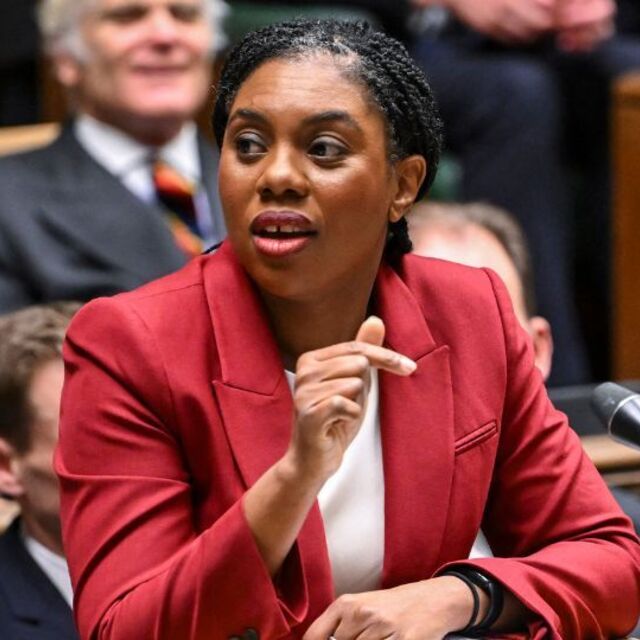
Kemi Badenoch has thrown the Conservative Party’s weight behind the very immigration reform the Labour government first proposed, urging ministers to hold the line on a decade-long wait for permanent residency and to resist growing pressure from within their own ranks to water it down.
In a letter to Home Secretary Shabana Mahmood, released through her account on X on Monday and jointly signed with Shadow Home Secretary Chris Philp, the Conservative leader argued that people who arrive on temporary work visas should not expect an automatic route to settling in Britain for good. “People who come to Britain on temporary work visas should not automatically be able to stay forever,” she wrote, adding that Labour “was right to make that harder” and that its own MPs were now pushing for a U-turn.
At the centre of the dispute is indefinite leave to remain, the status that lets a migrant live and work in the UK without immigration restrictions and, after a further qualifying year, apply for citizenship. Under long-standing rules, most workers and refugees become eligible after five years of continuous residence. Mahmood’s “earned settlement” plan, first trailed in the government’s May 2025 white paper, Restoring Control over the Immigration System, and formally set out in a Commons statement on 20 November 2025, would double that baseline to ten years and tie settlement to income, tax records, English proficiency and clean conduct rather than time alone.
Badenoch’s intervention is aimed squarely at reports that ministers are weighing whether to spare the roughly two million people who entered on work visas between 2021 and now from the extended timetable. She described any such carve-out as “a grave mistake,” warning that Britain had already paid a price for granting settlement too readily. “As Conservatives learned to our cost, five years is too short a time to obtain the indefinite right to remain in the UK,” the letter read.
She went further, arguing that migrants in low-paid, low-skilled roles could be replaced by some of the nine million economically inactive Britons and that those failing to make a “significant economic contribution” over ten years should return home once their visas expire. On the question of fairness to those already here, she maintained that tightening the rules would not be retrospective, since a temporary visa “does not guarantee permanent settlement.” That echoes Mahmood’s own position that ILR applications are judged under the rules in force at the time of application, a point the Home Secretary has repeatedly stressed while citing case law dating back to 2009.
The stakes are considerable. Home Office projections estimate that between 1.3 million and 2.2 million people could settle in the UK between 2026 and 2030, with grants peaking at around 450,000 in 2028, driven partly by the large Health and Care visa cohort of some 616,000 people who arrived between 2022 and 2024. Net migration, meanwhile, fell to 204,000 in the year to June 2025, down sharply from earlier highs.
The government’s consultation, which closed on 12 February 2026, drew an unusually heavy response. The Home Secretary put the figure at about 130,000 submissions, while the House of Commons Library counted more than 200,000. It is that volume, alongside a report from the Commons Home Affairs Committee on 13 March 2026 noting that much of the detail remained unsettled, that has slowed the timetable. Originally pencilled in for April 2026, the changes have now slipped to the autumn, with some elements possibly delayed into 2027.
Opposition to the plan cuts across party lines. A letter signed by 35 Labour MPs, 17 members from other parties, 21 peers and 33 civil society groups has urged Mahmood to rule out applying the reforms to migrants already in the country, warning it would be unfair to those who have already built lives around the five-year promise. The Law Society has similarly cautioned that the changes must not operate retrospectively or dent Britain’s competitiveness, while a group of skilled workers has signalled it is prepared to seek judicial review once final rules are published.
The politics around the issue have hardened considerably. Reform UK leader Nigel Farage has pledged to abolish ILR altogether, a proposal Prime Minister Keir Starmer branded “racist” and “immoral” at his party conference. Badenoch, who first floated the ten-year policy in February 2025, has since layered on tougher conditions, including a further five-year wait for citizenship and bars on those who have claimed benefits or hold a criminal record. In a pointed detail, her letter was copied to Greater Manchester Mayor Andy Burnham, whom she referred to as the “anticipated incoming Prime Minister,” a nod to the speculation swirling around Starmer’s leadership.
For now, the Conservative offer is conditional. Badenoch said her party would back the proposals “in undiluted form,” whether through the Immigration Rules or the Immigration and Asylum Bill 2026, but only if Labour resists the temptation to soften them. Whether the government stands firm, she suggested, would reveal how serious it truly is about controlling Britain’s borders.