
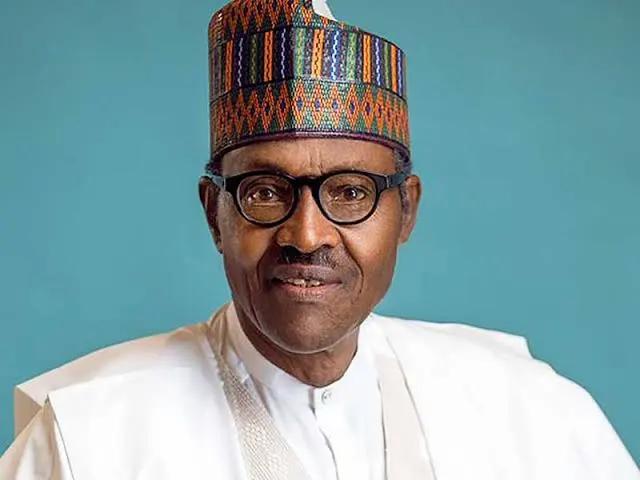
There was a particular image of Muhammadu Buhari that would follow him throughout his military and political career: a reserved, disciplined and somewhat austere man who appeared uncomfortable with unnecessary social engagement but was comfortable with responsibility.
Long before that image became associated with his leadership of Nigeria, it was already taking shape among the officers who served alongside him in the Nigerian Army.
The years immediately following the Civil War were particularly important in understanding the development of the man who would eventually become one of Nigeria’s most consequential military and political figures.
For Buhari, the end of the war was not simply the conclusion of a military campaign. It was the beginning of a different kind of test: returning to normal life, confronting the psychological and spiritual consequences of conflict, and establishing himself within an Army that was itself struggling to redefine its role in a country emerging from nearly three years of devastating internal conflict.
Chapter Nine of Buhari: The Phenomenon, appropriately titled After the Guns Fell Silent, offers an illuminating account of this formative period.
A soldier’s understanding of danger
Having experienced the Civil War at close quarters, Buhari appeared to approach its aftermath with a particular understanding of the military profession.
He regarded the possibility of death as an inherent part of the soldier’s calling. Officers who chose military service, in his view, had to accept its discomforts and dangers rather than behave as though the risks were unexpected.
Yet his response to the end of the war was not defined entirely by military considerations.
He undertook his first Hajj pilgrimage to Mecca alongside fellow officers, seeing the journey primarily as an opportunity to express gratitude to God for sparing his life.
The pilgrimage carried significance beyond the fulfilment of a religious obligation. Having witnessed death among men with whom he had shared the dangers of the battlefield, Buhari found in the spiritual journey an opportunity for reflection and renewal.
It was also during this period that he began developing relationships that would endure throughout his military career.
One of the most important was his friendship with Abdulsalami Abubakar, who would eventually become Nigeria’s Head of State.
Their acquaintance began in Mecca after the Civil War. They had served in different divisions during the conflict and had previously known of each other without developing a close personal relationship.
Abubakar’s recollections offer an interesting window into Buhari’s personality.
He described him as reserved and introverted but exceptionally determined.
One incident during the pilgrimage remained particularly memorable. After completing the tawaf around the Kaaba, the officers needed to travel to Mina. Severe traffic congestion made movement by vehicle almost impossible, forcing them to walk.
As some members of the party became tired, Buhari encouraged them to continue.
“Look, we are almost there. Please, let us finish this. When we reach there, we will rest,” he told them.
For Abubakar, the incident revealed something important about Buhari: a determination to complete whatever task he had undertaken, even when circumstances became uncomfortable.
It was a characteristic that would subsequently become familiar to officers who served under him.
A man of personal discipline
The pilgrimage also revealed aspects of Buhari’s personal conduct that distinguished him from some of his military contemporaries.
Abubakar remembered him as a man who spoke little, often kept to himself and did not drink alcohol.
Indeed, Buhari’s reluctance to participate in the drinking culture of the officers’ mess was sufficiently noticeable that non-alcoholic beverages became more regularly available.
Abubakar’s recollection is significant because it suggests that Buhari’s reputation for personal restraint was not something manufactured during his political career.
It was already part of his character as a young officer.
His relationship with Abubakar gradually developed into a close friendship. Abubakar came to address him as “Mallam Mamman”, while Buhari called him “Muallim”, an Arabic-derived expression associated with learning.
Their conversations frequently returned to their experiences during the Civil War.
They discussed difficult terrain, heavy rainfall, forest operations, inexperienced recruits and the enormous responsibility of keeping men steady under fire.
These conversations also helped Abubakar understand Buhari’s approach to leadership.
He believed Buhari assigned responsibilities to subordinates and allowed them to exercise their professional judgement rather than constantly supervising or interfering in their work.
This was an important dimension of his military personality: discipline did not necessarily mean micromanagement.
From battlefield experience to administrative competence
The end of the war brought Buhari into a series of appointments that gradually expanded his professional responsibilities.
He became Brigade Major of the 31st Infantry Brigade before serving as Assistant Adjutant General at the 1st Infantry Division Headquarters between 1971 and 1972.
These assignments required more than battlefield courage. They demanded organisational ability, administrative discipline and an understanding of the institutional machinery of the Army.
His work involved personnel records, postings, manpower administration and the systems required to keep a large military organisation functioning.
In 1973, he attended the Defence Services Staff College in Wellington, India, where officers from the Army, Navy and Air Force underwent training in joint strategic planning.
Buhari described the competitive atmosphere as a “competitive rat-race environment”, reflecting the pressure on participants to demonstrate professional excellence.
The experience broadened his understanding of military operations and strengthened his administrative and strategic capabilities.
His subsequent appointment as Adjutant General placed him in a position of considerable authority over personnel matters.
He was responsible for postings, discipline and other administrative decisions that could significantly influence the careers of officers.
It was a role that required consistency, restraint and sound judgement.
The Gowon connection
One of the most consequential developments in Buhari’s post-war career was his appointment to head the Nigerian Army Supply and Transport Command.
General Yakubu Gowon had received disturbing reports that vehicles imported for the Army were being diverted away from Lagos to other ports, including Warri and Sapele.
The officer previously responsible for the command, Lieutenant Colonel Ibrahim Taiwo, was removed, and Gowon selected Buhari as his replacement.
The choice was based on the younger officer’s reputation for diligence and reliability.
Gowon subsequently described him as a responsible, intelligent and competent officer whom he trusted with demanding assignments.
The appointment was important because it placed Buhari in charge of a function central to the operational effectiveness of the entire Army.
Military strength was not determined solely by the courage of soldiers or the sophistication of weapons. It also depended on the reliable movement of personnel, equipment and supplies.
Buhari’s responsibility was to ensure that these systems worked.
His performance strengthened his standing within the military establishment and brought him closer to some of the most influential officers of his generation.
Yet there was another side to the man that was less disciplined.
Friends and contemporaries remembered Buhari as a reckless driver. He owned and drove several vehicles, including Peugeot 403 and 404 models and Mercedes 200 and 250 saloons, but was involved in frequent accidents.
On one occasion, travelling from Makurdi to Kaduna with a friend, the vehicle crashed. His companion was thrown out, while Buhari’s leg became trapped in the steering wheel.
The incident offered a striking contrast to the image of the disciplined officer: a man who exercised considerable professional control but appeared less cautious behind the steering wheel.
The character behind the public image
What emerges from these accounts is a more rounded understanding of Buhari.
He was neither simply the austere military officer of popular imagination nor merely the ambitious young soldier who would later become involved in the struggle for political power.
He was a man shaped by war, religious conviction, institutional discipline, professional ambition and relationships with other officers.
His early friendship with Abdulsalami Abubakar, the confidence placed in him by Gowon and the respect he earned among younger officers all helped establish his position within the military establishment.
These experiences also prepared him for the political developments that would follow.
By the middle of the 1970s, Buhari was no longer simply a young officer who had survived the Civil War. He had become an influential military administrator with access to the operational machinery of the Army.
The guns had fallen silent, but the experiences of war had left their imprint.
And in the years that followed, the discipline, determination and sense of responsibility that colleagues had observed in him would become central to the story of a soldier whose career was about to take a dramatic turn.