
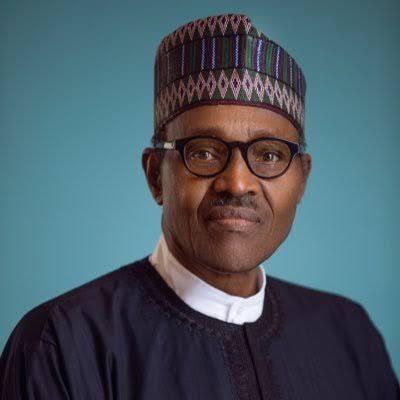
Long before Muhammadu Buhari became Nigeria’s military Head of State and, decades later, a democratically elected president, he was among a group of young military officers who helped bring an end to General Yakubu Gowon’s nine-year rule in July 1975.
Buhari, then a Lieutenant Colonel and Director of the Nigerian Army’s transportation unit, played a significant logistical role in the operation that removed Gowon from power, providing the vehicles needed to move and position troops involved in the takeover.
The account, contained in Chapter Nine, titled After the Guns Fell Silent, of Buhari: The Phenomenon, offers fresh insight into the former Nigerian leader’s military career, his relationships with influential officers and the circumstances surrounding one of the country’s defining political transitions.
The July 1975 coup followed growing dissatisfaction among younger military officers over what they regarded as the Gowon administration’s complacency, excesses and failure to honour its commitment to return the country to democratic government.
Although Gowon had initially promised a transition to civilian rule by 1972, the date was subsequently moved to 1976. His eventual reluctance to proceed with the transition further weakened confidence in his administration.
The dissatisfaction was particularly pronounced among officers who had distinguished themselves during the Nigerian Civil War and subsequently occupied strategic positions within the military establishment.
Among them were Buhari, Shehu Yar’Adua, Muhammadu Jega, Abdullahi Shelleng, Abdullahi Mohammed, Ibrahim Taiwo and Anthony Ochefu. Ibrahim Babangida and Aliyu Gusau later joined the network.
The officers reportedly held private meetings to discuss the state of the nation and the direction of military government.
Their concerns extended beyond political succession. They believed that the military’s continued involvement in government, alongside perceived administrative failures and indiscipline, was damaging the institution’s reputation.
The decision to remove Gowon eventually gathered momentum after he publicly reneged on his promise to hand over power to an elected government in 1976.
The operation required careful coordination across the country. One of its most important assignments was securing the cooperation of Colonel Joseph Garba, commander of the Brigade of Guards, whose responsibility for Gowon’s security made his participation crucial.
Without Garba’s cooperation, the operation risked unnecessary bloodshed.
General Murtala Muhammed, who had emerged as a preferred successor, initially declined an invitation to lead the new government, although he supported the coup. He eventually agreed to become Head of State if the operation succeeded.
On July 29, 1975, the principal officers converged at the Lagos Garrison Organisation headquarters to coordinate their plans and finalise operational assignments.
Buhari was among those present, alongside Shehu Yar’Adua, Abdullahi Mohammed, Ibrahim Taiwo, Ibrahim Babangida, Muktar Mohammed, Alfred Aduloju, Paul Tarfa and Sani Bello.
When the operation was eventually executed, Gowon was attending an Organisation of African Unity summit in Uganda. The takeover met little resistance and was described in the account as bloodless.
Murtala Muhammed emerged as Head of State, with Olusegun Obasanjo and Theophilus Danjuma forming part of the senior military leadership arrangement.
Buhari’s contribution was particularly significant because of his responsibility for the Army’s transportation system. The vehicles under his command facilitated the movement of troops and helped ensure the speed and coordination of the operation.
The chapter also reveals the professional qualities that had earned Buhari the confidence of senior officers before his involvement in the coup.
General Gowon recalled him as a diligent, intelligent and dependable young officer. Gowon had earlier entrusted him with the Nigerian Army Supply and Transport Command after reports of irregularities involving the diversion of military vehicles.
His subsequent performance strengthened Gowon’s confidence in him, making his participation in the movement against the government particularly surprising to the former Head of State.
Indeed, Gowon later acknowledged that he had not initially suspected Buhari when warnings emerged about a possible conspiracy within the military.
Beyond the political events of 1975, the chapter traces Buhari’s development after the Civil War, including his first pilgrimage to Mecca, his administrative postings and his professional training in India.
It also provides insights into his relationship with former Head of State General Abdulsalami Abubakar, who recalled Buhari as reserved, disciplined and unusually determined.
Their friendship began during their post-war Hajj pilgrimage, where Abubakar remembered Buhari encouraging fellow officers to continue walking when traffic congestion made their journey to Mina difficult.
The events of July 1975 marked a significant turning point in Buhari’s military career and Nigeria’s political history. For the young officer who had distinguished himself through administrative discipline and operational responsibility, the coup represented an entry into a much more consequential phase of national affairs.