
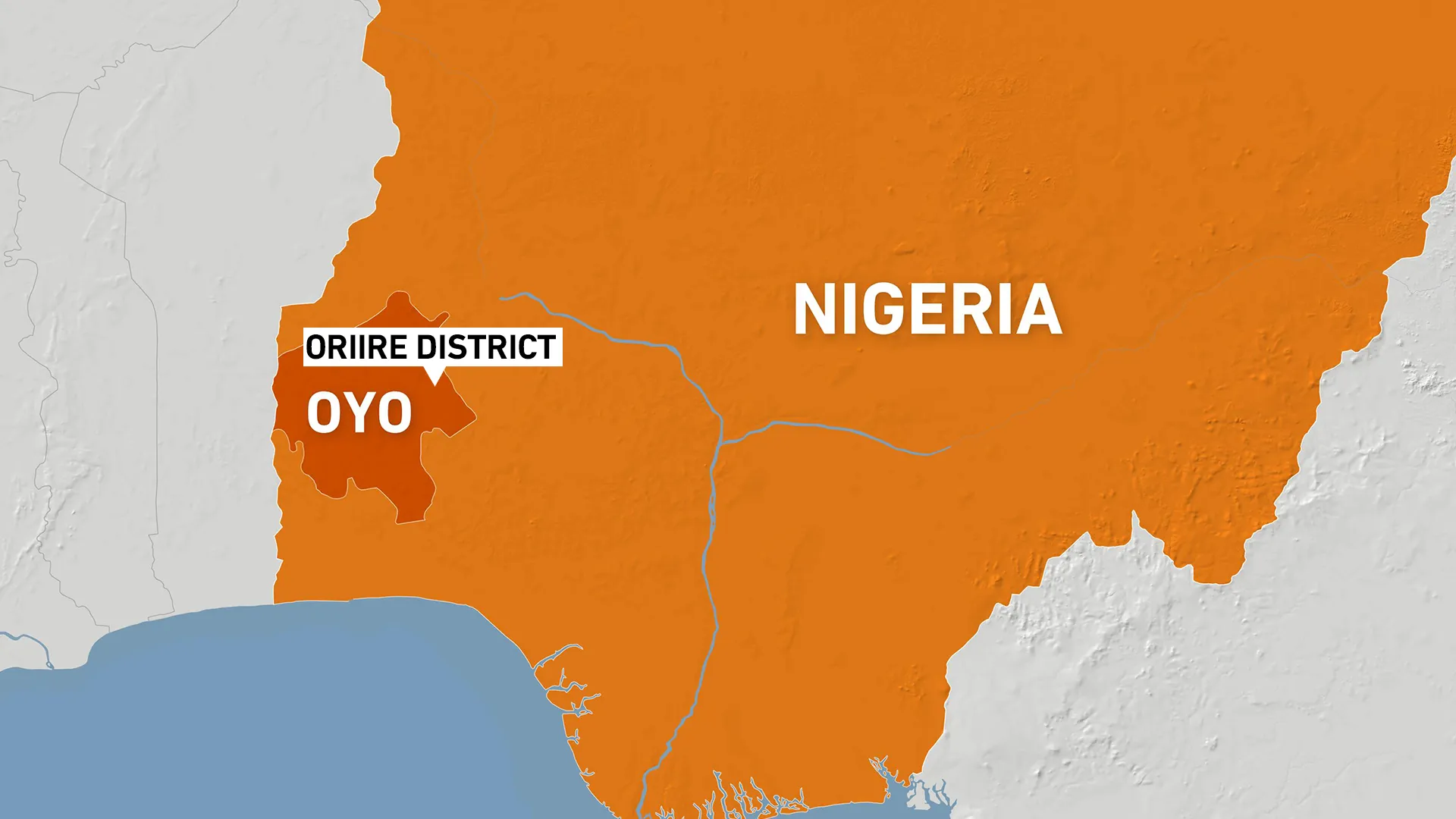
The Agbekoya Farmers’ Society of Nigeria has raised fresh alarm over the fate of victims abducted from schools in Esinele, Yamota and Alawusa communities in Oriire Local Government Area of Oyo State, alleging that the kidnappers are now ferrying their captives through dense forests across neighbouring states in a deliberate bid to evade security operatives.
The disclosure, contained in a statement jointly signed by the society’s President General, Chief Kamoru Okikiola, and its National Public Relations Officer, Chief Olatunji, has reignited concerns over the porous nature of South West forest corridors and the limits of state by state security responses to a threat that has grown increasingly mobile and transnational in character.
Agbekoya, one of the oldest farmer based traditional security formations in Yorubaland, with historical roots tracing back to the 1968 agrarian revolt against colonial era taxation in the old Western Region, said its field intelligence and rural community sources had confirmed the cross border movement of the victims. The kidnapped pupils and their teachers have now spent over a week in captivity, deepening anxiety among affected families.
“Our intelligence reports and community sources indicate that the abducted children and teachers are being moved through thick forests in neighbouring states to evade security operatives,” the group stated. “We appeal to the Oyo State governor and other South West governors to involve Agbekoya farmers and our security personnel in the search for the abductees.”
The Oriire abductions form part of a worrying escalation pattern across the South West, a region long considered relatively insulated from the mass abduction crisis that has gripped the North West and North Central zones. The Federal Government has previously documented thousands of kidnap incidents nationwide, with school based abductions in Chibok, Dapchi, Kankara, Kuriga and others establishing a template that armed groups have begun replicating in southern forest reserves.
Sprawling tracts such as the Old Oyo National Park, the Ido Forest and the contiguous Ofiki, Eluku and Onigambari reserves provide natural cover that cuts across Oyo, Kwara, Ogun and Osun states, presenting jurisdictional headaches for security agencies still organised along rigid state boundaries.
Agbekoya is now seeking formal approval from the Federal Government and South West governors to deploy its members alongside conventional security outfits. The group insisted it would rely on traditional methods rather than firearms.
“Our organisation has traditional weapons, not guns, and local charms to protect the entire South West and also disarm bandits and kidnappers,” the statement read. “Agbekoya farmers and security personnel can effectively protect South West forest reserves, rural communities and schools without guns, just as our forefathers did many years ago.”
The farmers’ body further proposed a structural overhaul of regional security architecture, urging the six South West states to abandon fragmented approaches in favour of unified action. “The South West, as a region, needs to coordinate and restrategise, not as six separate states but as a united region. South West governors should form a forum to agree on a joint approach,” the group added.
It also pressed for “an intelligence sharing platform among the states to exchange real time alerts on movements, camps and attacks,” alongside “synergy between Agbekoya, local security outfits, the police and the military to create a joint security task force for rapid response across state borders.”
The call arrives at a moment when the regional security outfit, Amotekun, established in 2020 by the six South West governors, has come under renewed scrutiny over equipment gaps, operational reach and inter state coordination weaknesses. Agbekoya’s proposed model would effectively layer indigenous community intelligence onto the existing Amotekun framework, a hybrid approach long advocated by traditional rulers and rural stakeholders.
As the Oriire victims enter their second week in captivity, pressure continues to mount on Oyo State authorities and federal security agencies. The Chief of Defence Staff has reportedly deployed additional troops and drones to track the abductors, while ActionAid and other civil society groups have demanded immediate rescue operations.
The Presidency and the Oyo State Government had yet to publicly respond to Agbekoya’s specific proposals as of press time.