
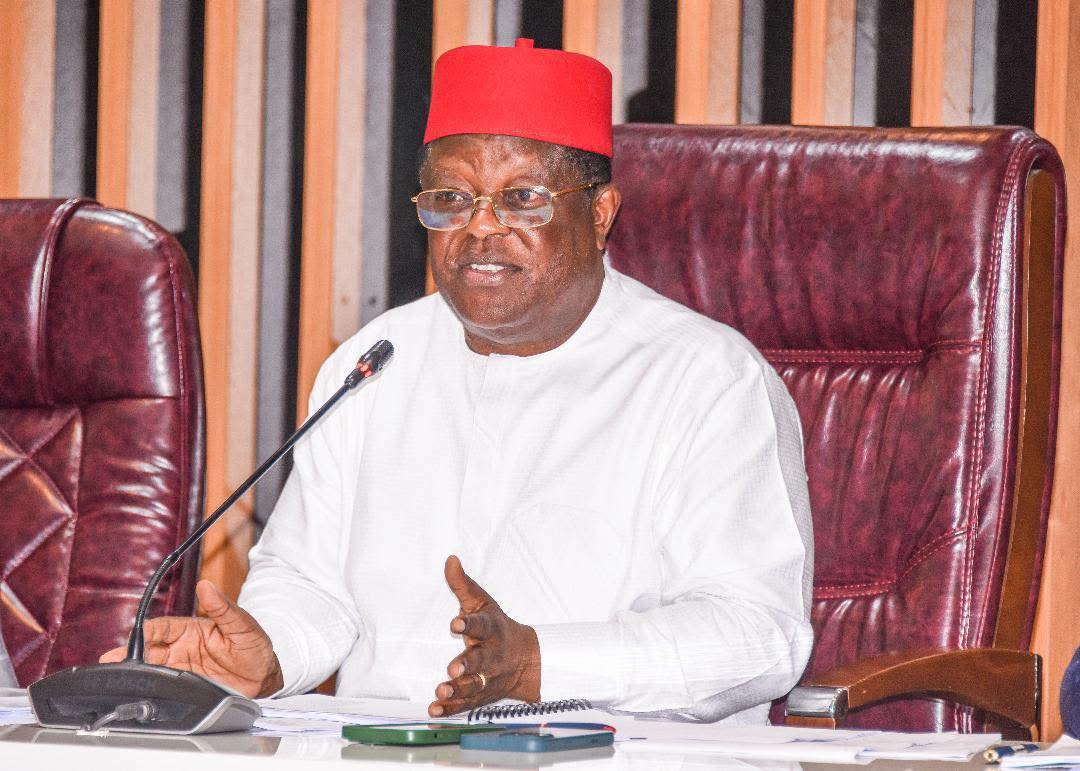
The federal government has signed contract agreements and memoranda of understanding for eight major road projects across the country. Works Minister Dave Umahi concluded the deals at the ministry headquarters in Abuja, binding the state to four flagship legacy highways and four strategic regional routes. The administration intends to fund these ventures through a combination of public money and international loans. To ease the fiscal burden, the government will provide 30 per cent counterpart funding while sourcing the remaining 70 per cent through credit facilities. The state plans to recoup these investments by tolling the completed sections.
This infrastructure push centers on the expansion of President Bola Tinubu’s primary transport corridors. The newly signed agreements cover Section II of the Calabar-Ebonyi-Abuja Superhighway, which spans 173 kilometres across Benue, Kogi, and Nasarawa states. It joins an already procured 123-kilometre stretch running from Cross River through Ebonyi. The state expects this corridor to reduce travel times between the south-east and Abuja to under four hours, a change meant to stimulate commercial transit. Other signed legacy segments include Section IV of the Sokoto-Badagry Superhighway in Oyo State and Section V of the Lagos-Calabar Coastal Highway in Akwa Ibom State.
The remaining four contracts target critical regional link roads that have suffered from long-term neglect. These include the dualisation of the Akwanga-Jos-Bauchi-Gombe-Biu-Maiduguri Road, specifically focusing on the Gombe-Biu axis. Contractors also signed papers for the reconstruction of the Mando-Birnin Gwari Road in Kaduna State, a route long plagued by security challenges. In the south-west, agreements cover the dualisation of the Ibadan-Ijebu Ode Road across Oyo and Ogun states. The final two projects involve the construction of the Osogbo-Ikirun-Akoda and Osogbo-Iwo-Ibadan roads to improve connectivity within Osun and Oyo states.
Engineering specifications for these contracts reflect a significant shift in national procurement policy. The presidency has mandated the use of concrete pavements rather than traditional asphalt for the flagship routes to ensure durability. Umahi defended the high capital layout, revealing that the standard carriageways will cost an average of N7.5 billion per kilometre. This figure covers extensive drainage systems, reinforced concrete structures, culverts, and modern road architecture designed to last several decades. The administration is betting that higher initial construction costs will prevent the rapid deterioration that typically destroys Nigerian highways within a few years.
Private investors have already shown strong interest in the commercial potential of these routes. The ministry revealed that several corporate entities are lobbying to manage completed portions of the Lagos-Calabar Coastal Highway. These firms intend to refund the government’s initial expenses in exchange for long-term tolling rights and strategic land acquisitions along the corridors. The government aims to make the highways self-sustaining, reducing the need for continuous maintenance allocations from the national budget. Motorists should be able to drive from Lagos into Ondo State on the first finished sections by November.
The aggressive rollout of these projects serves a distinct political purpose for the current administration. By scattering the four main legacy highways across all six geopolitical zones, the presidency hopes to counter regional accusations of lopsided development. The minister stressed that the infrastructure plan treats the entire country as a single economic unit. However, the reliance on heavy external borrowing to fund 70 per cent of the construction costs will inevitably invite scrutiny from fiscal analysts. The success of the scheme depends on whether toll revenues can cover the foreign loan obligations without overburdening local commuters.