
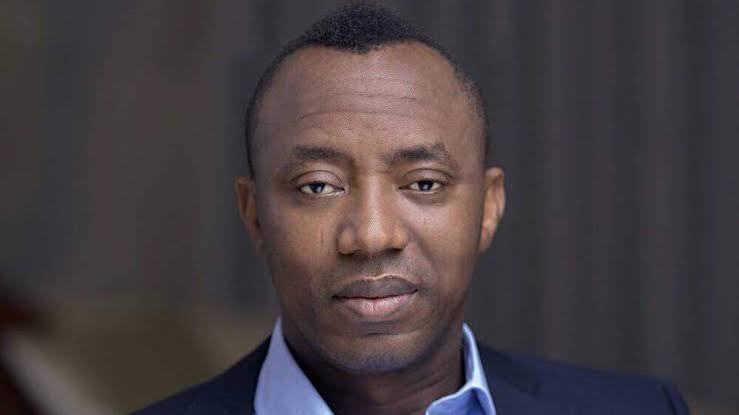
African Action Congress (AAC) presidential candidate Omoyele Sowore has unveiled an education reform blueprint for the 2027 election, promising free education from early childhood through university and the abolition of fees for public examinations including WAEC and NECO.
Sowore presented the policy document on his verified X handle on Monday, stating that no child would be required to pay for the West African Senior School Certificate Examination, the National Examination Council examination or any other public examination under his administration.
“No government under a #Sowore2027 administration will ever ask your child to pay WAEC, NECO, or any other public examination fee. Education will be free because knowledge is a right, not a privilege,” Sowore said.
The announcement comes days after the Federal Ministry of Education approved a uniform registration fee of ₦50,000 for WAEC and NECO Senior Secondary School Certificate Examinations, effective from the 2027 examination cycle. The increase represents a significant jump from previous rates—NECO rising from ₦30,000 to ₦50,000, and WAEC from ₦27,000 to the same amount. The approval was conveyed in a memo dated June 18, 2026, following a March 31, 2026 meeting between the Minister of Education and examination bodies.
The policy document outlines a 20-point education manifesto covering access, infrastructure, funding, curriculum, technology, research and student welfare. It proposes a restructured educational system of five years primary, five years secondary and four years university degree, with community colleges in every local government area offering two-year associate degree programmes.
Under the plan, students in public tertiary institutions would receive semester grants to support academic and living expenses. The manifesto also promises high-speed internet, digital classrooms, virtual labs and AI-assisted learning in schools, with coding, robotics, data science and cybersecurity introduced from primary level.
Technical and vocational education would target renewable energy, manufacturing, construction, aviation, maritime services, health technologies and software engineering. All polytechnics and monotechnics would be converted into universities.
The proposal prioritises teacher welfare with promises of better salaries, housing, research opportunities and professional development, alongside the establishment of two-year teachers’ institutes. It also pledges university autonomy free from political interference, with academic, financial and administrative independence.
Sowore’s declaration has generated attention amid growing criticism of the Federal Government’s fee increase, with education stakeholders warning that the higher charges could worsen Nigeria’s out-of-school children crisis by preventing students from low-income families from sitting for examinations required to complete secondary education.