
The killing of two Nigerians in South Africa within days of each other has renewed diplomatic strain between Abuja and Pretoria, coming as anti-migrant groups press a fresh 30 September ultimatum for undocumented foreigners to leave and as the National Assembly suspends legislative dealings with its South African counterpart.
The victims were named by the Nigerian government as Bishop Taiwo Michael Fakunle, a 58-year-old cleric, and James Uchechukwu Nwankwo, 48. According to a statement issued on Saturday by Nigeria’s High Commissioner to South Africa, Femi Fani-Kayode, Fakunle was shot dead at his home in Kensington, Johannesburg, on 4 September, while Nwankwo died the following day in what he described as a case of “gruesome interrogation techniques” by officers of the South African Police Service. Fani-Kayode said the two were the seventh and eighth Nigerians killed in South Africa in 2026, and prayed for the repose of their souls.
The accounts of Nwankwo’s death diverge, and the discrepancy matters. Nigeria’s Ministry of Foreign Affairs and Fani-Kayode place the death on 5 September, with the ministry locating it in Somerset, Cape Town, rather than Johannesburg. The South African Police Service has given a different version. A police spokesperson, Constable Ndakhe Gwala, said an inquest docket was opened after a 48-year-old man, arrested for suspected possession of drugs, died on Sunday, 6 September, after complaining of shortness of breath while being transported to Lwandle police station near Cape Town. The police did not state a cause of death, and the inquest remains open. Nigeria has rejected that framing and demanded a transparent investigation, saying law enforcement officers charged with protecting lives were instead worsening a fragile situation.
The circumstances of Fakunle’s death are less contested. The Nigerian Citizens Association South Africa, whose national president Frank Onyekwelu first reported the killing, said two suspects forced their way into the cleric’s residence in Kensington and shot him more than seven times before fleeing. Fakunle, an indigene of Iye in the Ilejemeje Local Government Area of Ekiti State, founded the Settled Word Leadership and Theological Seminary in South Africa. The association said it had notified the Consulate General of Nigeria in Johannesburg and that a murder case was opened at the Jeppe Police Station. The Consulate General, in a statement attributed to its head Okey-Uche, described the killing as gruesome and confirmed that the attackers traced Fakunle to his home, shot him and burgled the property. The motive has not been established, and neither the association nor the police have said the killing was xenophobic.
That distinction runs through the wider dispute over numbers. Fani-Kayode said more than 100 Nigerians had been killed in South Africa between 2022 and now, with more than 30 of them killed by officers of the police service and the defence force, and four of this year’s eight deaths attributable to the police. The figures cited by Nigerian officials are not uniform. On 20 August, the Minister of State for Foreign Affairs, Sola Enikanolaiye, told a virtual roundtable convened by the Nigerian Institute of International Affairs that about 90 Nigerians had been killed in what he termed Afrophobic violence since June 2022, a count the ministry had put at 98 in late July. In May, the Nigerian Union South Africa and the Nigerian Citizens Association South Africa jointly estimated at least 105 Nigerian deaths over seven years, breaking it down as about 12 in the 2019 unrest, more than 17 in 2022, more than 40 in 2023, about eight each in 2024 and 2025, and more than 20 between January 2026 and May. These are community and official estimates compiled from reports and records rather than independently audited tolls, and the variations reflect differing definitions and periods rather than a single verified dataset. South African authorities have generally disputed characterisations of migrant deaths as coordinated xenophobia.
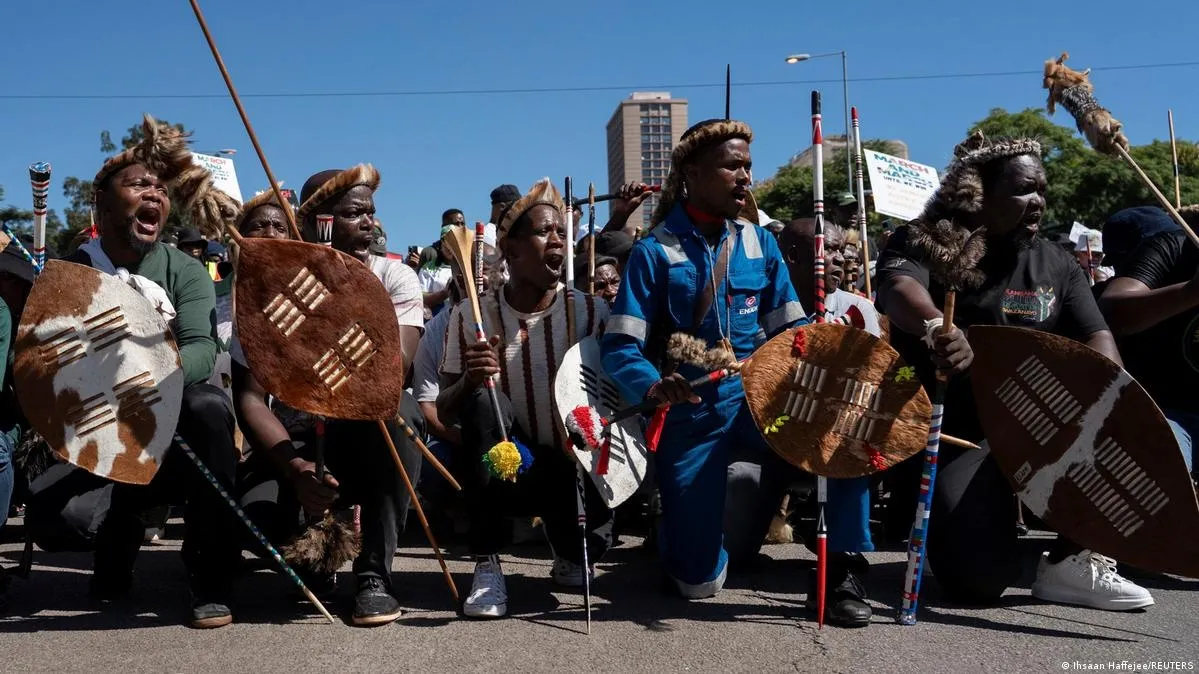
The killings land at a tense moment. Anti-migrant movements, chiefly Operation Dudula and March and March, first set an unofficial 30 June deadline for undocumented foreigners to leave, then extended it to 30 September after that date passed without government action. Sphelele Shinga of the March and March movement has said the group is preparing a mass mobilisation around the new date. The South African government has repeatedly stated the deadlines carry no legal force, and the police have said their approach will not change. Fani-Kayode described the organisations behind the ultimatum as racist and Afrophobic and urged Pretoria to protect Nigerians from their threats.
Nigeria’s formal response has hardened. The Ministry of Foreign Affairs, in a statement by its spokesperson Oluwafemi Adeniyi, condemned both killings “in the strongest terms possible” and said the country was weighing concrete measures against the pattern of attacks. On 11 September, the National Assembly announced it was suspending legislative engagements with South Africa, covering official visits, committee travel, conferences and parliamentary exchanges, in response to reports of Nigerians being killed, injured, displaced and forced to abandon homes and businesses.
The bilateral relationship carries particular weight, which is why the deaths resonate beyond the individual cases. Nigeria and South Africa are the continent’s two largest economies and operate a Bi-National Commission meant to manage relations at the highest level. Nigerian officials have repeatedly invoked Nigeria’s support for the anti-apartheid struggle when protesting the treatment of its nationals, framing the attacks as a betrayal of that history. Earlier episodes have followed a similar arc. In April 2025, Taiwo Raji and Yemi Akinwunmi were shot dead in front of their shops on Church Street in Arcadia, Pretoria, and the Nigerians in Diaspora Commission, led by Abike Dabiri-Erewa, condemned the killings and pressed for prosecution. In many such cases, Nigerian authorities say arrests were made but convictions did not follow.
What is confirmed is that two Nigerians are dead, that South African police have opened a murder investigation in one case and an inquest in the other, and that neither has produced an arrest. What remains unresolved is the cause of Nwankwo’s death, the true scale of Nigerian fatalities, given the competing tallies, and whether the 30 September deadline will pass without further violence. Nigeria has said it is considering firmer measures, but has not specified what they would be. The outcome of the Jeppe murder case and the Lwandle inquest, together with events around the end of the month, will be the next test of both governments’ handling of a recurring crisis.