
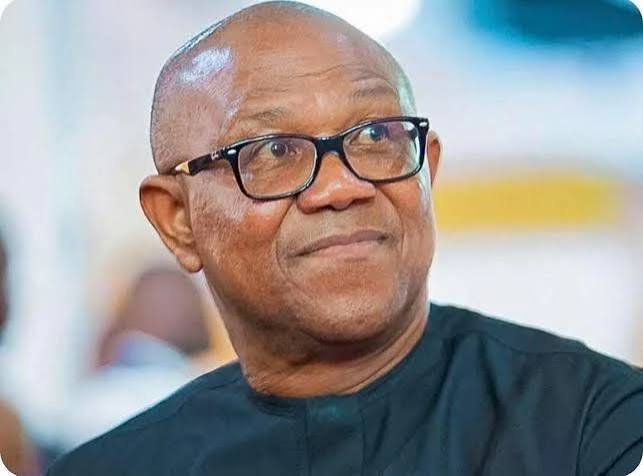
The obstruction of Peter Obi’s convoy in Benue State has become the latest flashpoint in a widening argument over the safety of opposition politicians, drawing sharp warnings from Igbo leaders and socio-cultural groups who say a pattern of physical confrontation is emerging as the 2027 campaign gathers pace.
Obi, presidential candidate of the Nigeria Democratic Congress, was stopped on Tuesday, 8 September 2026, while travelling from Makurdi towards Yelwata in Guma Local Government Area, the site of one of the deadliest rural attacks in recent Nigerian history. According to a statement issued by the NDC through its National Publicity Secretary, Osa Director, youths blocked the convoy near the Nigerian Air Force base along the Gboko to Makurdi road, chanting for Obi to turn back. Obi, who said he had come to mourn with families rather than for partisan politics, abandoned the trip and left the state by air within hours.
The accounts of who was responsible diverge sharply, and none has been independently established. The NDC alleged the group was led by an aide to Benue State Governor Hyacinth Alia. The state government, through the governor’s Chief Press Secretary, Tersoo Kula, denied any knowledge of the visit and rejected claims that it deployed or sponsored the youths. The police offered a third account. The Benue Commissioner of Police, Cletus Nwadiogbu, told journalists in Makurdi on Wednesday that the command was notified of the visit at about 5:30pm on Monday, 7 September, and deployed personnel including three escort vehicles led by an assistant commissioner of police. He said officers chose not to use force to avoid escalation, escorted Obi safely to the airport, and had since arrested 46 people through what he described as intelligence led operations. He warned that security agencies would not tolerate actions capable of heightening political tension as the elections approach.
The visit’s purpose lends the incident additional weight. Yelwata was overrun by gunmen overnight on 13 to 14 June 2025, in an attack that displaced thousands and drew condemnation from Pope Leo XIV, who said most of those killed were internally displaced people sheltering at a Catholic mission. Estimates of the death toll vary. Amnesty International put it at more than 100, the Benue governor initially cited 59, and in February 2026 federal prosecutors filed 57 terrorism related charges against nine men over an attack they said killed about 150. Obi has referred to more than 270 deaths. The differences reflect the difficulty of verifying casualty figures in the affected communities, and the higher figure has not been officially confirmed.
For those who spoke out, the Benue episode does not stand alone. It follows a confrontation in Benin City, Edo State, on 24 February 2026, when gunmen trailed and fired on Obi’s convoy as he arrived at the residence of former Edo governor and one time All Progressives Congress national chairman, John Odigie-Oyegun. That attack, which the Edo State Police Command confirmed, damaged several vehicles but caused no reported fatalities. Obi was travelling then as a leading figure in the African Democratic Congress, before his current alignment with the NDC for 2027. Taken together, supporters argue, the two incidents point to a hardening environment for opposition movement.
Reacting to the latest development, former Minister of Health and Education, Ihechukwu Madubuike, described it as barbaric and unprecedented, and cautioned that repeated resort to intimidation could ultimately endanger civilian rule. He drew a comparison with the political disorder that preceded the 1966 military intervention, arguing that the inability of political actors to conduct themselves within democratic norms had helped open the door to military rule then. Former Senate President and Peoples Democratic Party Board of Trustees chairman, Adolphus Wabara, called the blockade an affront to democracy, insisting that “the ballot box, not the street, must determine who leads Nigeria” and that any attack on a candidate was an attack on the rights of the citizens who support that candidate.
Others framed the incident in ethnic terms. The National President of the Association of Igbo Town Unions, Emeka Diwe, argued that Obi’s treatment could not be separated from his identity as the only frontline presidential contender of Igbo extraction, and warned that the attacks were “looming signals” that the 2027 elections could be marred by violence. He also alleged that some state governors had threatened Obi against visiting their states, a claim that has not been substantiated. The Igbo Renaissance Group demanded a public apology from Governor Alia, while the Alaigbo Development Foundation, through its General Secretary Abia Onyike, went further, accusing the governor of acting irresponsibly. These are the positions of the groups concerned. The Benue government has maintained that it played no role, and the police investigation remains open.
The dispute unfolds against a genuinely fragile backdrop in Benue, where insecurity is not a matter of political rhetoric. Amnesty International reported that at least 510,182 people were internally displaced across the state as of July 2025, and the Middle Belt has for years been the fault line of recurring violence over land, ethnicity and religion. The 2027 campaign has now layered a volatile contest onto that instability, with Obi emerging as one of the principal challengers to President Bola Tinubu.
What can be stated with confidence is limited but significant. A convoy carrying a serving presidential candidate was blocked, the trip was abandoned, and 46 people are in custody pending investigation. Three institutions, the NDC, the state government and the police, have offered three different explanations of how it happened and who bears responsibility. Whether the arrests lead to prosecutions, and whether the pattern its critics fear takes hold, will depend on the outcome of the police inquiry and on how the security agencies manage opposition movement in the eighteen months before Nigerians vote.