
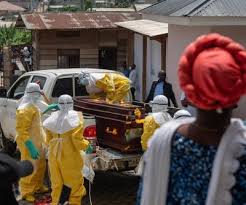
Canada and The Bahamas have joined the United States in imposing temporary travel restrictions tied to the worsening Ebola outbreak in central and east Africa, a coordinated tightening of borders that underscores mounting international anxiety over the virus’s cross continental spread.
The measures specifically target travellers arriving from the Democratic Republic of the Congo, Uganda and South Sudan, three nations now at the centre of what the World Health Organisation has described as an escalating public health emergency.
In a statement issued Tuesday, Canada’s Public Health Agency confirmed that residents from the three affected countries would be barred from entering Canada for 90 days beginning Wednesday.
“This will mean that even those with a previously approved temporary resident visa, electronic travel authorization (eTA) or permanent resident visa will not be allowed to travel to Canada while their immigration document is suspended,” the agency said.
The Canadian government further directed that its own citizens and permanent residents who had visited any of the affected countries within the previous 21 days would be required to undergo a mandatory 21 day quarantine upon arrival, a window that aligns with Ebola’s maximum known incubation period.
Canada’s Health Minister, Marjorie Michel, framed the action as a precautionary public health intervention rather than a diplomatic signal. According to her, the border measures would help “reduce the risk of Ebola disease entering the country while ensuring that travellers are managed based on their level of risk.”
The Bahamas followed with its own tightened protocols. Authorities in the Caribbean nation announced that foreigners who had been in the DRC, Uganda or South Sudan within 30 days before arriving in the Bahamas could face enhanced health screenings and possible quarantine. The Bahamian government said the restrictions took immediate effect and would remain in force for 30 days, subject to review by the country’s health ministry.
The latest moves build on travel curbs introduced last week by the United States, which imposed similar restrictions on non citizens arriving from the three affected nations. Washington is also expected to establish a quarantine facility in Kenya to accommodate Americans exposed to the virus during the regional outbreak.
The outbreak’s regional footprint has already prompted defensive action within Africa itself. Uganda recently shut its border with the DRC in response to rising case numbers, while the WHO has warned that the situation will likely deteriorate further before stabilising. The Nigeria Centre for Disease Control has separately flagged Nigeria as being at high risk of virus importation, given the country’s extensive aviation links to affected regions.
Ebola virus disease, first identified in 1976 near the Ebola River in what is now the DRC, carries an average case fatality rate of around 50 percent, according to WHO data, though previous outbreaks have recorded rates as high as 90 percent. The 2014 to 2016 West African outbreak, the deadliest on record, killed more than 11,000 people across Guinea, Liberia and Sierra Leone, and prompted a sweeping overhaul of global outbreak response architecture.
Despite the wave of restrictions, no confirmed Ebola cases have been reported in Kenya, the United States, Canada or the Bahamas as of press time. Public health authorities in all four countries have stressed that the current measures are preventive, not reactive, and are designed to buy time for surveillance systems and contact tracing infrastructure to absorb any potential imported case.
The coordinated international response signals a notable shift from the slower posture that characterised earlier outbreaks, with governments increasingly willing to deploy aggressive border measures at the first sign of cross border transmission risk.